A business proposal is one of the last things standing between a great discovery call and a signed contract.
The proposal structure, the framing, the way value is communicated to a buying committee of five — every element affects whether the deal moves forward or stalls in review.
A high-converting proposal speaks to the CFO's risk concerns, gives the stakeholder who wasn't in the discovery call a reason to say yes, and makes the next step obvious without a follow-up nudge.
This guide covers how to structure a successful business proposal, what to include in each section, the proposal tips that move buyers from review to signature, and 23 industry-specific examples across sales, marketing, software development, and more.
Key Takeaways
- A Strong Start is Half the Battle: Your proposal's introduction should grab attention like a headline does. Think of it as the trailer to the blockbuster that is your proposal.
- Clarity is King: Aim for a fluff-free zone. We'll show you how to be crystal clear about what you're offering and why it matters.
- Tailor Made to Fit: Like a bespoke suit, your proposal should be customized to fit your potential client's needs. Leave the cookie-cutting to the competition.
- Evidence, Please: Back up your claims with solid proof. Testimonials, case studies, and data are your best friends.
- A Call to Action That Calls Out: Don't leave your reader hanging. A compelling call to action prompts their next move - so it's imperative that you're crystal clear about what you want them to do next to move things forward.
Check out our video if you're more of a visual learner:
What is a business proposal?
A business proposal is a document submitted to a potential client that outlines a product, service, or project offering and makes the case for taking a specific action. It’s typically used in B2B sales, RFP responses, and client engagements across professional services, software, and agency work.
Proposals are submitted in response to a formal Request for Proposal (RFP) process or sent proactively after discovery conversations where both sides have established shared context around the problem and the solution.
Unlike a contract, a sales proposal is a persuasion document. A strong business proposal confirms that the vendor understands the client's problem, presents solutions, and gives every decision maker involved a clear reason to approve it.
Read next: How to create a conference proposal
Types of business proposals
Business proposals fall into five categories: solicited RFP responses, unsolicited pitches, informal follow-ups, renewal proposals, and internal business cases. Understanding the following components of each type helps sales teams choose the right structure, tone, and level of commercial detail depending on who requested it and why.
Solicited proposals
A solicited proposal is submitted in response to a Request for Proposal (RFP), Request for Quote (RFQ), or other formal invitation from a potential client.
- When to use: Replying to a structured request with specific evaluation criteria
- What to include: Clear compliance with requirements, structured format, pricing, timelines, and qualifications
- Example: A SaaS company responding to an RFP from a large enterprise needing a CRM
Qwilr tip: Mirroring the prospective buyer's RFP language and structure helps reviewers comparing multiple vendors move faster through a proposal that maps directly to their criteria. Consistent formatting across sections makes that comparison easier.
Unsolicited proposals
An unsolicited proposal is a proactive pitch sent without a formal request, built around a business challenge or growth gap the vendor has identified.
- When to use: A clear opportunity exists that the client hasn't put out to bid
- What to include: Compelling insights, proof of ROI, and a call to action that makes moving forward straightforward
- Example: A marketing agency reaching out to a potential client with a tailored proposal to revamp an underperforming social media presence.
Qwilr tip: Personalization and industry-specific data carry more weight here than in any other proposal type.
Informal proposals
An informal proposal is requested, but unstructured. It typically follows a discovery conversation or exploratory meeting where the prospect asks the vendor to "send something over."
- When to use: A qualifying conversation has taken place, and the prospect has asked for a written follow-up
- What to include: A concise executive summary, solution outline, pricing, and relevant case studies
- Example: A startup founder requests a proposal after an introductory call at a conference
Qwilr tip: Proposals sent while the conversation is still fresh compete against fewer distractions. A professional look matters here, since the document often forms the first formal impression after an informal conversation.
Renewal or continuation proposals
A renewal proposal extends an existing client relationship or proposes a new phase of an ongoing engagement.
- When to use: A contract renewal, scope expansion, or strategic continuation is on the table
- What to include: Recap of outcomes already delivered, future opportunities, and additional value-adds
- Example: A design agency proposing a retainer model after completing a successful rebrand
Qwilr tip: Opening with results already delivered builds a stronger case for continuation than projections about what comes next.
Internal proposals
An internal proposal makes the case for a new initiative, tool, or budget allocation to decision-makers within the same organization.
- When to use: A new system, process change, or resource investment needs internal approval
- What to include: Business case, cost-benefit analysis, stakeholder impact, and resource requirements
- Example: A sales operations manager proposing the adoption of Qwilr to modernize the team's proposal process
Qwilr tip: Internal approvers weigh budget allocation against competing priorities. A proposal that quantifies efficiency gains and cross-functional impact, with concrete deliverables attached to each cost, gives decision-makers the business case they need to say yes.
How to structure your business proposal
A business proposal typically includes seven essential elements: executive summary, problem statement, proposed solutions, methodology and timeline, pricing, proof of success, and a call to action. Every section earns its place by advancing the buyer's understanding of the problem, the solution, and the commercial case for moving forward.
Executive summary
The executive summary opens the proposal with a concise snapshot of the client's problem and the vendor's solution. A compelling executive summary gives every stakeholder, including those who won't read the full document, enough context to understand the opportunity and the recommended path forward.
Problem statement
The problem statement demonstrates a deep understanding of the specific pain points the potential client faces. Specific language, concrete details, and accurate framing of the client's situation signal that the vendor has done the work to understand the business.
Proposed solution
The proposed solutions map directly to the problem statement and explain how the vendor's product or services address each facet of the client's challenge. The focus belongs on outcomes and fit.
Methodology and timeline
The methodology and timeline section provides a clear roadmap covering how and when the vendor plans to deliver. A realistic timeline with defined milestones gives procurement, IT, and operations teams the detail needed to plan internal resources and manage stakeholder expectations.
Pricing
The pricing section of a proposal outlines the full cost structure transparently. Framing pricing as a strategic investment — with costs mapped to specific deliverables and outcomes — gives finance teams and legal teams the detail needed to approve without follow-up questions. Where payment terms, variable charges, or add-on services apply, list these explicitly so the potential client understands the full cost structure upfront.
Proof of success
Case studies, testimonials, and relevant data validate the vendor's claims and demonstrate capability. The strongest proof points mirror the potential client's industry, company size, and business challenges. Include relevant case studies and client testimonials that reflect the buyer's situation. The closer the match, the more credible the evidence and the faster decision-makers move toward approval.
Call to action
The closing section states exactly what the next steps are and makes taking that step straightforward, whether scheduling a follow-up call, selecting a package, or signing the proposal directly. A single, direct call to action, whether scheduling a follow-up call or signing the proposal, keeps momentum intact and reduces the time between review and decision.
What makes a stand-out proposal in the buyer’s mind?
Proposal tips that focus purely on formatting miss the bigger problem: a buying committee of five needs different things from the same document, and a proposal that doesn't account for that loses ground before the follow-up call. The proposal tips below cover structure, stakeholder alignment, interactivity, and follow-up timing — drawn from Qwilr's analysis of over one million proposals and best practices from sales teams across professional services, software, and agency work.
1. Lead with the buyer's problem
Centering a proposal on the goals gives every stakeholder, including those who weren't in the discovery call, an immediate reason to keep reading. A compelling business proposal that addresses the prospective buyer's specific challenges before presenting a solution gives the champion something they can share and advocate for internally without needing to contextualize it first. Addressing specific pain points by name — using the language the buyer used during discovery — signals that the proposal was built for this account, not adapted from a generic template.
Sydney Young, Account Executive, puts it directly:
"Proposals should be less on 'us' and more on them. Lead with prospect needs so it immediately resonates — and if anyone else gets involved, they can understand the proposition quickly without you in the room."
Qwilr's business proposal templates give sales teams a ready-to-use starting structure built around the buyer's experience, with sections for problem framing, solution mapping, and outcome-led pricing.
2. Keep proposals short and focused
Cut every section that doesn't directly support the commercial case. An executive summary, a problem statement, proposed solutions, pricing, and a call to action cover the essential elements. Everything else is optional.
Proposal length directly affects acceptance rate. Qwilr's analysis found that proposals with fewer than six proposal content sections have a 66% higher acceptance rate than those with 14 blocks or more.
As a proposal software, Qwilr includes drag-and-drop content blocks and a reusable asset library that make it straightforward to build lean, focused business proposal presentations without starting from scratch.
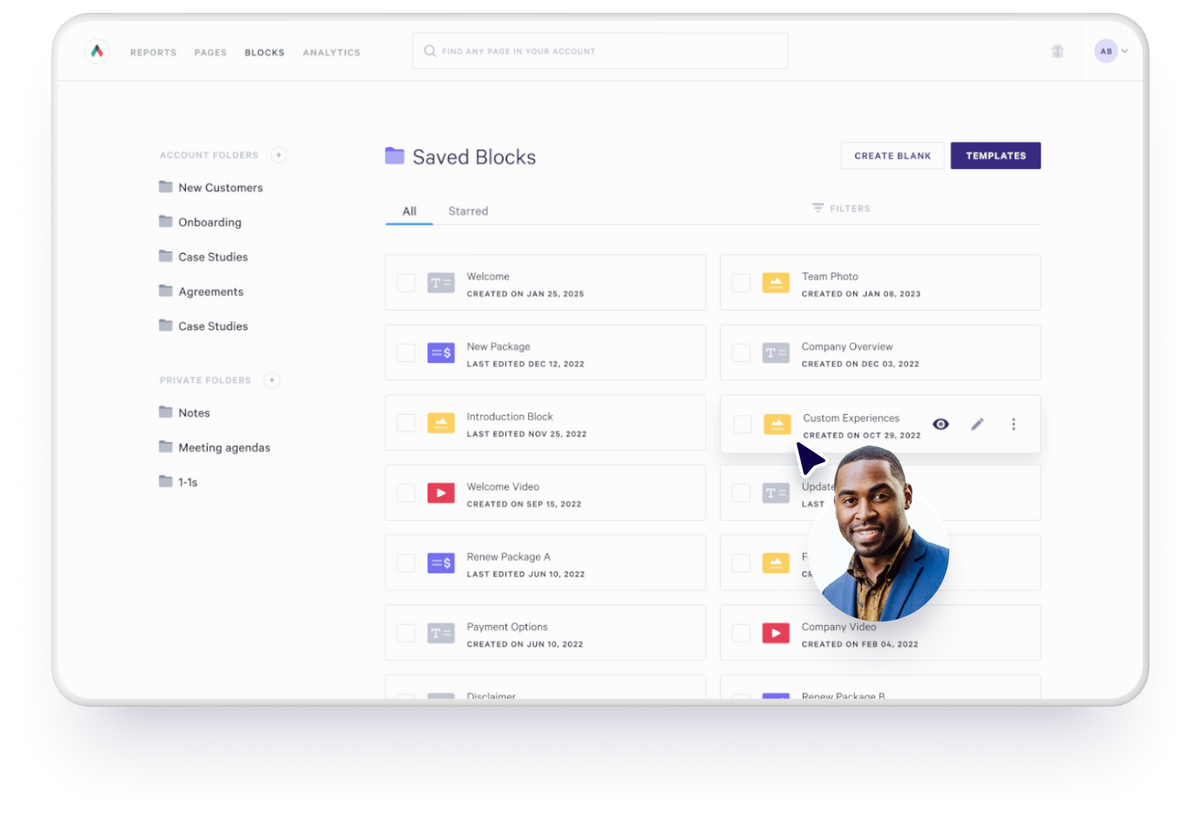
Reps pull approved sections from a centralized library — placeholder text already scoped to each section. They can assemble the proposal in minutes and send a document that respects the buyer's time.
For small businesses sending proposals without a dedicated business proposal design function, Qwilr's proposal templates include consistent formatting, color scheme, and design elements that don't require a designer to maintain.
3. Use interactive elements to drive engagement

Interactive proposals give buyers a way to engage with the content directly by adjusting pricing, modeling ROI, and exploring package options. That shift in behavior has a measurable impact on close rates since buyers who interact with a proposal are 1.7x more likely to accept it, according to Qwilr's analysis.
Upsell opportunities are also built into the flow. Qwilr's interactive quotes let sales teams present recommended plans, optional add-ons, and tiered packages that prospective buyers can explore and configure without a follow-up conversation to clarify what each option costs.
4. Build the proposal for every decision-maker
Each stakeholder — finance, IT, legal, operations — needs to find their answer without a follow-up conversation.
Seth Bredenkamp, Web Sales Engineer at Thrive Internet Marketing Agency, frames it directly:
"Clearly state what sets your services apart from competitors. Mention any additional services or features that add value."
A proposal reviewed by multiple decision makers moves through internal approval faster than one that sits with a single contact waiting to be forwarded. Qwilr's data shows that proposals reaching at least two additional decision makers within five days of sending see a 1.9x higher acceptance rate. Helping the prospective client understand who else needs to see the document is part of the proposal strategy.
Qwilr's group sign functionality lets multiple stakeholders review and sign a single proposal.
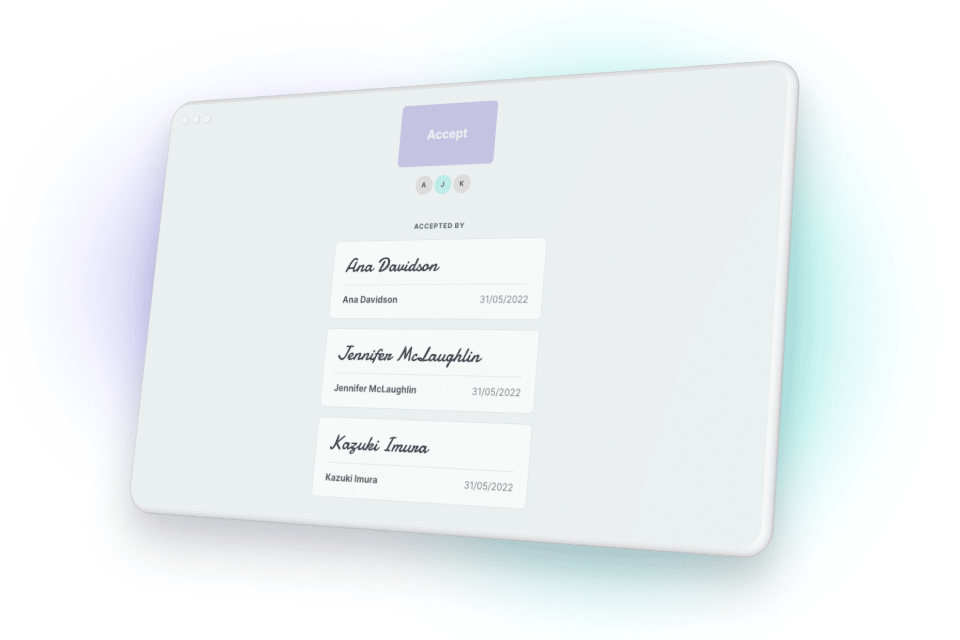
It removes the coordination overhead of managing approvals separately and giving every stakeholder direct visibility into the document.
Sending a mutual action plan alongside the proposal sharpens that dynamic further. When both the vendor and the buyer have named milestones and deadlines attached to the same document, the proposal stops functioning as a pitch and starts functioning as a shared plan with realistic milestones both sides are accountable to.
5. Show value in terms that every stakeholder understands
A proposal that quantifies value in concrete, role-specific terms gives each stakeholder a reason to approve it on their own terms. The CFO needs ROI and payback period. IT needs integration specs and security compliance. Operations needs timeline and resource requirements.
Confirming commercial terms before writing the proposal, like pricing parameters, discount structures, payment terms, and timeline expectations, removes a category of late-stage friction that harms otherwise winnable deals and helps build trust with the economic buyer before the document arrives. Getting alignment on those terms first shifts the proposal from a commercial offer into a confirmation of what both sides have already agreed in principle.
“The key to a successful proposal is clearly answering the question: How can my organization support yours? It's important to demonstrate not only that your organization excels but also that it’s uniquely positioned to help address the specific problem. Providing this clear alignment between your strengths and their needs is essential for a compelling proposal.”
Danielle Hickin, Grant Writer at Tutored by Teachers
With sales tools like Qwilr, add an embedded ROI calculator that lets sales teams build a customized return model directly into the proposal.
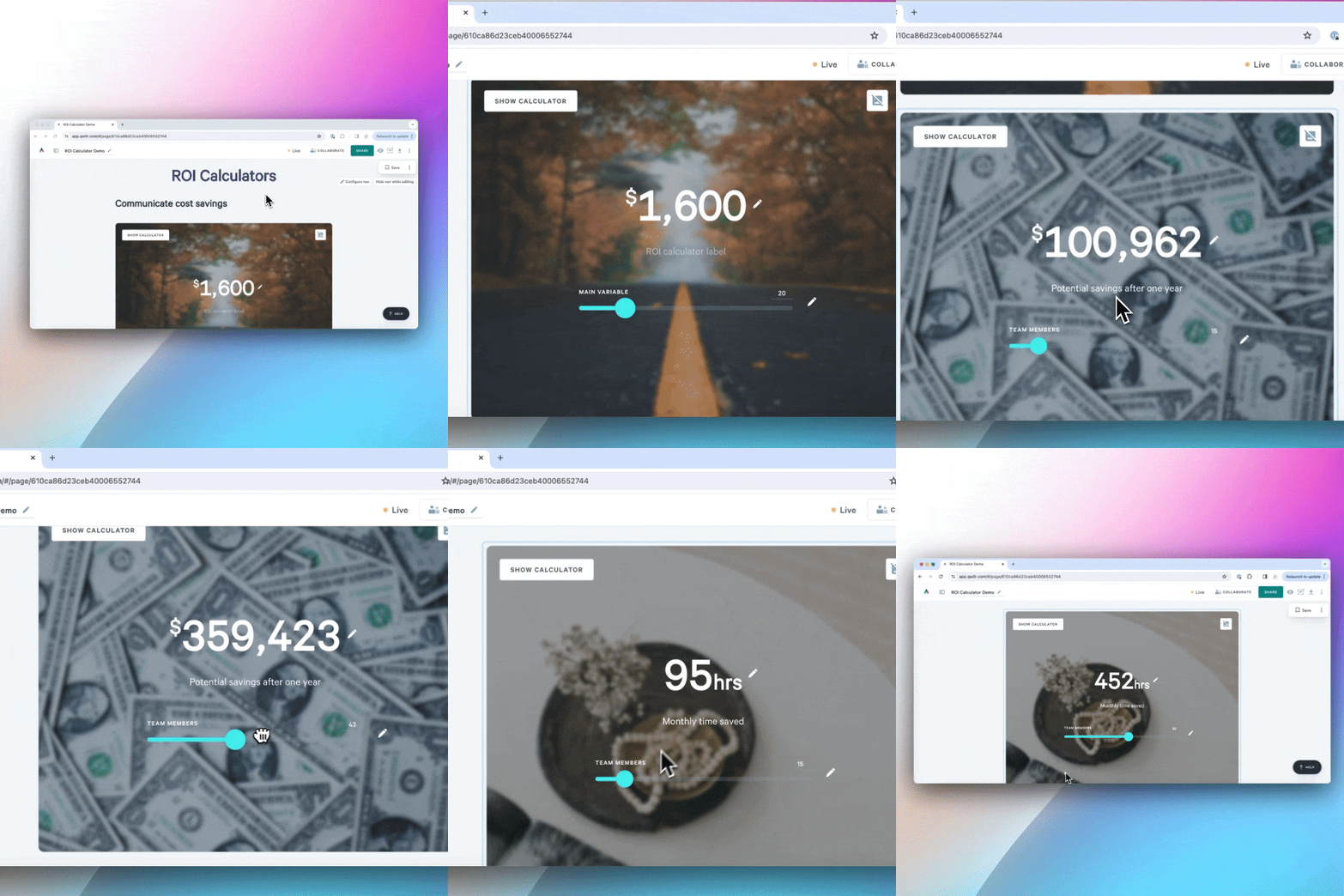
Paired with interactive pricing that maps costs to specific deliverables, the proposal gives every stakeholder something concrete to approve.
6. Design proposals that hold attention
A proposal that holds a buyer's attention long enough to absorb the full commercial argument gives the sales team a stronger position going into follow-up. Qwilr's analysis found that proposals where buyers spend more than four minutes reading see an 11x higher acceptance rate than those reviewed in under a minute.
Qwilr proposals support embedded video, Loom recordings, interactive elements, calendar links, and branded layouts — design elements built to match company name, colors, and fonts without design or development overhead.
Brand controls let teams set a consistent color scheme, fonts, and approved proposal content once.
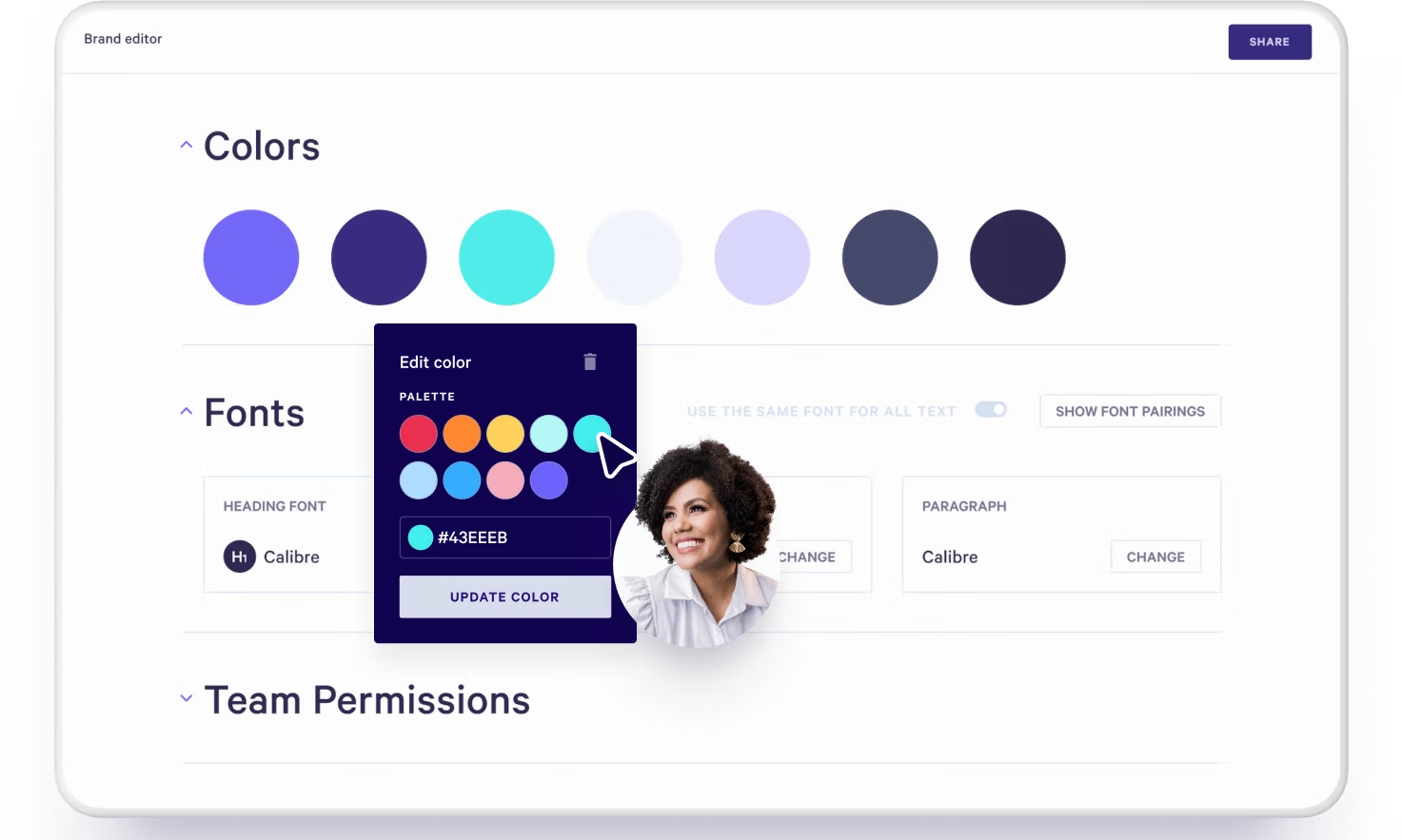
Every proposal that leaves the team looks consistent, professional, and on-brand without a design review before it goes out.
7. Follow up at the right moment
Timing a follow-up to buyer engagement signals gives sales teams a more accurate read on where the deal stands and a stronger reason to reach out. A proposal that receives a second unique view within two hours of the first is significantly more likely to close, signaling that active internal evaluation is underway.
Qwilr sends real-time alerts via Slack or email the moment a buyer opens, engages with, or accepts a proposal. Identity verification shows exactly which stakeholder is viewing and which sections they spent time on.

Sales teams get the context on buyer intent to follow up with the right message at the right moment rather than guessing at buyer intent from a static sent timestamp.
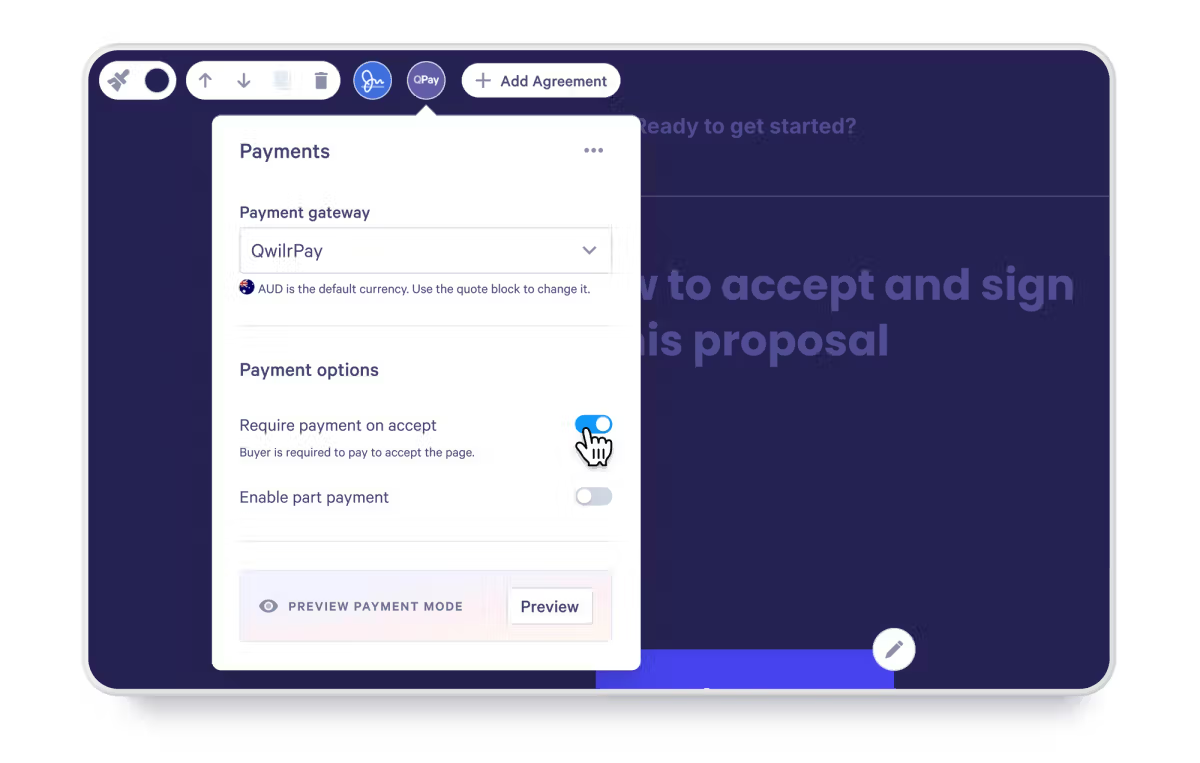
QwilrPay completes the loop: once a prospective buyer is ready to commit, they can sign and pay directly inside the proposal without a separate invoice, payment terms negotiation, or friction between acceptance and revenue collected.
23 Business proposal examples + ready-to-go templates
Qwilr's template library covers 23 business examples across sales, marketing, software development, investment, and internal business cases. Each business proposal template below defines what the proposal type is, when sales teams and agencies send it, and what key information it needs to include to move the deal forward.
1. SaaS proposal
A SaaS proposal is a sales document that software-as-a-service companies use to make the case for adopting their platform. Sales teams send it after discovery, once they understand the buyer's workflow problems and technical requirements.
Lead with the specific operational problems the software solves, quantify the expected impact — time saved, error rates reduced, revenue influenced — and close with customer success and integration details that reduce transition anxiety for IT and operations teams.
Top tip: Highlight customer lifetime value, customer success support, and integration capabilities early. Qwilr's SaaS Proposal Template is a ready-to-use business proposal template that fully integrates interactive pricing, e-signature, and CRM data so sales teams can send a polished, personalized proposal without rebuilding it from scratch for every deal.
2. Mobile app development proposal
A mobile app development proposal is a document that development agencies and freelance teams use to pitch a custom app build to a potential client. It typically follows a discovery brief or RFP where the client has outlined the problem the app needs to solve.
A strong proposal covers the user journey, development phases, testing and QA strategy, scope, and a milestone-based timeline. Portfolio work and client testimonials in a mobile App development template validate that the team can execute against the brief — social proof from comparable projects gives prospective buyers the confidence to approve.
Top tip: Include a clear roadmap with major milestones and deliverables so clients can plan internal resources and set stakeholder expectations before the project begins.
3. Enterprise sales proposal
An enterprise sales proposal is a document that sales teams use when selling complex solutions to large organizations with multiple stakeholders involved in the buying decision. Finance, IT, legal, and operations each evaluate the solution through a different lens — a proposal that speaks only to the champion's priorities loses ground with every other stakeholder in the process.
A strong enterprise sales template opens with a compelling executive summary built around efficiency, scalability, and ROI, then maps proposed solutions to strategic goals with data that gives each decision-maker a concrete reason to approve.
Top tip: Address the pain points and needs of each stakeholder group explicitly. Cross-functional buy-in speeds internal approval and reduces the risk of a late-stage veto.
4. Software development proposal
A software development proposal is a document that development agencies and web development firms use to pitch a custom build engagement. It typically follows an RFP or discovery conversation where the client has defined the technical problem and delivery expectations.
Breaking the engagement into defined phases with milestones, acceptance criteria, and QA checkpoints at each stage gives procurement and IT teams the transparency they need to approve without follow-up questions.
Top tip: Specify testing and quality assurance practices for each development phase. This signals delivery discipline and reduces perceived risk for a potential client evaluating multiple vendors. Concrete deliverables at each milestone give procurement teams something specific to approve.
5. Investment proposal
An investment proposal is a document that founders, project leads, and development teams use to make the commercial case for committing significant capital to a specific business opportunity. They send it to investors, venture funds, or private equity groups evaluating multiple deals simultaneously.
Investors need a clear, structured argument, with market opportunity, growth projections, business model, and risk profile, in a format that supports due diligence without requiring a follow-up conversation to fill in the gaps. Qwilr's investment proposal template builds this structure in, with space for the company name, team background, contractual language, and a business plan summary that keeps the pitch compliant from the first submission.
Top tip: Open with an executive summary focused on market opportunity and a concrete path to ROI — investors decide quickly whether a deal warrants deeper review, and a buried lead loses that window.
6. Marketing proposal
A marketing proposal is a document that agencies and consultants use to pitch a strategy, campaign, or ongoing retainer to a potential client. It follows discovery conversations where both sides have established the client's current market position, goals, and budget parameters.
The marketing proposal template scope covers brand guidelines, design elements, copy, and channel strategy, with KPIs attached to each workstream. The prospective client can evaluate performance against clear benchmarks and client testimonials from comparable campaigns give decision-makers the social proof needed to approve.
Top tip: Attach specific, measurable goals and KPIs to every deliverable — clients approve marketing proposals faster when they can see exactly how the agency will track and report performance.
7. SEO proposal example
An SEO proposal is a document that agencies and consultants use to pitch a search optimization engagement to a client whose organic visibility, rankings, or traffic are underperforming. It typically follows an audit or discovery conversation where both sides have assessed the client's keyword gaps and competitive position.
Break the approach into concrete workstreams — keyword research, on-page optimization, content, link building — with projected traffic outcomes at each stage. The breakdown gives clients a clear picture of what the investment covers and when to expect results in an SEO proposal template.
Top tip: Include a keyword opportunity analysis with estimated traffic potential and separate short-term quick wins from the long-term strategy — buyers need to see both immediate traction and sustainable growth.
8. Paid search proposal (PPC or Google Ads)
Paid search proposals cover a specific commercial need: a client is spending on advertising but not seeing returns that justify the budget. Agencies and paid media consultants send PPC proposals after auditing a client's current ad account performance and identifying gaps in targeting, bidding strategy, or campaign structure.
The proposal maps out a campaign built around the client's ideal customer profile, with projections for return on ad spend (ROAS), cost per acquisition, and conversion rate improvements. Including before/after benchmarks from comparable accounts gives skeptical buyers a data-backed picture of what a well-run paid search program delivers.
Top tip: Break projections down by campaign type — branded, non-branded, and competitor terms — so clients can see exactly where the budget goes and what each segment is expected to return.
9. Influencer marketing proposal
Brands evaluating influencer partnerships need proof that the influencer's audience matches their target market, and clear metrics that define what success looks like. Influencer marketing proposals typically come from content creators, talent agencies, or influencer marketing platforms pitching a paid partnership or campaign collaboration.
The strongest proposals open with target audience demographics and engagement data, map those numbers to the brand's target audience profile, and close with campaign KPIs tied to specific deliverables.
Top tip: Justify each influencer selection with audience fit data, not follower count alone — brands approve partnerships faster when the match between creator audience and target customer is explicit.
10. Branding proposal
A rebrand can touch brand identity, messaging, visual design, and customer-facing communications simultaneously. Branding agencies send branding proposals after completing an initial brand audit and competitive review, once the strategic direction has taken shape.
Open with an honest assessment of the current brand's market perception, followed by a rebranding strategy grounded in market research, mood boards, and comparable case studies. A brand identity proposal template structured this way with research front and center gives decision-makers the confidence that the recommended direction reflects best practices rather than aesthetic preference alone.
Top tip: Lead with a brand audit and competitor research. potential clients approve branding engagements faster when the strategic rationale precedes the creative vision. Include a company name and logo review as part of the audit to make the analysis feel specific rather than generic.
11. Sponsorship proposal
Sponsorship proposals work best when both parties can see a win-win partnership and a clear commercial overlap between their audiences. Event organizers, media companies, and content creators send sponsorship proposals to brands whose target customers align with their existing audience.
The sponsorship proposal template opens with an audience analysis that maps the overlap between the sponsor's target customer and the creator or event's existing reach. The proposal presents tiered sponsorship packages with specific deliverables, exclusivity options, and past campaign results as proof of concept.
Top tip: Include audience overlap data and past sponsorship performance metrics — sponsors approve deals faster when the case for alignment is quantified, not assumed.
12. Content marketing proposal
A content marketing proposal addresses how a client is producing content that isn't generating pipeline, building authority, or ranking in search. Agencies and content strategists send these proposals after auditing the client's existing content performance and identifying where the strategy is underdelivering.
A strong content marketing proposal template covers the full content mix — blog, video, social, email — with a content calendar, channel-specific KPIs, and performance benchmarks from comparable campaigns. Tying every content type to a measurable business outcome gives clients a clear picture of what the investment is built to achieve.
Top tip: Detail a content calendar with publishing cadence and format breakdown. It's easier for prospective clients to approve content retainers when consistency, realistic milestones, and planning are visible from the start.
13. Email marketing proposal
Email remains one of the highest-ROI channels in B2B and e-commerce — and email marketing proposals make that case to clients who are either underinvesting in the channel or running campaigns without a segmentation or personalization strategy.
Agencies and email specialists send these proposals after reviewing the client's current list health, open rates, click rates, and revenue attribution. The email marketing proposal template covers the segmentation approach, automation workflows, content plan, and performance benchmarks from past campaigns, giving the client a concrete picture of what a structured email program delivers.
Top tip: Lead with a segmentation strategy so clients approve email proposals faster when they can see how the agency plans to tailor messaging to different audience segments.
14. Website design proposal
A website redesign touches brand, conversion rate, SEO, and user experience simultaneously. The buying committee in this case often includes marketing, IT, and a senior business stakeholder. Web design agencies and UX consultancies send website design proposals after a discovery process where the client's current site performance, user experience gaps, and business goals have been established.
Mockups, UX research findings, and case studies from comparable redesign projects give decision-makers the evidence they need to approve the engagement with confidence. Framing the website design proposal around conversion rate improvement and long-term brand equity speaks to every stakeholder in the room.
Top tip: Ground the website proposal template in UX research findings from the outset and include relevant case studies from comparable redesign projects. Prospective buyers approve website redesigns faster when the strategic rationale precedes the business proposal design direction and the scope is defined across pages, features, and deliverables.
15. “Spin selling” proposal
When a sales team's conversion rate stalls, the problem often sits in discovery — reps asking surface-level questions and missing the buying signals that move deals forward. A SPIN Selling proposal makes the case for replacing unstructured sales conversations with a four-part questioning framework: Situation, Problem, Implication, and Need-payoff.
Sales consultants and training firms send it to sales leaders whose teams are struggling with deal conversion or inconsistent qualification. A strong SPIN selling template opens with a frank assessment of where the current process breaks down, introduces each question type with real examples, and closes with outcome data from teams that have adopted the framework.
Top tip: Map each SPIN component to a specific gap in the client's current sales process — the more precisely the methodology connects to their situation, the stronger the case for adoption.
16. “MEDDPICC” proposal
Late-stage deal losses and unreliable forecasts share a common root cause: qualification gaps that went undetected until the wrong moment. The MEDDPICC/MEDDIC proposal makes the case for a structured eight-component framework — Metrics, Economic Buyer, Decision Criteria, Decision Process, Paper Process, Identify Pain, Champion, Competition — that surfaces deal-critical intelligence earlier in the sales cycle.
Revenue leaders and sales enablement consultants send this proposal to organizations losing deals late in the pipeline or presenting forecast numbers leadership can't trust. The proposal opens with a diagnosis of where the current qualification process breaks down, then presents MEDDPIC as a repeatable framework for catching those gaps before they cost a deal. For something simpler, the MEDDIC template is also a
Top tip: Anchor the proposal in pipeline and forecast data from the client's own sales cycle. Revenue leaders approve methodology changes faster when the cost of the current approach is quantified.
17. “MEDDIC” Proposal
MEDDIC — Metrics, Economic Buyer, Decision Criteria, Decision Process, Identify Pain, Champion — gives mid-market sales teams a six-component qualification structure that produces more accurate forecasts and fewer unqualified deals consuming pipeline. A MEDDIC proposal pitches that framework to organizations that need more rigor in discovery without the added complexity of an enterprise-grade qualification process.
Sales consultants send it after identifying that the client's current approach to qualification is inconsistent across reps, producing a pipeline that looks healthy until late-stage losses reveal the gaps. An effective business proposal contrasts current qualification habits with what a structured framework produces in close rate, forecast accuracy, and average deal size.
Top tip: Include before/after pipeline metrics from teams that have adopted MEDDIC — the clearest argument for a methodology change is what the numbers looked like before and after.
18. “Challenger sales” proposal
Relationship-led sales approaches produce long cycles and late-stage losses — particularly in competitive markets where buyers have already done their research before the first call. The Challenger Sales model addresses that directly, built around three rep behaviors: teaching buyers something new about their business, tailoring the message to each stakeholder, and taking control of the commercial conversation.
Sales training firms and revenue consultants send a Challenger Sales proposal to organizations where reps default to rapport-building over commercial insight. The proposal opens with a clear-eyed assessment of where the current approach leaves value on the table, introduces the three behaviors with real examples, and builds the case with outcome data from organizations that have adopted the model.
Top tip: Lead with an insight that reframes how the client thinks about their own sales problem — a Challenger Sales Methodology template should demonstrate the methodology by practicing it.
19. “Mutual Action Plan” proposal
A standard proposal asks the buyer to evaluate and decide. A Mutual Action Plan assigns milestones, owners, and deadlines to both the vendor and the buyer, creating shared accountability from the first touchpoint through to signature.
Sales teams send mutual action plans when deals involve multiple stakeholders, extended timelines, or complex procurement requirements that a one-sided proposal can't adequately address. A strong mutual action plan opens with the agreed commercial goal, maps every step required to reach it, assigns clear ownership at each stage, and identifies the blockers most likely to slow progress.
Top tip: Build the timeline around the buyer's internal deadlines. A Mutual Action Plan template that maps to the client's procurement cycle, budget approval process, or go-live date creates urgency that a standard proposal never does.
20. Digital marketing proposal
A client whose paid, organic, social, and email channels aren't producing a consistent pipeline has a strategy problem, and a digital marketing proposal makes the case for fixing it across all at once. The document covers channel mix, strategy, deliverables, and KPIs, structured so the client can evaluate the approach against their specific growth goals.
Digital marketing agencies send it after auditing the client's existing channel performance and identifying where spend and effort are generating the weakest returns, whether that's lead volume for a B2B software company or purchase conversion for an e-commerce brand. A digital marketing proposal template can save time and ensure consistent formatting, allowing teams to quickly tailor each proposal to specific client needs while maintaining a professional look across every document that goes out.
Top tip: Open with a channel-by-channel performance audit before presenting the strategy — clients approve digital marketing proposals faster when the recommended approach connects directly to gaps in their current results.
21. Graphic design proposal
Creative direction is only half the argument a graphic design proposal needs to make. The other half is scope clarity involving defined deliverables, revision rounds, and file formats that give the client confidence the engagement won't expand beyond the agreed parameters once work begins.
Graphic designers and creative studios send this proposal after a brief or discovery conversation where the client has outlined the project scope, audience, and creative direction. Presenting the approach visually with mood boards, style references, or preliminary concepts gives clients a concrete sense of the direction before the project begins.
Top tip: Include a clear scope of work with defined revision rounds and deliverable formats.
22. Real estate proposal
Property investment decisions hinge on the quality of the opportunity and the credibility of the numbers behind it. A real estate proposal presents property details, market analysis, projected returns, and risk factors in a format that gives investors the detail they need to evaluate the deal without a follow-up meeting to fill in gaps.
Real estate investors, developers, and agents send it to potential investors or financing partners, evaluating multiple opportunities simultaneously. Qwilr's real estate investment proposal template includes an embedded capital growth calculator that lets investors model projected returns against different assumptions, giving them a direct way to interrogate the numbers rather than accept static projections.
Top tip: Lead with a concise summary and investment thesis before moving into property details, and use a Google Docs-style editable proposal format or an interactive template so investors can interrogate the numbers directly rather than accept static projections.
23. Market research proposal
Behind every strong market research proposal is a clear answer to one question: what business decision does this research need to inform? Without that anchor, a proposal risks presenting methodology for its own sake which is technically sound but commercially unconvincing.
Market research agencies and independent researchers send this proposal to clients who need data to support a specific strategic decision like a product launch, market entry, competitive repositioning, or audience segmentation exercise. The market research proposal template covers research objectives, methodology, sample design, timeline, and deliverables, with past research examples that validate the team's ability to produce findings that translate into concrete action.
Top tip: Connect every research objective to a specific business decision the potential client needs to make. Clients approve research proposals faster when the output has a clear, named use case and when relevant case studies from past research projects demonstrate that the team's findings translate into concrete action, not just key information delivered in a report.
Upgrade your business proposals
A business proposal template gives sales teams a repeatable starting point — one that covers the sections buyers expect, in a structure that moves the commercial conversation forward without building from scratch on every deal.
Qwilr's business proposal templates are built for specific industries and proposal types — ready-to-use, modular enough to add or remove sections in minutes, and fully customizable without any coding. Every proposal that goes out supports e-signature, interactive pricing, and real-time engagement tracking, so the process from send to signature runs inside a single tool and helps sales teams write more proposals, close more deals, and build trust with prospective buyers from the first interaction.
Book a demo or start a 14-day free trial to see how it works.
About the author

Kiran Shahid|Content Marketing Strategist
Kiran is a content marketing strategist with over nine years of experience creating research-driven content for B2B SaaS companies like HubSpot, Sprout Social, and Zapier. Her expertise in SEO, in-depth research, and data analysis allow her to create thought leadership for topics like AI, sales, productivity, content marketing, and ecommerce. When not writing, you can find her trying new foods and booking her next travel adventure."
Frequently asked questions
A proposal should be as long as necessary to convey your value proposition clearly and compellingly. That said, aim for brevity and relevance. If you can say it powerfully in five pages, don't stretch it to ten.
In a world of black and white, be a burst of color. Use visuals, infographics, and even videos if your platform allows it. Tailor your proposal to speak directly to your prospect's needs and pain points. And don’t forget the power of a compelling story—people remember stories far longer than specs and numbers.
Overlooking the 'why.' It's easy to get caught up in the what and the how (what you're offering and how you'll do it), but if you forget to explain why it matters to them, you've lost before you've begun. Always link your services or products back to their benefits.
Yes, but with a twist. Pricing should be transparent but also flexible. Use interactive pricing tables that allow your prospects to adjust scope based on their budget.
Imagine planting a seed and not watering it… Follow-ups with your prospective client are crucial. They show you're genuinely interested in their business and open the door for feedback or questions. Timing is key, though—wait a day or two, not an hour (and definitely not a week!)