Proposal Mistakes That Slow Deals, Kill Trust, & Frustrate Buyers (According to Sales Experts)

I still remember the time I nearly lost a million-dollar deal.
I was working in investment sales, and everything had gone to plan. So when the client replied, flagging a clause that didn’t apply to them (a leftover from an old template), I froze. What should have been a formality turned into a review process I hadn’t planned for.
We still closed, but not without cost. The buyer’s confidence dipped, our internal credibility took a hit, and the deal moved more slowly than it should have.Play that same scene out in B2B sales, and the stakes get even higher. Proposals often become the moment when small cracks show that buyers can't unsee.
To understand the common proposal mistakes that quietly derail deals, we spoke to sales and RevOps experts who see these patterns every day. Based on their insights, we’ve broken these down into three groups:
- Mistakes buyers feel immediately
- Mistakes that sales reps overlook (until they hurt close rates or credibility)
- Mistakes that RevOps and sales leaders shouldn't ignore
If you’ve ever watched a well-qualified deal slip into silence, this list might explain why. Short of time? Check out our video on the top mistakes and how to solve them:
Mistakes that frustrate buyers and stall deals
Some proposal mistakes create confusion, hesitation, or extra work for your buyer, and once that happens, it becomes harder for them to move forward with confidence. If you're a sales rep, you've probably seen it happen when deals that were tracking well suddenly fall silent.
1. Making buyers do the work
We don’t always see it from the other side, but receiving a proposal can feel like opening a to-do list for your customer.
Quite often, they have to assemble the pieces (the PDF in one place, the pricing table in another tab, contracts and approval steps buried in an email thread).
In B2B sales, every small delay compounds. If a buyer has to ask where to find the pricing, confirm the latest terms, or forward attachments to legal, the proposal has already started working against you. The friction builds before anyone says no, and usually, no one says anything at all.
Blake Ziolkowski, Sales Manager at LaunchNotes, mentions why they moved away from manual, multi-step proposal processes. With Qwilr, they now consolidate design, pricing, terms, and e-signature in a single flow — so buyers can review and approve everything in one place.
“We created a short version of our terms and included them in the quote pricing module. Then, when a customer e-signs, they’re accepting the price, terms, and package we’ve put together for them.”
He adds, “With Qwilr, we can be growing the business even while grocery shopping!”
2. Overcomplicating what should be simple
One of the biggest mistakes in proposal writing is thinking that more content equals more value. So teams add everything (the product overview, team bios, implementation steps, optional extras), hoping it shows thoroughness.
But for the buyer, it creates noise.
The most effective proposals are the ones that make it easy to say yes. They tell a clear story: here's your problem, here’s how we’ll solve it, here’s what it will take. Anything that distracts from that makes it harder to focus, leading buyers to disengage quickly.
So what’s the best way to keep things focused?
Start with what the buyer actually needs to see to move forward, not what you feel obligated to include. If it doesn’t answer a question they’ve asked, support a goal they’ve shared, or clarify what happens next, it probably doesn’t belong.
According to Qwilr data, proposals with fewer than six content blocks perform significantly better than longer ones. In essence, a shorter, sharper proposal shows that you understand the decision they’re trying to make—and makes it easier for them to make it.
3. Using static documents in a collaborative world
In a world where buyers are scanning, sharing, and making decisions collaboratively, the static proposal format is starting to show its age. PDFs should essentially be archived, yet many organizations still rely on them as their default.
And then there’s buyer attention, which continues to shrink, and humans now take eight seconds or less to decide whether to engage or move on. But most proposal strategies don’t reflect that reality. Buyers rarely read every paragraph. They skim, jump ahead, or forward it to someone else who’s looking for something entirely different.
According to Qwilr’s analysis of over 1 million proposals, proposals with interactive elements saw acceptance rates up to 2x higher — not because they look better, but because they help buyers understand and engage faster.
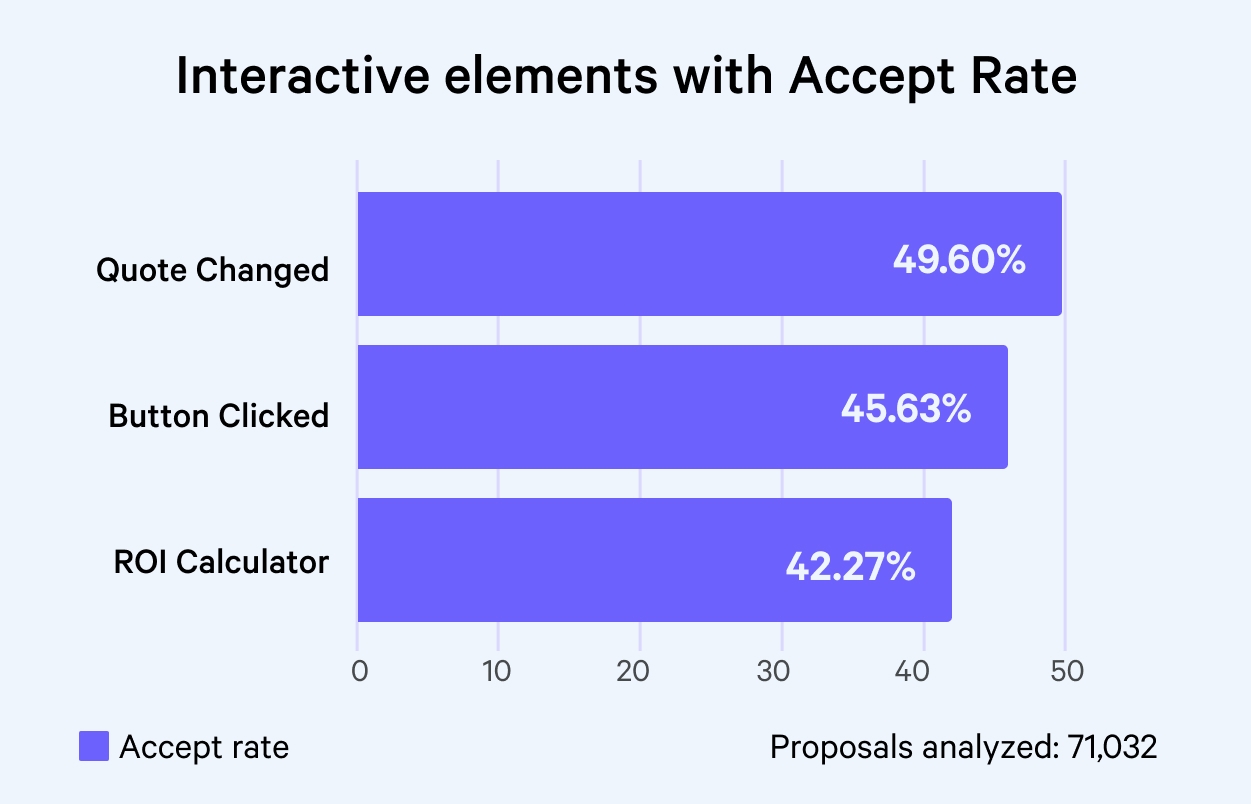
For example, imagine you’re sending a SaaS proposal to a CFO and operations lead. Instead of explaining ROI in a paragraph, you could embed a calculator that lets them model it themselves. Instead of attaching a pricing table as a separate sheet, you could use interactive pricing blocks that let them explore different packages in real time.
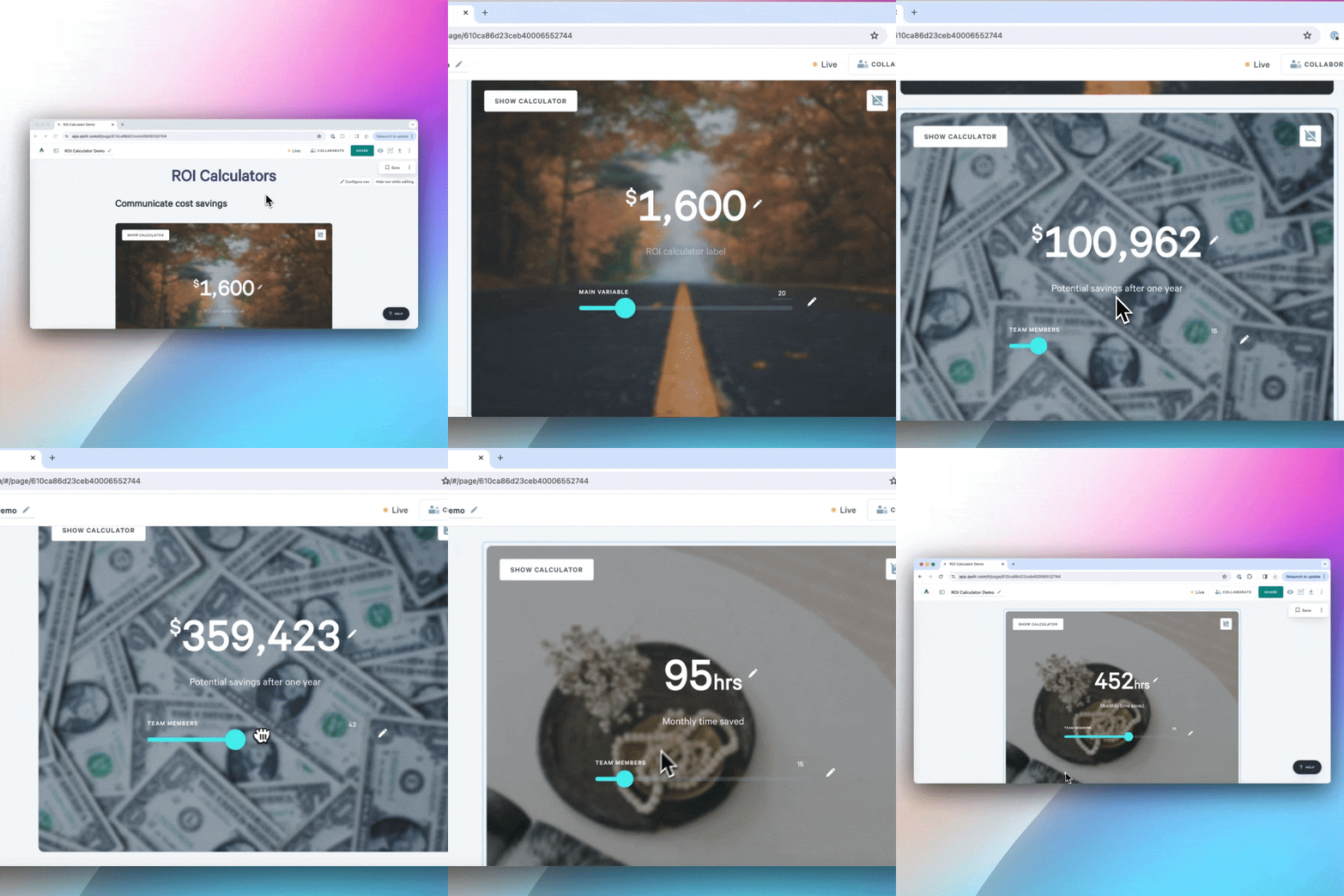
These features are built into Qwilr, so instead of adding extra work, you’re guiding the buyer through the information they care about — in the format they’re most likely to act on.
4. Weak branding that weakens trust
There’s a persistent myth that branding doesn’t matter in the proposal stage and that once a buyer is this far into the process, design is just fluff.
But presentation is part of the pitch. When a proposal feels clunky, misaligned, or inconsistent with how you've shown up so far, it plants quiet doubt.
If the formatting is messy, the fonts clash, or the logo looks like an afterthought, buyers start asking themselves subtle questions, such as: Is this how they operate behind the scenes? If this is rushed, what else might be? They might not say them out loud…but they do.
This is where Qwilr becomes more than just a document builder.
Your brand guidelines, such as fonts, colours, logo, and layout, can be built into your proposal templates from the start. So every proposal looks like it was designed by your creative team, even when it’s sent by someone on the sales floor, ensuring same polish and consistency every time.
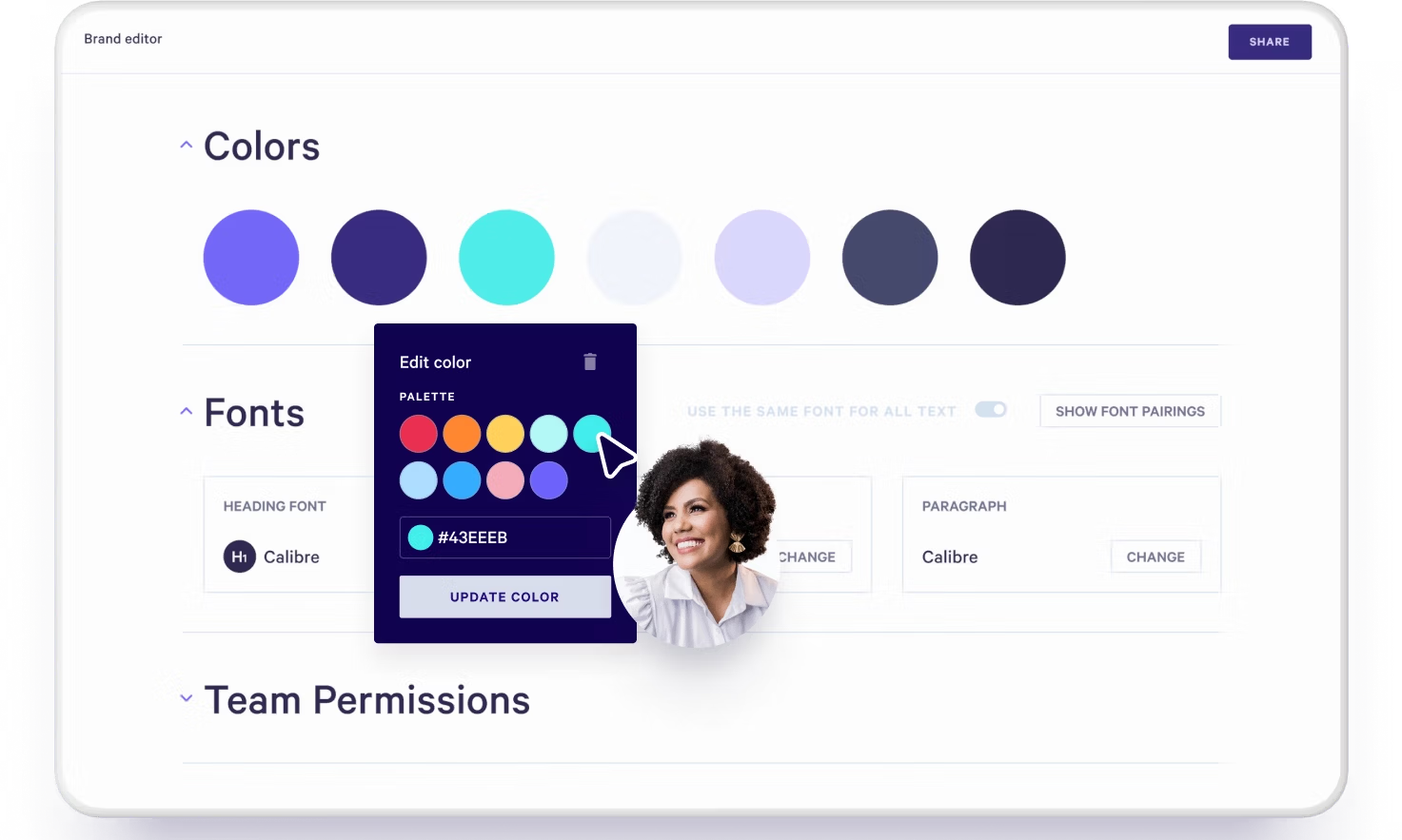
A clean, consistent, on-brand proposal shows care, attention, and credibility, all of which shape how buyers perceive the value of what you’re offering.
Mistakes that slow down your sales team
Now that we’ve looked at how proposals can confuse or frustrate buyers, it’s worth shifting focus. In this section, we’ll look at the internal mistakes that slow teams down and make it harder to scale proposals.
5. Rebuilding every proposal from scratch
Writing proposals from scratch might feel like the custom approach, but it breaks focus, delays follow-ups, and adds hidden friction to every deal. And while it might feel like a sign of thoroughness, it’s often a sign that your proposal process isn’t built to scale.
Clum Creative is a good example. Founder Mike Clum had been stuck in a 12-step offline sales cycle that made it hard to respond quickly, let alone stand out. As a video production agency, sending print-and-scan PDFs meant they couldn’t even showcase their work. The process was slow, disconnected, and holding them back.
With Qwilr, the team now sends around 80 proposals a month. Everyone can access the dashboard, pull in the right content blocks, and send polished, interactive proposals minus a designer. What they have a achieved is shorter sales cycle, a faster process, and a clearer brand experience. As Mike puts it:
“My business has gone from $400k to $2 million since starting using Qwilr, and I give a lot of the credit to Qwilr.”
Similar to Clum, most scalable teams work from modular, well-structured templates, because they’ve done the work to make those templates feel personal without starting over every time.
6. Handoff hell between sales, legal, and finance
Umberto Anderle, Cofounder at HowdyGo has seen firsthand how chaotic proposals can get once legal or finance steps in.
“Normally when legal & security teams are brought in to sign off on a deal. That's when most of the back and forth occurs and when deals can drag on a bit with revisions etc.” he says, adding it is the biggest friction point in the proposal process.
The solution for this may seem obvious, but it’s not always easy to implement. For example, enterprise teams like Shippit build cross-functional systems where proposals are shaped collaboratively from day one. But not every company has that kind of structure, and without it, visibility breaks down fast.
That’s why Qwilr helps reps stay one step ahead. You can see exactly what buyers are reading and clicking on — block by block — so you know where their attention is going. When you understand what matters to them, you can tailor follow-up and keep the deal moving without getting stuck in circles.
7. Separating the proposal from the signature
One of the things we’ve heard from hundreds of sales teams is that, the moment they ask a buyer to switch platforms — to sign a contract, review final pricing, or make a payment, deals start to wobble.
That’s why Qwilr brings everything into one place — the proposal, the agreement, eSignature, and even payment.
Here’s how it works:
- Agreements in Qwilr are legally vetted and fully branded. Buyers can review terms and sign both the pricing and agreement in one seamless flow — with tracked, timestamped, and legally binding eSignatures built right into the proposal.
- QwilrPay lets buyers make payment as soon as they’ve signed. You can offer one-off payments, deposits, or subscription-based options using Stripe which is built right into the same experience.
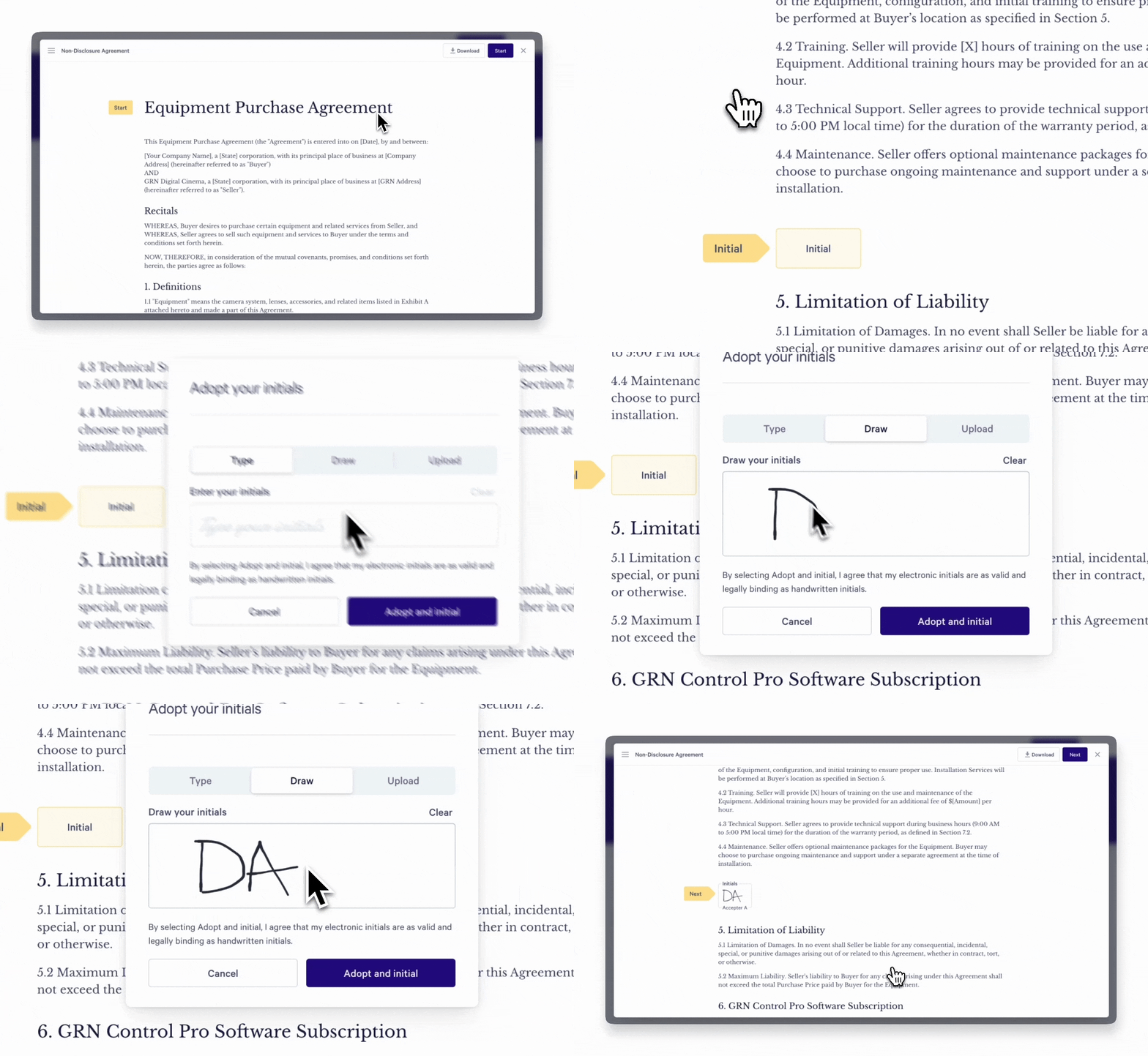
Buyers can review, approve, sign, and pay, without ever leaving the proposal. And because it’s all one experience, it’s not just faster for them, it’s more predictable for you.
8. Flying blind after you hit send
Without visibility, your next step in the proposal process is often a guess. Did they open it? Did they share it? Are they even interested anymore?
From our research on 1 million proposals, two clear patterns emerged:
- Time spent = buyer intent. Proposals viewed for more than 4 minutes had an acceptance rate of 41%. Those viewed for less than a minute? Just 3.5%.
- More eyes = more momentum. When at least two additional unique users viewed a proposal within the first five days, the acceptance rate nearly doubled.
Of course, you can’t track all this without analytics. And that’s exactly why we’ve built Qwilr’s proposal analytics to give reps and teams real-time insight into buyer engagement.
This way, you can plan your next steps instead of watching deals fall through the cracks, whether it is outreach (previously shared), or go deeper by knowing with confidence when new stakeholders are getting introduced, or track the history and see when buyers become engaged and disengaged.
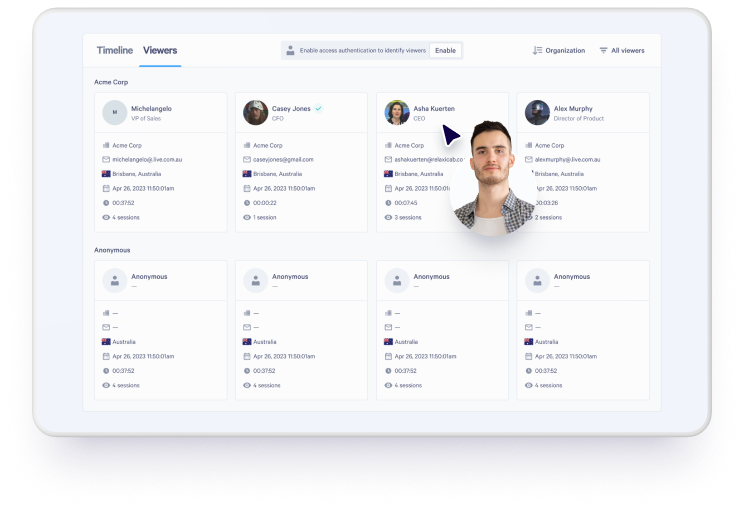
Take, for example, Matt Anson from STAFFLINK, who got a second chance at a closed-lost deal, not through guesswork, but through Qwilr’s real-time alerts.
“We sent a proposal to a prospect who wanted a website redesign, but they decided to explore other options. Six months later, I got an alert from Qwilr that they’d reopened the original proposal. I reached back out — and they ended up signing up for more than we had originally pitched.”
Proposal mistakes that RevOps and Sales Leaders shouldn't ignore
Some proposal mistakes that don’t just slow down reps, but also stall revenue, and the ones RevOps and Sales Leaders can’t afford to ignore.
9. Sending proposals before there's real alignment
One of the biggest mistakes in B2B proposals is confusing interest with readiness.
Just because a buyer seems engaged doesn’t mean they’re ready for a proposal. If unchecked, this may lead to extra rework — revised proposals, additional explanations, and delays caused not by lack of fit, but by moving too soon.
Sales qualification exists to protect you from this exact pattern. It helps separate genuine readiness from surface-level signals. Who else needs to see this? What happens once you send it over? Is the budget confirmed? Are there any blockers they’re still working through?
These questions don’t take long, but they reveal whether the buyer is actually ready or just being polite.
Mael Hartl, Head of RevOps at Shippit, put it simply:
“One that’s often missed is proper pre-proposal alignment. Too many teams rush to send a deck without confirming key details like appetite, authority, or timing. It’s far more effective to qualify properly upfront.”
You don’t need to delay proposals, but you do need to check the ground beneath them. Tools like Qwilr make it easier to support this handoff by letting you embed a short video walkthrough or summary directly in the proposal, so everything the buyer needs to act on is in one place.
10. Avoiding automation to stay “flexible”
When teams send proposals, automation rarely enters the picture, because the current process technically still works ( late-night edits, manual copy-paste from the CRM, and frantic checks to make sure pricing is up to date.) The question is, do we need such pressure to accommodate the belief that automation means rigidity? Imagine what happens when it’s done right:
- CRM data syncs directly into your proposal, without copying over names, roles, or totals
- Approval status updates in Slack automatically when a proposal is viewed or signed
- Pricing pulls from live product data, so it’s always current and compliant
- Proposal status pushes back into your CRM, keeping pipeline views accurate without manual updates
- Zapier connects it all
With Qwilr’s flexible integrations — HubSpot, Salesforce, Zapier, Slack — you automate without losing ownership. The result is a smarter, smoother process that still feels like yours.
11. Letting templates age out quietly
Finally, many teams build a great template set once, and never touch them again; not realising that outdated branding, pricing, broken links, and expired terms quietly chip away at your credibility.The best-performing teams treat templates as living assets, evolving them every quarter to reflect new products, GTM shifts, and buyer feedback. Sometimes it’s easy with a few tweaks in your Qwilr dashboard. Other times, it’s not. That’s where our design team can help with:
- Template upgrades
- Template refreshes
- Branding refreshes
- Custom design work
If you’ve been struggling to keep your templates fresh, we’ll meet you where you are, and help you get them where they need to be. Have questions? Reach out to docs@qwilr.com.
Proposal mistakes are fixable
We’ve worked with hundreds of sales teams, from high-velocity SaaS startups to multi-stakeholder B2B enterprises, and we’ve seen every proposal mistake shared above play out.
But every one of them is fixable. If you spotted yourself in a few of these, it means you’re paying attention to what’s slowing your proposals and where the change starts.
Pick one area to clean up this week. Then keep going. Proposals don’t have to be perfect. But they do need to evolve with your team. The good news is that you don’t have to do it alone and we are here to help!
Book a demo with our team to see how Qwilr can transform your proposal workflow from pre-alignment to close.
About the author
Taru Bhargava|Content Strategist & Marketer
Taru is a content strategist and marketer with over 15 years of experience working with global startups, scale-ups, and agencies. Through taru&co., she combines her expert skills in content strategy, brand management, and SEO to drive more high-intent organic traffic for ambitious brands. When she’s not working, she’s busy raising two tiny dragons. She's on a first-name basis with Mindy Kaling.