
Grant proposals get rejected when teams skip the groundwork. Writing starts before understanding what specific foundations fund, before budget numbers are finalized, and before gathering the statistics, case studies, and testimonials needed to prove impact.
The solution starts with preparation. Successful proposals research funders thoroughly, align stakeholders on budget and timeline, and compile data that proves both need and capacity to deliver.
This guide breaks down the grant writing process into a structured system. From funder research and budget planning to narrative development and final submission, each section provides concrete steps that strengthen proposals and improve funding outcomes.
Key takeaways
- A grant proposal connects project goals with needed financial support, requiring a clear narrative that compels action.
- Essential elements of a grant proposal include a summary, problem definition, project description, outcomes, budget, organization info, and a call to action.
- The proposal should maintain a hopeful tone, showing that the problem can be tackled and inviting donors to be part of the solution.
- The budget section should detail project costs and demonstrate responsible financial management.
- The proposal should conclude with a clear and convincing call to action, emphasizing the difference donors can make.
What is a grant proposal?
A grant proposal is a formal funding request submitted to foundations, government agencies, or corporate sponsors. The document outlines a specific project or program, explains the problem it addresses, and details how funding will be used to create measurable change.
Winning grant proposals include a project narrative, detailed budget, and supporting documents that prove credibility. Funders evaluate project alignment with their mission, organizational capacity to execute, and whether the requested amount matches realistic needs.
The proposal serves as both a persuasive argument and a practical plan. Funders evaluate whether your project aligns with their mission, whether your organization can execute effectively, and whether the requested amount matches realistic project needs.
Who is likely to write grant proposals?
Organizations that depend on external funding to operate programs and advance their missions write grant proposals.
- Nonprofit organizations submit proposals for program funding, operational costs, and capacity-building initiatives
- Universities request grants for research projects, lab equipment, faculty positions, and student scholarships
- Medical institutions seek funding for clinical trials, public health programs, and research into disease treatment and prevention
- Arts organizations apply for project grants to support exhibitions, performances, community programs, and facility improvements
- Government agencies and NGOs write proposals for international development work, disaster relief, policy research, and social service programs
- Graduate students and early-career researchers write grant applications for fellowships, dissertation funding, and pilot projects that launch their academic careers.
Grant writing typically falls to development directors, program managers, or dedicated grant professionals. Templates like Qwilr's Grant Proposal Template can streamline the grant writing process by providing pre-structured sections that ensure all required components are included.
Preparation is key: What to think about before you start writing your proposal
A well-crafted proposal communicates the significance of your research to a broader audience. The grant writing process requires five essential preparation steps before drafting begins: aligning on funding goals, establishing organizational credibility, gathering supporting data, identifying the right funding agencies, and researching their specific priorities.
The following steps show how to prepare before writing begins.
Align on funding requirements and goals
Grant teams need to align on three core questions before writing begins:
- How much funding does the project require
- What specific outcomes will the funding achieve
- What timeline is realistic for completion
Define the problem clearly in the need statement using data, statistics, and anecdotes focused on community need. Misalignment at this stage leads to budget gaps, scope creep, and proposals that fail to convince funders the project is well-planned. Schedule a stakeholder meeting with program leads, finance staff, and leadership to document funding needs, establish milestones, and break down cost categories.
"I begin by thoroughly analyzing the grant requirements to ensure I fully understand what's expected," says Danielle Hicken, Proposal and Grant Writer at Tutored by Teachers. "Once I have a clear grasp of what's needed, I compile a comprehensive list of key items before diving into the research."
Review sample proposals from successful applicants (if available through the funding organization) to understand what a winning grant proposal looks like. Pay attention to anticipated outcomes, budget justification, and how applicants structured their actionable plans.
For teams managing complex budgets across multiple stakeholders, tools like Qwilr's interactive pricing tables allow budget modeling and real-time collaboration on financial planning.
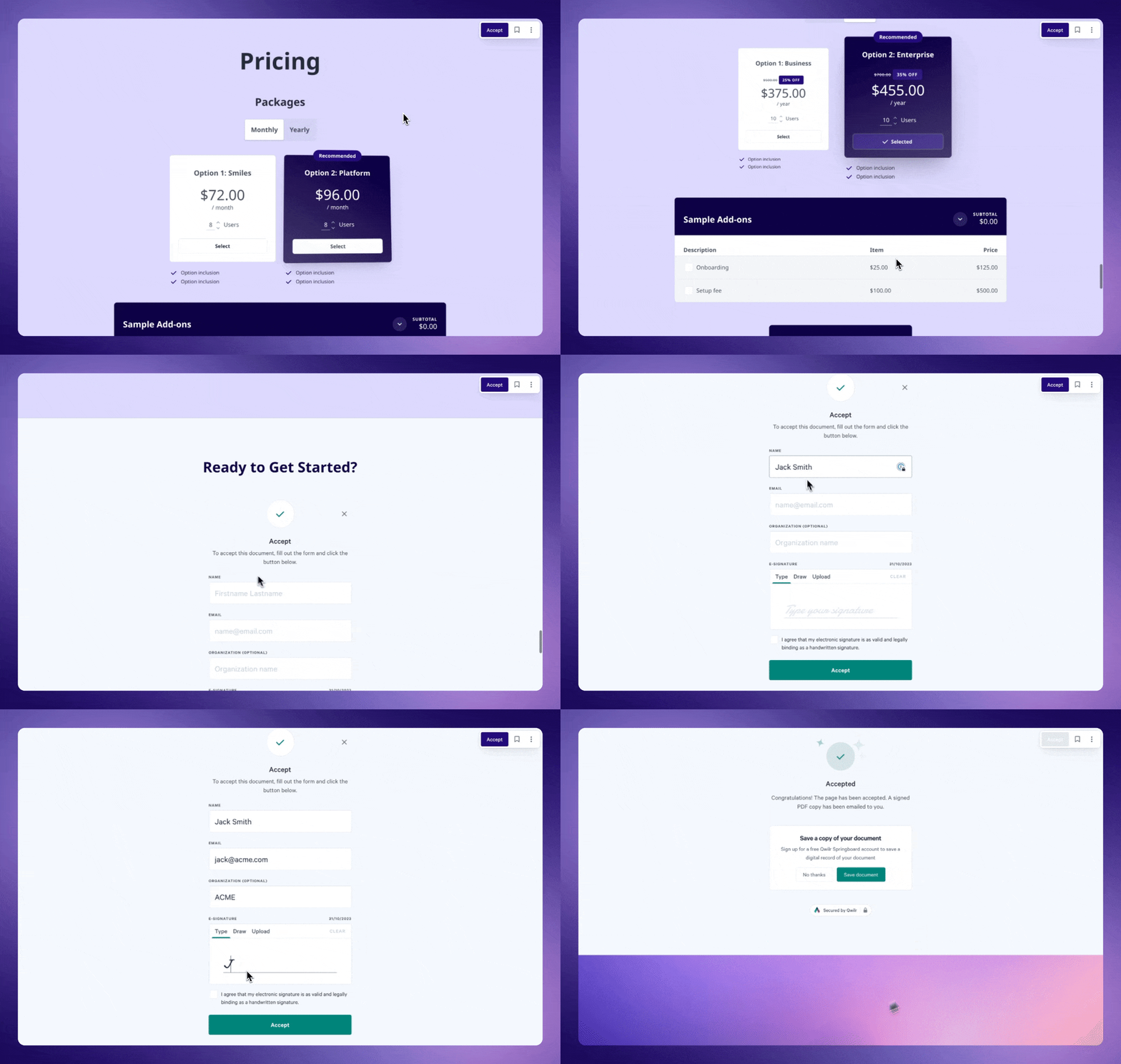
Stakeholders can review scenarios, adjust line items, and provide input without version control chaos across email threads and spreadsheets.
Establish organizational credibility before grant writing
Funders evaluate organizations on their ability to execute. Credibility requires showcasing past performance, team expertise, and institutional capacity to deliver results.
Build your credibility package with:
- Relevant publications, presentations, patents, or media coverage
- Team qualifications: degrees, certifications, years of field experience
- Testimonials or letters of support from respected partners, community leaders, or past funders
- Preliminary data or pilot project results that validate your concept
- Progress reports from completed projects showing successful outcomes
- Literature reviews demonstrating knowledge of current research and best practices
The specific evidence that matters varies by organization type. Universities should highlight departmental strengths, institutional resources, and research infrastructure. Nonprofit organizations should emphasize program outcomes, financial stability through audited statements, and board member expertise.
Gather quantitative and qualitative data to support claims
Data serves three functions in grant proposals:
- Proving the problem exists
- Showing organizational capacity to address it
- Showing the proposed solution can work at the intended scale
Research found that the median total grant award was $246,800, but award sizes varied significantly based on how well organizations demonstrated need with concrete data. Organizations with clear quantitative and qualitative evidence secured funding at substantially higher rates.
Assemble quantitative data, including market research, demographic statistics, survey results, and performance metrics. Collect qualitative information like case studies, stakeholder feedback, and expert opinions that provide context.
Then, collect qualitative information that provides context to the numbers. Case studies, stakeholder feedback, or expert opinions give a human perspective to statistics and establish a deeper understanding of the problem.
The combination proves the problem exists and your organization understands it. A homeless services nonprofit might cite regional homelessness rates (quantitative) alongside testimonials from unhoused individuals describing barriers to housing (qualitative).
Identify funders whose priorities match your mission
Funder research identifies which organizations fund projects like yours, how much they typically award, and what criteria they use to evaluate applications. Start by mapping potential funding sources across categories: government agencies, private foundations, corporate sponsors, or internal funding mechanisms.
For each prospect, investigate:
- Stated funding priorities and focus areas
- Average grant size and typical funding ranges
- Geographic or demographic restrictions
- Review criteria and decision-making process
- Past grantees, particularly organizations similar in size and mission
- Proposal requirements, including page limits, formatting guidelines, and whether a cover letter is required
Look beyond the obvious choices. Emerging foundations, corporate social responsibility initiatives, or cross-sector partnerships may find the work compelling even when larger, well-known funders pass.
Research funder giving patterns and decision criteria
Personalization determines whether proposals resonate with funders. Research what they prioritize, how they define success, and what decision criteria they use. Review their recent grants to identify patterns in funding amounts, project types, and geographic focus. Read annual reports and program guidelines to understand evaluation criteria.
Identify what they value most. Some funders prioritize innovation and pilot projects. Others want proven models ready to scale. Study sample proposals from past awardees when the granting organization makes them available. Note the research design, research methods, and how applicants framed their research questions. This shows you what a strong proposal looks like in their eyes.
"To stand out, tailor your writing to directly address the specific needs of the grantor. For instance, if they seek literacy support, focus on showcasing your organization's strengths in that area, rather than highlighting unrelated achievements, like success in math. Every sentence in your proposal should clearly align with what the grantor is seeking."
Danielle Hicken, Grant Proposal Writer
Use this research to shape how the proposal tells its story, which data points to emphasize, and how to present organizational credentials.
Grant proposal key elements to include
Now, we'll guide you through all the essential parts of a successful grant proposal process, from outlining the benefits of your project to setting a sensible budget.
1. Executive summary
The executive summary condenses the entire proposal into one page that captures the problem, solution, and expected impact. This section determines whether reviewers read further or move to the next application.
Write this last and include:
- The problem being addressed and its urgency
- The proposed solution and what makes it viable
- Expected outcomes and measurable impact
- Total funding request
Avoid jargon and use concise language—senior leaders often read only this section to decide whether to advance the proposal.
2. Organization introduction
The organization's introduction establishes why your team has the expertise, resources, and track record to execute the proposed project successfully. Build funder confidence by sharing:
- How long the team has worked together
- Major accomplishments and past project successes
- Relevant expertise and credentials of key personnel
- Organizational mission and how this project advances it
Highlight the skills and experience that directly relate to the proposed work. A health nonprofit applying for mental health programming should emphasize clinical staff credentials, past mental health initiatives, and community partnerships in that specific area.
Focus on proven results and specific qualifications. Include completion rates from past programs, certifications held by staff members, or partnerships with established institutions in the field. Use active voice and adequate white space to make this section scannable. Dense paragraphs discourage reviewers from engaging with your organizational strengths.
"Storytelling is crucial when applying for a new grant or responding to an RFP. You must assume the grantor knows little to nothing about your organization, so it's essential to illustrate who you are and how you can add value to their project. By crafting a compelling narrative, you help them understand your mission, capabilities, and the unique ways you can meet their needs. This not only highlights your expertise but also makes your proposal more engaging."
Danielle Hicken, Proposal and Grant Writer at Tutored by Teachers
3. Need statement
The problem statement explains the problem the project addresses, its urgency, and its impact on the affected population. Convince funders the problem warrants investment with specific evidence:
- Statistics and studies that quantify the problem's scale
- Demographic data showing who is affected and how many people
- Stories or case examples that illustrate real human consequences
- Trends showing whether the problem is growing or evolving
Use concrete data wherever possible. A food bank shouldn't state "many families face hunger." Instead, cite "4,200 families in Jefferson County experienced food insecurity in 2024, a 23% increase from 2023 according to the County Health Department."
Maintain a tone that acknowledges the problem's seriousness while showing it can be addressed. The goal is urgency without hopelessness, which can discourage funders from investing in what seems like an unsolvable issue.
4. Project description
Detail how the solution addresses the problem, what activities will occur, and who executes them. Connect your solution to a literature review of proven approaches in your field. Reference other resources, such as government reports, academic studies, or successful models from peer organizations that validate your research methods and implementation strategy
Start with a clear statement of what the project will achieve. Set ambitious but realistic goals with specific targets that can be measured. "Reduce food insecurity among 500 families by providing weekly meal kits for 12 months" is stronger than "help families in need."
Walk through the implementation specifics. Outline the steps involved, the timeline for each phase, and who's responsible for making it happen. If the approach builds on successful models or research, explain what backs up the strategy. A job training program might reference Bureau of Labor Statistics data showing demand for specific skills, or point to similar programs that achieved 75% job placement rates.
5. Outcomes and evaluation
Define what success looks like, articulate clear research questions, and explain how you'll track progress. Start with the results the project aims to achieve—the concrete signs that show it's making a difference. Whether improving literacy rates, reducing pollution levels, or expanding healthcare access, outcomes should be something you can observe and measure.
Then explain the evaluation methods:
- Surveys to track participant satisfaction?
- Data analysis to measure behavior change?
- Pre- and post-assessments to show skill development?
Be specific about tools and how often they'll be used.
Include both short-term and long-term measures where relevant. A youth mentoring program might track monthly meeting attendance (short-term) and high school graduation rates (long-term). This dual approach shows quick wins while proving the project creates change that lasts beyond the funding period.
6. Budget breakdown
The budget section lists all project costs, explains why each expense is necessary, and shows how funds will be managed responsibly. Detailed budgets show careful planning and prove the organization will use funds as promised.
Break down the budget into clear categories:
Category | Expense examples |
Personnel | Salaries, benefits, consultant fees |
Materials and supplies | Program-specific items needed |
Equipment | Technology, tools, or infrastructure |
Travel | Mileage, lodging, conference attendance |
Indirect costs | Overhead, administrative support |
Link each expense directly to project activities. Instead of just listing a $50,000 salary line, explain that it covers a full-time program coordinator who will manage participant recruitment, track outcomes, and coordinate with community partners.
7. Conclusion and call to action
The conclusion reinforces why the project matters and clearly states what the organization needs from the funder. This is the final chance to inspire action and reviewers appreciate proposals that clearly illustrate how the project’s impact will continue after grant funding ends.
Briefly review the key points. Restate the problem, the solution, and the expected outcomes to keep the proposal clear in reviewers' minds.
Then make a direct, specific ask. State exactly what's needed—funding amount, resources, partnership—and explain the difference it will make. Emphasize the change funders will help create and why their support matters to project success.
Lastly, include a sustainability plan to outline how the project will be funded beyond the life of the grant. Describe specific revenue streams such as earned income, individual donations, partnership agreements, or additional grant funding that will support the program after this grant period ends. "Avoid being overly ambitious with sustainability projections. Funders appreciate realistic timelines over aggressive revenue targets that may not materialize.
8. Appendices
The appendices contain additional documents that back up claims made in the proposal and prove organizational credibility. This section provides evidence reviewers can check without cluttering the main narrative.
Include relevant supporting materials:
- Letters of support from community leaders, partners, or past funders
- Financial statements showing organizational fiscal health
- Detailed resumes of key team members
- Research studies, data sources, or reports that support the approach
- IRS determination letter confirming nonprofit status
- Board member list with professional affiliations
- Cover letter from the Executive Director or Principal Investigator expressing organizational commitment
- Any additional materials referenced in the particular grant application guidelines
Each document should connect directly to claims made earlier in the proposal. Only include materials that add strength and credibility—avoid padding the appendices with information that doesn't reinforce the strongest points.
Tools and technology to streamline grant writing
Modern grant proposal writing tools can dramatically reduce the time spent on proposal development while improving quality and consistency. According to GrantStation's 2025 State of Grantseeking Report, 64.9% of organizations rely on just one to two people to handle all grant writing activities—making efficiency tools essential for small teams managing multiple grant applications.
Build a centralized content library
Create a content library with frequently used sales content to save time while writing proposals. Store reusable content such as:
- Standard organizational descriptions and mission statements
- Team member biographies and credentials
- Templates for cover letters tailored to different funding organizations
- Research design frameworks and research methods descriptions for different project types
- Problem statement templates with placeholder text for different issue areas
Organizations that maintain well-organized content libraries can reduce proposal writing time and allow grant writers to focus on customization rather than recreating standard sections from scratch.
Use AI-powered writing assistance
AI-driven writing assistants can help create compelling arguments, improve clarity, and ensure consistency across proposals. These tools can:
- Suggest stronger language to emphasize impact
- Identify passive voice and overly complex sentences
- Flag jargon that might confuse reviewers
- Ensure alignment with funder priorities by analyzing guidelines
- Generate first drafts of standard sections for editing and refinement
- Check that research questions are specific and measurable rather than overly ambitious
- Ensure the proposal meets all requirements in the funding agency's guidelines
However, AI should enhance—not replace—human judgment. Always review and personalize AI-generated content to ensure it authentically represents your organization's voice and mission.
Use interactive proposal platforms
Traditional PDF proposals are becoming outdated. Interactive proposal platforms like Qwilr offer features that make proposals more engaging and professional:
Qwilr's Grant Proposal Template includes:
- Executive Summary
- Problem Statement
- Goals and Objectives
- Strategy
- Evaluation Plan
- Project Budget
- Organization Introduction
- Call to Action
This template provides a structured starting point, eliminating the blank-page problem and ensuring all essential sections are included from the outset. Alternatively, use Qwilr's AI proposal generator to create customized templates in minutes.
Integrate systems to reduce manual work
System integrations can eliminate redundant data entry and keep information synchronized across platforms:
- Connect your CRM to track funder relationships and communication history
- Link financial systems to pull current budget data automatically
- Sync with project management tools to track proposal deadlines and submissions
- Integrate with collaboration platforms so team members can review and edit simultaneously
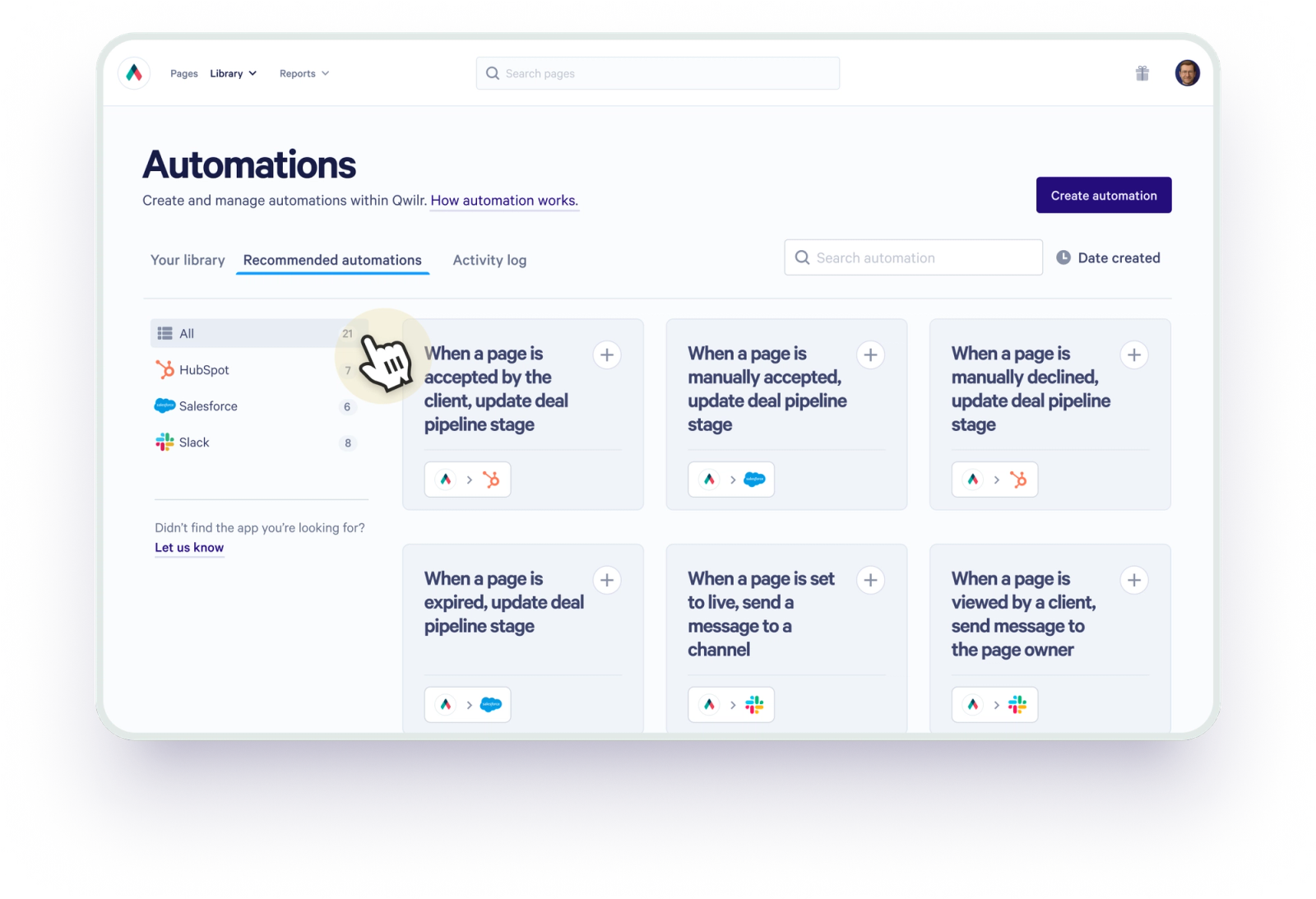
Qwilr integrates directly with CRMs like HubSpot and Pipedrive, payment processors like Stripe, and connects to hundreds of additional tools through Zapier for seamless workflow automation.
5 common grant proposal mistakes to avoid
Grant proposal mistakes can derail months of preparation and cost organizations critical funding opportunities. Small errors in structure, follow-up timing, or presentation format reduce acceptance rates and make it harder for funders to see the project's value.
At Qwilr, we analyzed over a million proposals submitted between January 2020 and August 2025 to identify which mistakes kill deals and which changes improve acceptance rates. The data revealed clear patterns in what separates funded proposals from rejected ones.
Here are the top mistakes to avoid:
Starting with your organization instead of the funder's needs
Opening with organizational history before addressing funder priorities buries the key question: does this align with what we fund? Funders prioritize proposals showing immediate mission alignment.
Start by acknowledging the specific problem they want to solve:
- Reference language from their guidelines or recent annual reports
- Use opening lines like "This proposal addresses your stated priority to reduce youth homelessness in urban areas"
- Signal immediate relevance before introducing your organization
Position your project as the solution before diving into the organizational background. Save the detailed organizational story for the introduction section, where it proves you have the capacity to deliver results.
Sending generic, one-size-fits-all proposals
Generic templates signal lack of investment in understanding funder priorities. Reviewers spot this through vague language and misaligned objectives.
Instead:
- Reference specific funding priorities from their guidelines
- Use the same terminology they use in their materials
- Address their stated goals directly
- Mention their past funded projects when relevant
Consider a workforce development grant application. Submitted to a foundation focused on economic mobility, it should emphasize job placement rates and wage increases. The same project pitched to an education funder needs to highlight skill development and training completion.
Match the funder's language and priorities throughout to show you understand their mission and how your work advances it.
Submitting overly long proposals that bury key information
A common mistake in grant writing is failing to clearly define the aims of the proposal. Lengthy proposals that exceed page limits or bury details in dense paragraphs reduce clarity and hurt acceptance rates.
Qwilr's analysis found that documents with six pages or fewer had 66% higher acceptance rates than longer submissions. Similarly, GrantStation's report found that 57.5% of successful grants had application cycles (from submission to decision) of one to six months, suggesting that concise, focused proposals move through review faster
Funders review dozens to hundreds of applications. Dense text blocks make it harder to extract key information about project goals, outcomes, and budget.
Keep proposals focused and scannable:
- Use clear section headers that tell reviewers what's coming
- Add bullet points to break up dense paragraphs
- Present budget information in tables
- Focus on outcomes rather than exhaustive process descriptions
Respect stated page limits strictly. Guidelines specify 10 pages for the project narrative? Submit 10 pages maximum. Also, adhere strictly to font sizes, margin widths, and character limits to prevent disqualification due to minor formatting errors.
Failing to follow up after submission
Submitting a proposal and then waiting quietly for a response reduces your visibility with the people making funding decisions. Qwilr data shows something surprising: when multiple stakeholders review a proposal within six days of submission, acceptance rates increase by 1.9 times compared to proposals reviewed by just one person. Research also showed that almost 70% of organizations received award funds within three months of notification when multiple decision-makers were engaged early in the process.
Many funders involve program officers, board members, and review committees in their evaluation process. Use proposal analytics from Qwilr to track who is opening your proposals so that you can time your follow-ups perfectly, encouraging champions to loop in other team members.
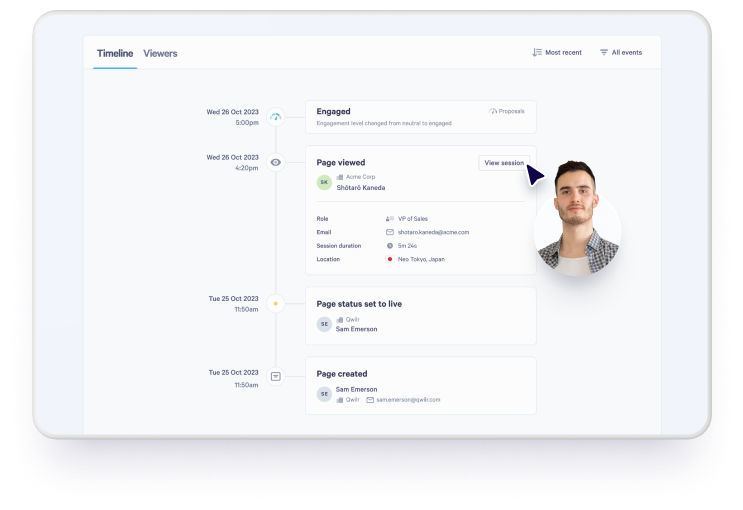
Getting your proposal in front of multiple decision-makers increases your chances of finding supporters who champion your work.
Here are some examples of follow-up actions:
- Confirm receipt within one week of submission
- Ask if additional information would be helpful
- Inquire about questions that came up during initial review
- Request timeline and next steps (if appropriate for the relationship)
Pro tip: Understand the Request for Applications (RFA) by reading the particular grant's guidelines in full and making a checklist of all requirements. Some funding agencies prohibit contact during review periods and specify this clearly in their application instructions.
Using static PDFs instead of interactive, engaging formats
Text-heavy PDF proposals with no visual breaks are harder to scan and less memorable than formats that engage reviewers actively. Reviewers often have to read multiple proposals, so a well-organized, visually appealing document can make a significant difference. Qwilr's analysis showed that interactive elements increased acceptance rates by up to 200% compared to static documents.
Static PDFs require scrolling through dense pages to find budget details or project timelines. Interactive proposals offer advantages:
- Embedded videos explaining project impact
- Clickable navigation to specific sections
- Dynamic ROI calculators that calculate totals automatically
- Visual storytelling through multimedia elements
Qwilr enables these features while maintaining professional presentation and making the reviewer's job easier.

One important note: check funder requirements first. Some require specific formats like PDFs submitted through grant portals. When you have format flexibility, interactive proposals demonstrate innovation while improving reviewer experience.
Get your grants with Qwilr
Grant proposal writing requires preparation, precision, and personalization. Strong proposals define clear problems, present evidence-based solutions, and prove your organization can deliver—all while matching what the funder wants to support.
The numbers tell the story: organizations that research funders thoroughly, organize their content, and use modern proposal tools win more grants. GrantStation found that organizations submitting six or more applications achieved success rates exceeding 95%. Qwilr's data showed interactive proposals increased acceptance rates by up to 200% compared to static PDFs.
Qwilr's Grant Proposal Template gives you a structured starting point with all essential sections built in. You won't forget critical details, your project looks professional, and you save hours on formatting.
Start creating proposals that secure the funding your mission needs.
About the author

Kiran Shahid|Content Marketing Strategist
Kiran is a content marketing strategist with over nine years of experience creating research-driven content for B2B SaaS companies like HubSpot, Sprout Social, and Zapier. Her expertise in SEO, in-depth research, and data analysis allow her to create thought leadership for topics like AI, sales, productivity, content marketing, and ecommerce. When not writing, you can find her trying new foods and booking her next travel adventure."
Frequently asked questions
The ideal format for a grant seeking application is straightforward, short, and concise. It takes the reader through what you want to do, why you seek grant funding, and how you want to use it. Ensure you include an intro summary, a problem statement, your goals, how you plan to achieve them, how you'll measure success, your grant requirements, a call to action, and a meaningful conclusion.
Although all sections of a grant application are essential, the executive summary is arguably the most important as it's often the first (and sometimes the only) part that funders read. It should summarize the core of your project, its importance, and why it deserves funding.
Common mistakes in nonprofit grant writing include:
Not following the funder's guidelines.
Vaguely describing the goals and impact of your project.
Submitting a grant proposal with typos or grammatical errors.
The lack of a detailed budget for the funding opportunity.