
- Non-profit Grant Proposal Template
Non-profit Grant Proposal Template
Apply for a grant with a clear need statement, measurable goals, a costed budget and plans for evaluation and sustainability, in the order funders expect.
About this template
Use this template if you're a non-profit or charity applying to a foundation or other funder for a project grant. It covers an executive summary, a need statement, the project description, goals and objectives, the budget and funding request, an evaluation plan, your organization's capacity, a sustainability plan, a budget breakdown, supporting documents and next steps.
The project, figures and documents are examples, so replace them with your own and follow each funder's guidelines, which take priority over any template. Our guide to writing a grant proposal covers each section.
Want a version built around your brand and programs? Qwilr's design team can create one for you. Talk to our team
What's included?
- Executive summary
- Need statement
- Project description
- Goals and objectives
- Budget and funding request
- Evaluation plan
- Organizational capacity
- Sustainability plan
- Budget breakdown
- Supporting documents
- Next steps
The sections in this non-profit grant proposal template
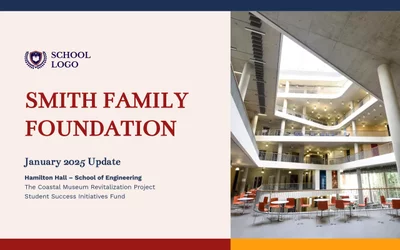
Cover page
Open with your organization's logo, the proposal title and the funder's name, over a photo of your work.
Project description
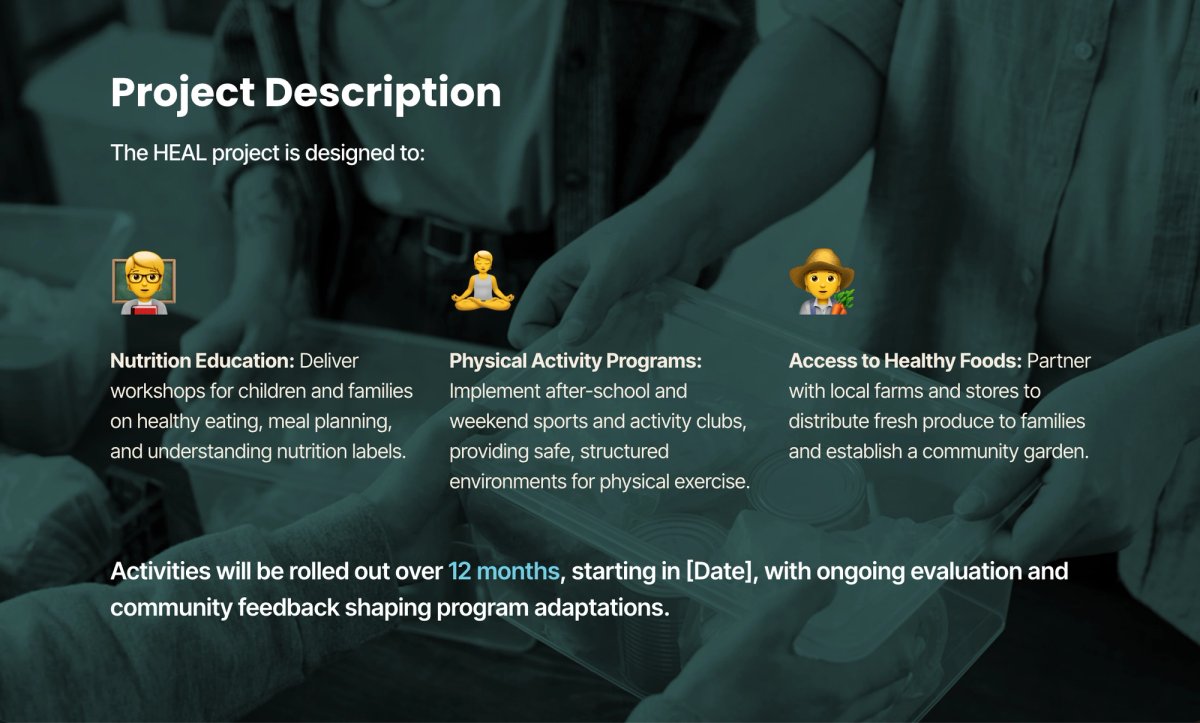
Explain what the project will do, with each strand of work and when it will roll out. The example covers nutrition education, physical activity and access to healthy food.
Goals, budget and plans
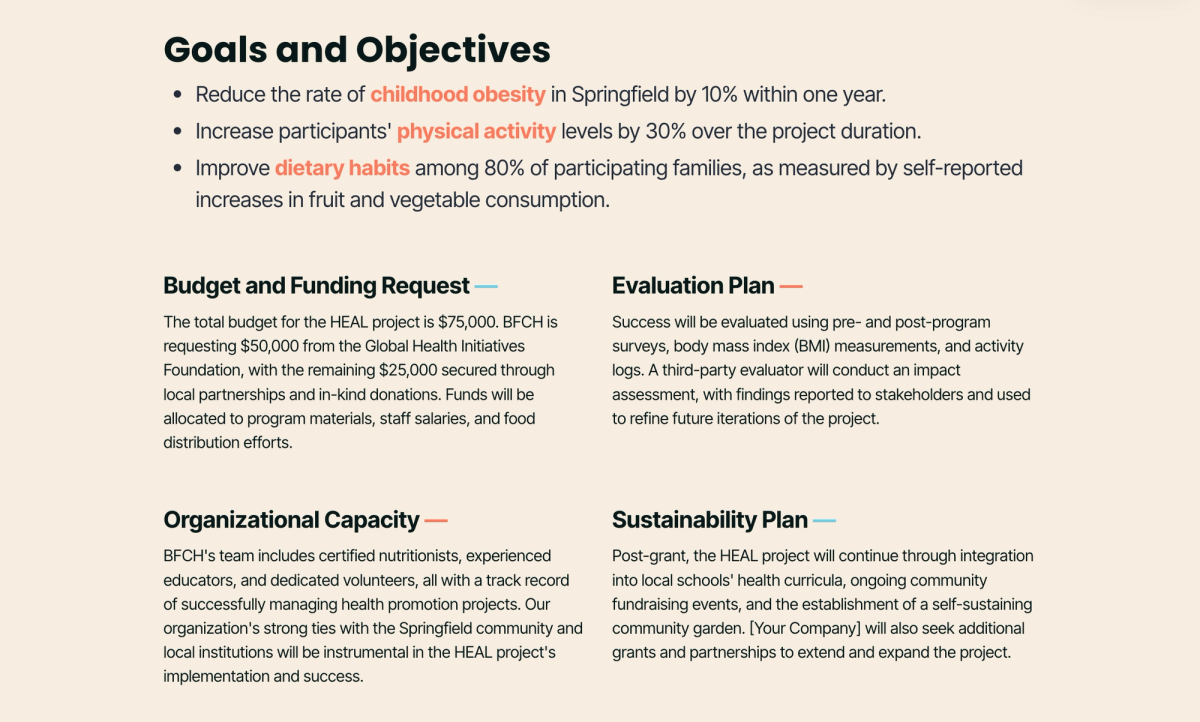
Set measurable goals, then the budget and funding request, how you'll evaluate the project, your organization's capacity and how it will continue after the grant ends.
Supporting documents
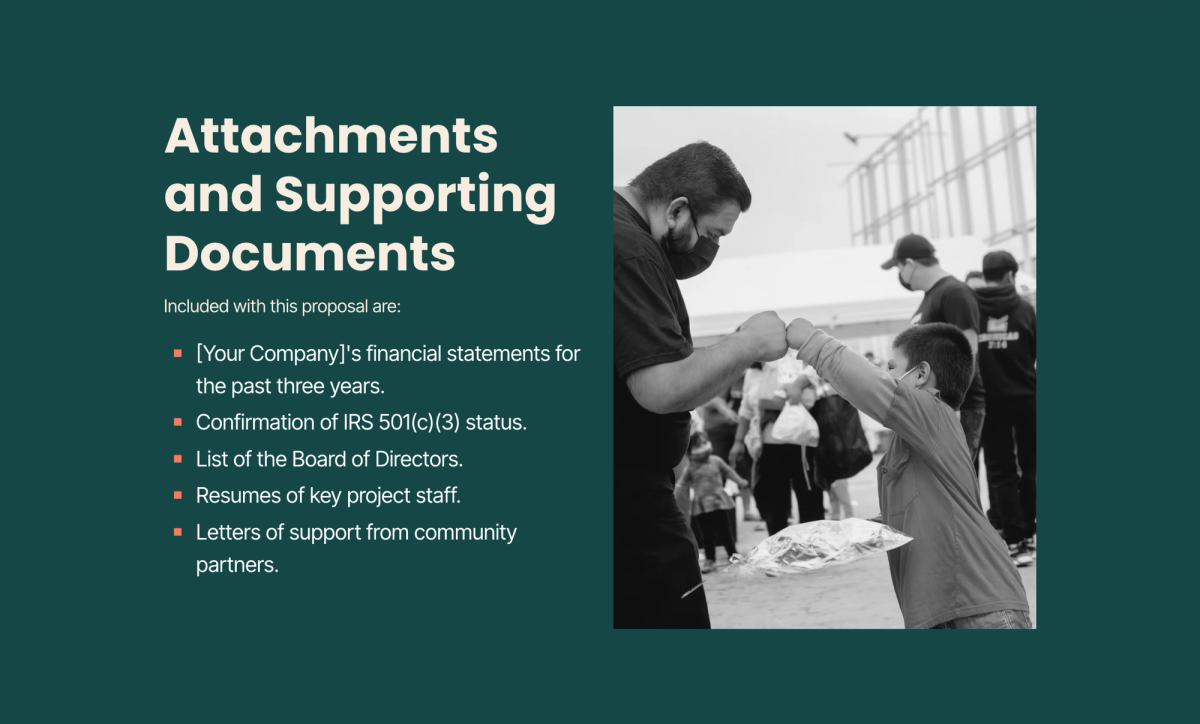
List the documents the funder asks for, such as financial statements, proof of charitable status, your board and letters of support.
Why non-profits use this template
Funders read many applications against the same criteria. A proposal that follows the order they expect, with measurable goals, a clear budget and a plan for life after the grant, makes it easy for a reviewer to score you well.
Rated a Leader for proposal software on G2

Why Qwilr?
Design interactive proposals
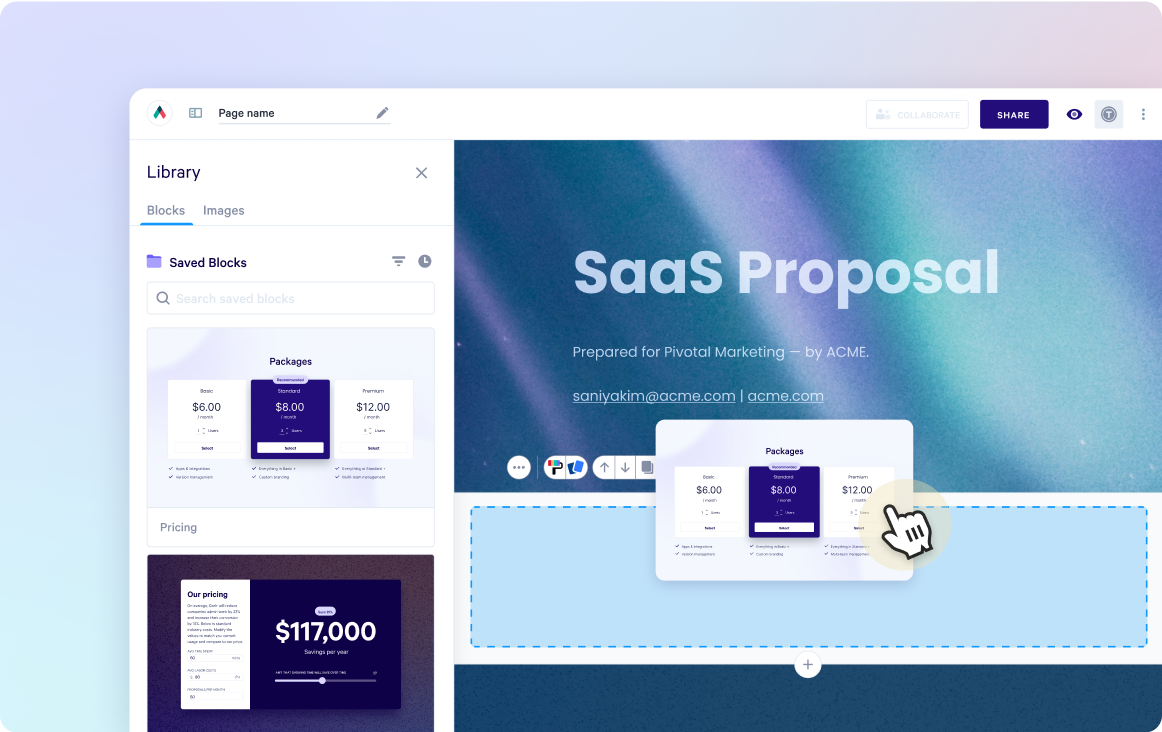
Impress buyers with interactive proposals that stand out. Qwilr’s drag-and-drop editor makes it easy to create on-brand, stunning collateral — no design skills needed. Add videos, dynamic pricing, and ROI calculators to deliver a unique experience, while automated brand customizations ensure every proposal looks professional.
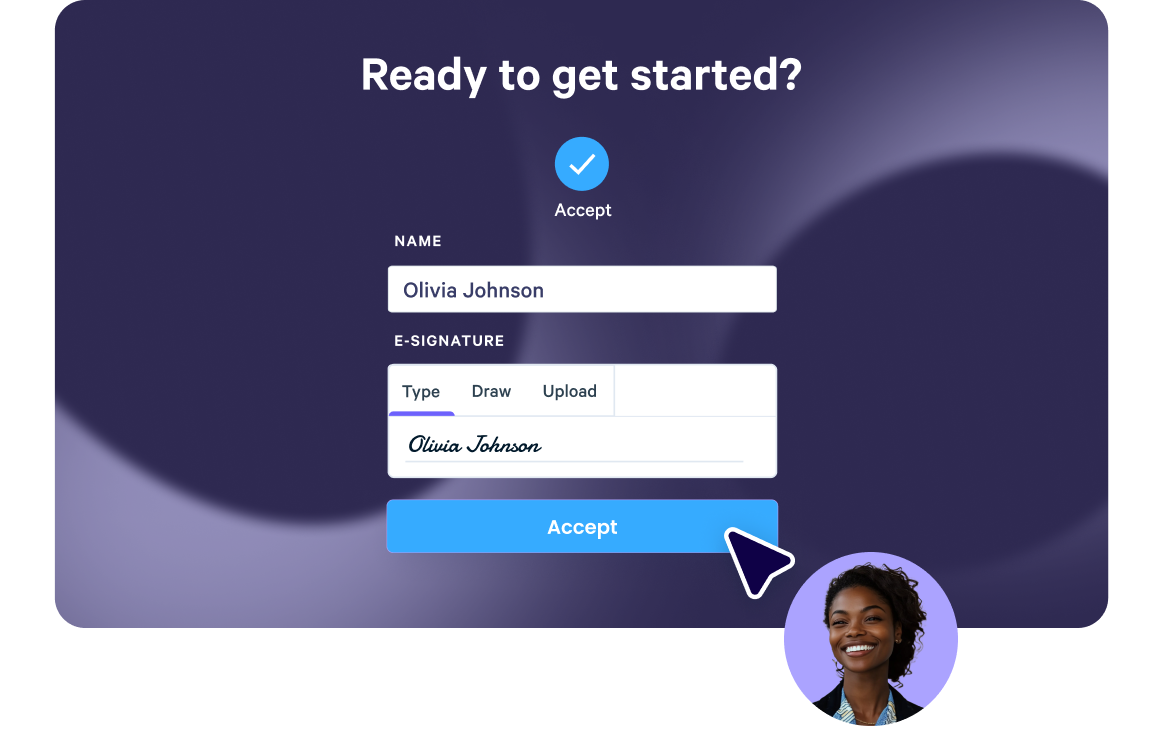
Built-in e-sign functionality
Combine stunning proposals, plain-text agreements, and secure e-signatures in one tool. Add print-friendly agreements alongside dynamic content and collect legally compliant e-signatures with ease. Track progress, capture multiple signatures, and close deals faster with Qwilr’s integrated e-sign functionality.
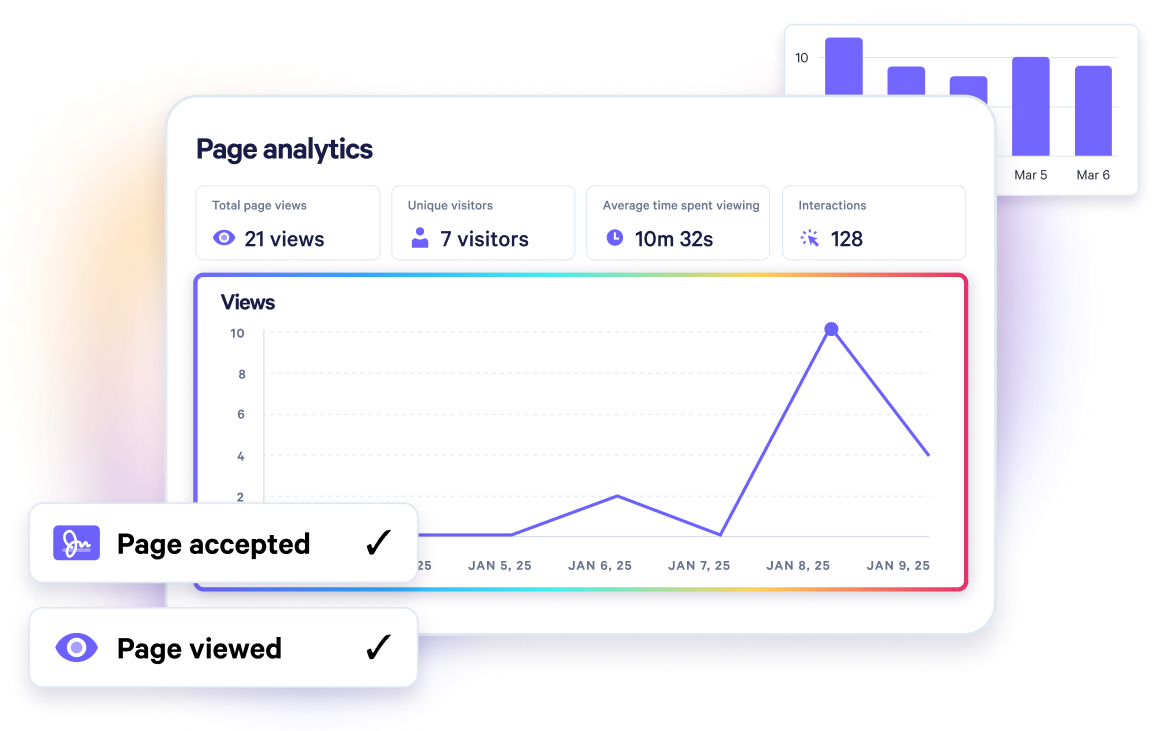
Real-time proposal analytics
Qwilr’s analytics provide full visibility into buyer engagement. Track when proposals are opened, signed, or shared, and get instant notifications for key buyer activities. See what buyers click on, how they engage, and prioritize follow-ups based on real-time insights—all designed to help close deals faster.
Templates for every use case
Explore templates for sales, marketing, customer success and more, or see how Qwilr works for your industry.
Explore proposal templates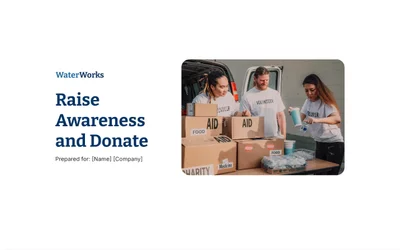


Frequently asked questions
An executive summary, a need statement with evidence, the project description, measurable goals, a budget and the amount requested, an evaluation plan, your organization's capacity to deliver, a sustainability plan and supporting documents. Our guide to writing a grant proposal covers each section.
As long as the funder allows and no longer. Many set a word or page limit for each section, and going over can rule you out. Where there's no limit, aim for a few pages that answer each criterion clearly, with detail in attachments.
Show you've read the funder's priorities and link your project to them in their language. Back the need with local data, set goals you can measure, show a realistic budget and explain how the work continues afterwards. Speaking to the funder before applying often helps.
Describe the problem in the community you serve, backed by recent, local evidence, such as statistics or survey results, and explain who's affected and why current services don't solve it. Keep the focus on the people you serve, not your organization's needs.
Every cost of the project, such as staff, equipment, materials, outreach and evaluation, with indirect costs if the funder allows them. Show the total, the amount requested and other funding, such as match funding or in-kind support. The budget should match the activities you describe.
It explains how you'll measure whether the project met its goals: what you'll track, how, when and who will do it, and how you'll report to the funder. Use measures linked to your objectives, such as before and after surveys or participation figures.