The gap between a shortlisted vendor and a signed contract is almost always a proposal problem. Reps invest weeks in discovery, build strong relationships with a single contact, and then send a document that reads like a product brochure instead of a business case.
In enterprise sales, the proposal is often the single document that circulates through an entire buying committee without a rep in the room to contextualize it. A proposal that doesn't address each reader's priorities gives stakeholders a reason to stall, and the rep may never get a direct conversation to recover.
This guide breaks down how to write a sales proposal that speaks to every stakeholder in the room and removes the friction that causes late-stage deals to collapse.
What is a sales proposal?
A sales proposal is a document that outlines how a product or service solves a specific buyer's problem, including scope, pricing, timeline, and expected outcomes. Sales teams send it after discovery to formalize the business case and move the deal toward a purchasing decision.
Unlike a generic pitch deck or product overview, a sales proposal is tailored to the buyer's situation. It addresses the specific pain points surfaced during discovery, maps the solution to the buyer's stated priorities, and gives every stakeholder in multithreaded sales the information they need to evaluate and approve the purchase.
A strong sales proposal typically includes:
- An executive summary that frames the buyer's challenge and the proposed solution
- A scope of work with clearly defined deliverables
- A pricing breakdown tied to outcomes, not features
- A timeline with milestones and dependencies
- Case studies or proof points relevant to the buyer's industry
- Terms, conditions, and a clear call to action
The format varies by sales complexity. While a transactional sale might require a two-page proposal with a single pricing option, an enterprise deal with a six-person buying committee and a 90-day procurement cycle might need interactive pricing, embedded legal terms, and sections tailored to different stakeholder roles.
Why your sales proposal is more important than ever
A sales proposal is the primary document a buying committee uses to evaluate, compare, and approve a vendor. Writing a winning sales proposal means building something that works for every stakeholder in that room, not just the champion who requested it.
That makes the proposal a decisive moment in the sales cycle. While discovery calls build the relationship and demos build interest, the proposal is where interest either converts into a signed deal or stalls indefinitely.
Three factors make proposals critical in modern B2B sales environments:
Buying committees make decisions from documents
HubSpot's 2025 Sales Trends Report found that 74% of sellers say AI tools have made buyer research easier, putting more pressure on sellers to deliver value beyond the conversation. A proposal that clearly articulates the problem, the solution, and the business case gives stakeholders the language they need to advocate internally, even when the rep has no direct access to the room where the decision happens.
Proposals set the terms for how the buying committee evaluates value
A buyer comparing three vendors side by side defaults to whatever evaluation framework is easiest to apply. Transparent pricing framed around cost savings, time recovered, and revenue impact anchors the conversation in value and builds buyer confidence from the first read.
Late-stage deal risk compounds without a strong proposal
Deals that reach the proposal stage have already consumed significant rep time, leadership attention, and pipeline forecasting weight. When a proposal fails to address a stakeholder's concern, it creates a forecast gap that distorts the entire quarter.
According to Qwilr's analysis of over one million proposals, proposals viewed by three or more stakeholders within the first five days of sending are 1.9 times more likely to be accepted — a direct indicator of deal win rates.
When every decision-maker sees their priorities addressed on the first read, the proposal moves through approval faster than one that requires follow-up to fill in the gaps.
Key components of a winning sales proposal
A strong sales proposal typically includes:
- An executive summary that frames the buyer's challenge and the proposed solution
- A scope of work with clearly defined deliverables and key benefits tied to the buyer's stated priorities
- A transparent pricing breakdown tied to outcomes, not features
- A timeline with milestones and dependencies covering the implementation process
- Case studies, client testimonials, or proof points relevant to the buyer's industry
- Contact details, terms, conditions, and a clear call to action
A sales proposal needs to give every stakeholder on the buying committee a reason to approve and no reason to delay. That means each section has a specific job: establish credibility, quantify value, define scope, and remove friction from the approval process.
The components below cover what a high-converting sales proposal includes and why each section matters to the people evaluating it. Missing any one of these gives a stakeholder a reason to ask for a follow-up conversation instead of moving the deal forward.
Executive summary
The executive summary gives decision-makers a complete picture of the entire proposal in 200–400 words. Senior stakeholders — particularly economic buyers who approve the budget but skip granular details — may read this section and nothing else before deciding whether the deal moves forward.
A strong executive summary covers the buyer's core challenge, the proposed solution, the key benefits and expected business outcomes, and the investment required. It reads as a self-contained argument for why this deal makes sense and gives any stakeholder a clear understanding of the opportunity without requiring them to read the full document.
Writing it last is a practical safeguard. Every number, timeline, and commitment referenced in the summary should match the details in the full proposal.
Problem statement based on pain points
Before a buying committee evaluates a solution, they need to see that the vendor understands what's broken.
HubSpot's research highlighted that 37% of deals fail because buyers don't see product fit — a gap that starts in the problem statement.
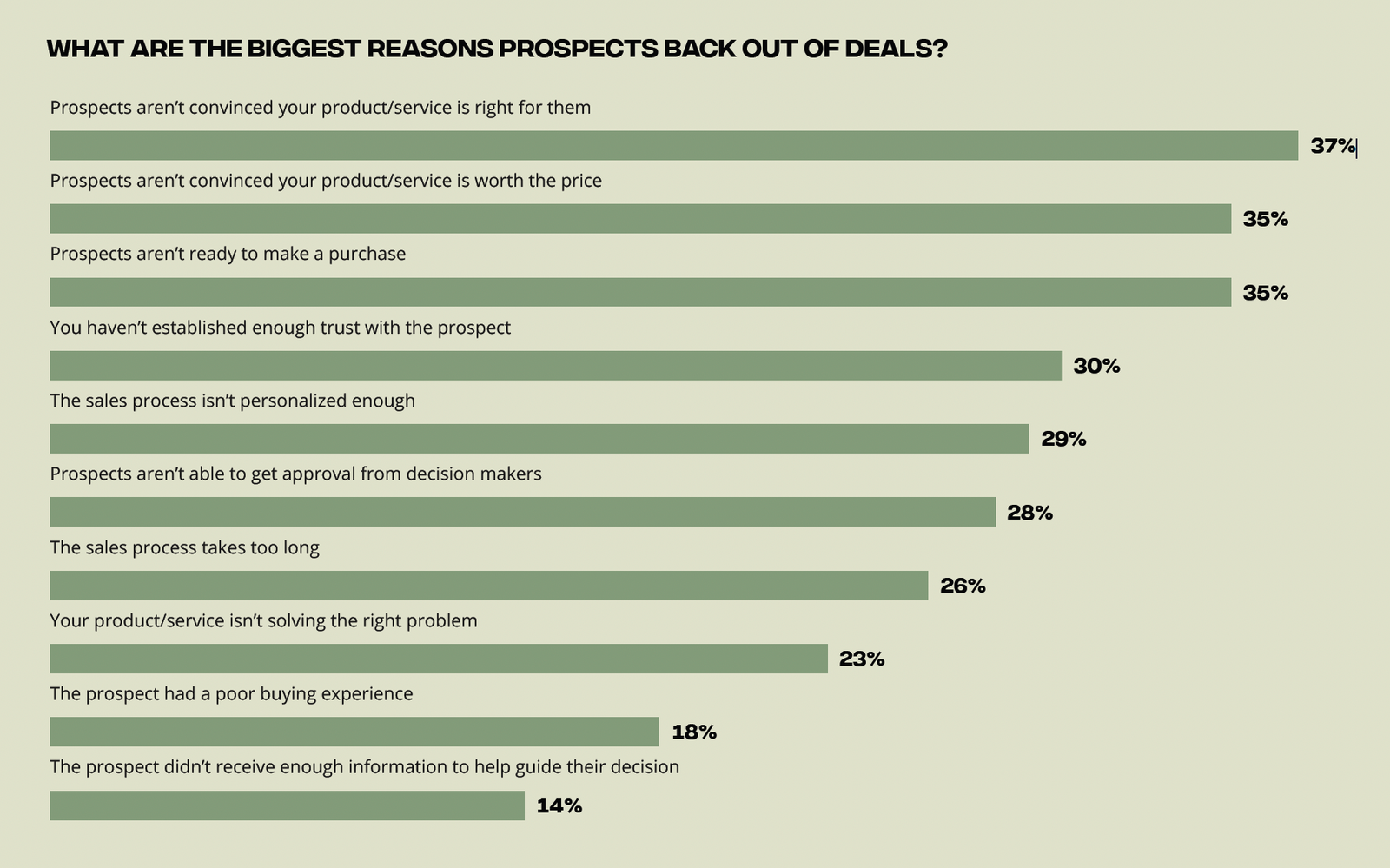
When the proposal describes a generic industry challenge, the committee has no reason to believe the solution was built for them.
The problem statement defines the specific business challenge the buyer is facing, grounded in what surfaced during discovery. A logical structure here — moving from current state to impact to cost of inaction — gives the committee a clear understanding of why solving this problem matters now.
Effective problem statements include:
- The operational or financial impact of the current state, quantified where possible — using client data from discovery wherever available
- The teams, workflows, or revenue streams most directly affected
- The cost of inaction — what happens if the problem remains unsolved over the next six to twelve months
A logistics company losing $40,000 per quarter to manual inventory reconciliation errors has a different problem than a logistics company struggling with warehouse staff turnover. Both might buy the same software. But a proposal that names the specific pain point — and ties the rest of the document to resolving it — carries more weight with the committee than one that describes the client's problem in broad terms.
Timeline
A credible timeline breaks the implementation process into phases — onboarding, configuration, integration, testing, launch — with milestones and dependencies attached to each.
Implementation delays sometimes originate on the buyer's side: delayed access credentials, slow internal approvals, or key stakeholders unavailable during critical feedback windows. Including key points of client responsibility alongside vendor milestones gives both sides a shared accountability framework before work begins.
Mapping those dependencies explicitly protects both parties. The buyer sees a realistic plan they can resource against. The vendor establishes accountability on both sides before work begins. And project sponsors inside the buyer's organization get a document they can use to hold their own teams to deadlines.
Pricing breakdown
A single line item with a total figure invites one question from procurement: Can we get this cheaper?
A detailed pricing breakdown invites a different conversation about value allocation, phasing options, and which components deliver the highest return. It moves the evaluation from a cost comparison to a scope discussion, where the vendor has more control over how the deal is framed.
Line items should map directly to deliverables and project phases so finance teams can trace every dollar to a specific output. Transparent pricing with a brief rationale for each line gives a CFO reviewing the proposal without attending the demo a clear understanding of what they're paying for and why. It also removes the most common trigger for a procurement-led price comparison.
Proposal software like Qwilr includes interactive quote blocks that let buyers adjust scope, toggle optional line items, and see updated totals in real time.
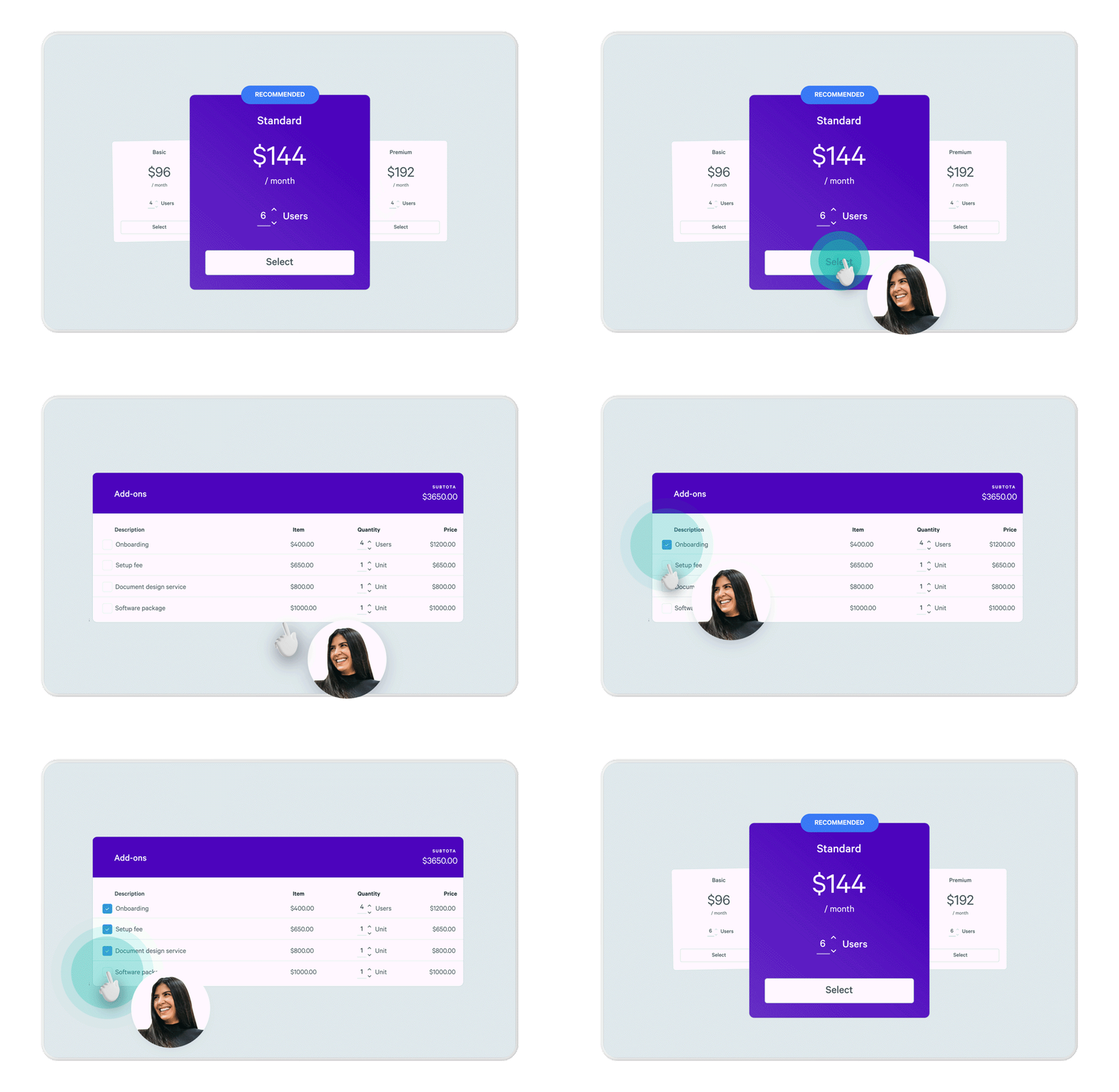
These blocks remove the back-and-forth that delays deals between pricing questions and revised PDFs.
Terms and conditions
A proposal that leaves terms and conditions for a separate document adds a step to the sales process, and every additional step is an opportunity for the deal to stall.
Embedding terms directly in the proposal gives legal and procurement teams what they need to begin their review immediately. Key elements to address in a sales pitch document that reaches legal and procurement review:
- Payment schedules and milestone-based billing
- Intellectual property ownership and licensing terms
- Data privacy and security obligations relevant to the buyer's industry
- Change request procedures and how scope adjustments are handled commercially
- Cancellation and termination conditions
- Contact details for the signatory on each side
The goal is to reduce the number of documents, handoffs, and review cycles between proposal acceptance and a signed contract. Qwilr embeds legally binding terms and e-signature directly into the proposal.
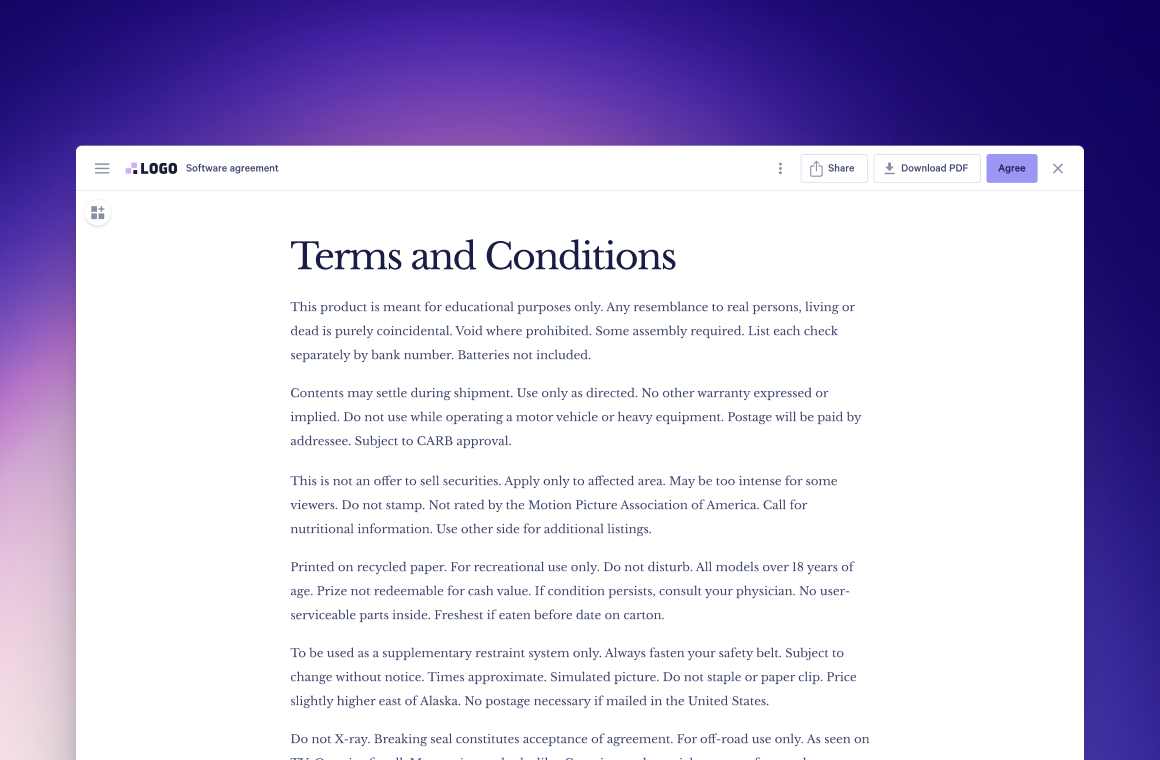
Legal teams can review, negotiate, and approve within the same document that the rest of the committee has already evaluated.
Description of product or service
This section explains what the buyer is purchasing — the specific capabilities, features, and deliverables included in the proposed engagement. Where the problem statement establishes why change is needed, the product description answers what the vendor will provide to make that change happen.
Structure the description around the buyer's priorities. Lead with the capabilities that solve the problems named in the problem statement, then address supporting features that round out the solution. Include technical specifications — integrations, security certifications, infrastructure requirements — for IT stakeholders, but positioned after the business-level description.
Unique selling proposition
Every vendor on the shortlist can describe what their product does. The unique selling proposition answers a harder question: why this vendor over every other option the committee is evaluating?
Generic differentiators don't differentiate because every competitor claims the same thing — including small business vendors and leading providers alike. A strong USP is specific, verifiable, and tied to something the buyer already cares about.
The value proposition can come from several angles:
- Vertical depth: Industry expertise proven in the buyer's sector with client testimonials and case studies to back it up
- Implementation speed: A documented track record of faster time-to-value than competitors in comparable deployments
- Architectural advantage: A technical capability that directly addresses a constraint surfaced during discovery
- Commercial flexibility: Pricing models, contract structures, or support tiers that competitors don't offer across multiple industries
A differentiator woven through multiple sections builds a cumulative case that's harder for the committee to dismiss.
How to write effective sales proposals: 6 expert tips
Tailor the front page by stakeholder role
A single proposal often needs to persuade five or more stakeholders with fundamentally different priorities.
Salesforce reports that 67% of sales professionals say personalization is more important to customers than it was last year. In a multi-stakeholder deal, personalization involves structuring the document so each decision-maker finds their priorities addressed.
Ben Grant, Managing Partner at Lambton Capital Partners, adapted his approach after seeing how multiple stakeholders engaged with the same document:
"I learned to tailor by stakeholder. For finance teams, I led with cost and ROI. For operations managers, I led with implementation timelines and minimising disruption. Same deal, different front page."
In practice, the realistic approach is to structure a single document so each stakeholder can navigate to their section within seconds — with clear headings, logical structure, bullet points that surface key points fast, and a summary at the top that flags where each role's concerns are addressed.
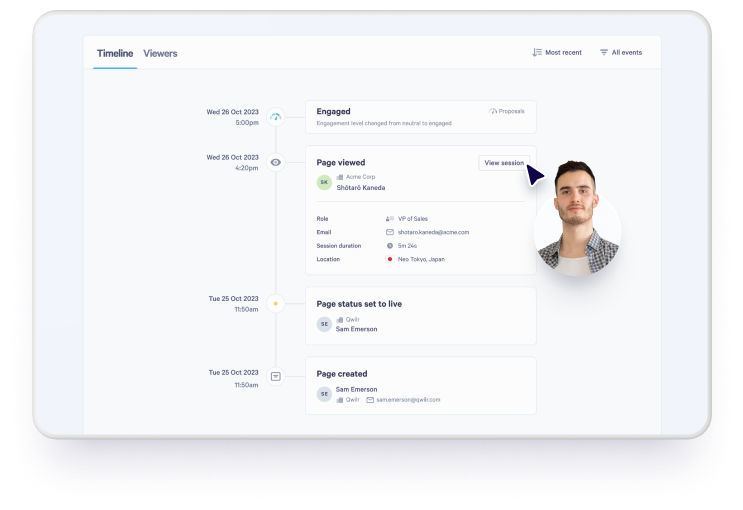
Qwilr's proposal analytics then show which stakeholders opened the document and which sections they spent time on to give sales professionals precise intelligence for follow-up conversations.
Replace optionality with a single recommendation
Presenting three pricing tiers, a menu of add-ons, and an à la carte support package feels like flexibility.
But Salesforce's 2026 report found that 57% of sales professionals say customers take longer to decide than they used to. Adding multiple pricing tiers and configuration options to a proposal compounds that delay. A single recommendation with a clear rationale gives the committee one thing to approve instead of several things to debate.
Chris Sorensen, CEO at PhoneBurner, shifted away from multi-option proposals after seeing the impact on deal velocity:
"It can be really tempting to show flexibility with multiple packages or add-ons, but when you show a single, opinionated recommendation that clearly showcases 'this is what we believe you should do and here's why,' decision velocity improves."
The logic is straightforward. Every option in a proposal requires the buying committee to evaluate, compare, and agree on a choice before they can approve the deal.
Two options double the internal conversation. Three options triple it.
A stronger approach is to present one recommended package — scoped to what discovery revealed about the buyer's needs, budget, and timeline — with a clear rationale for why that configuration fits their situation. If the deal genuinely requires flexibility, offer a single alternative with a stated recommendation for which option is the better fit and why.
Qwilr's interactive quote blocks support this structure by letting buyers adjust scope variables within a recommended configuration rather than choosing between separate packages.
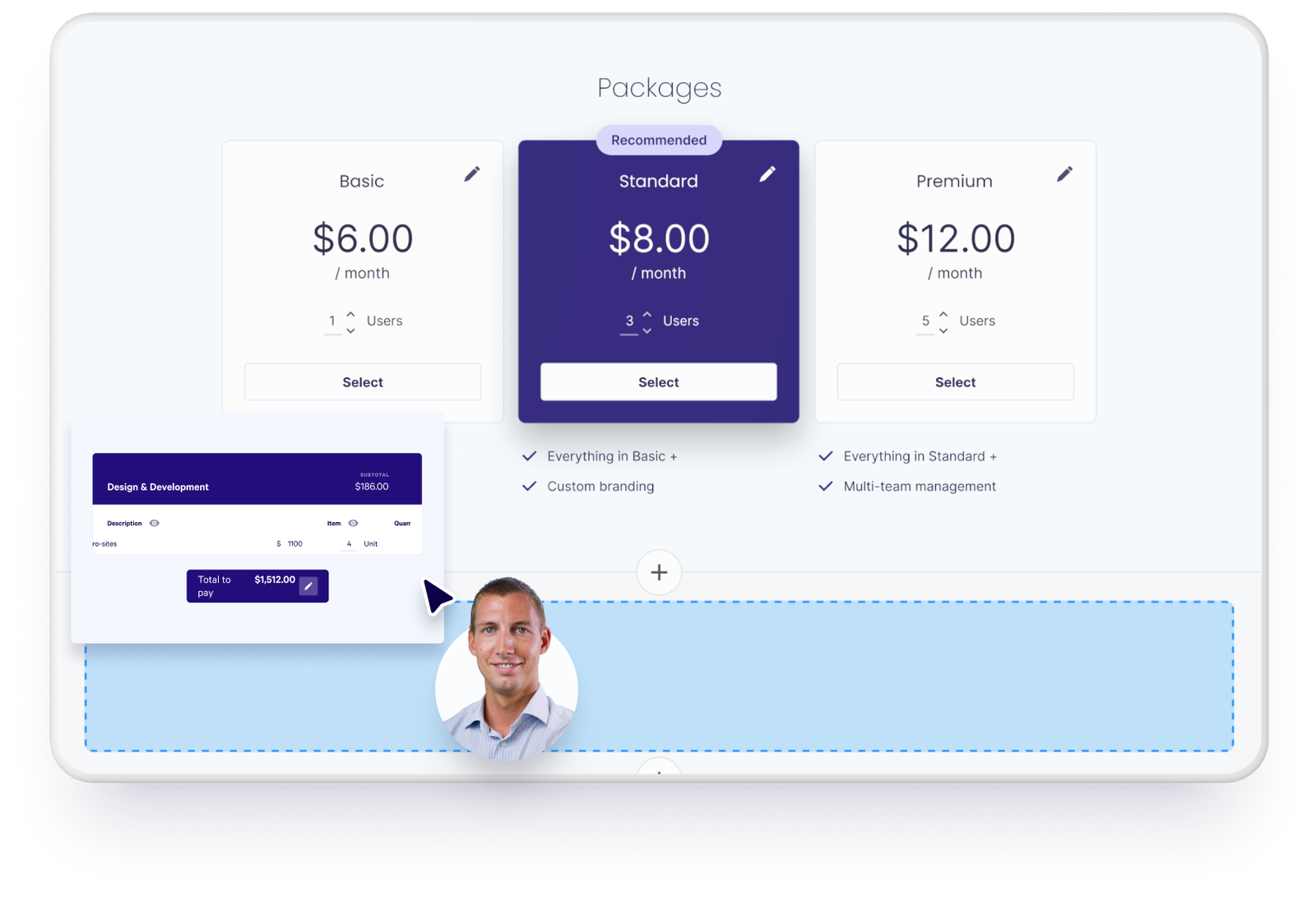
The buyer retains control over the final number without the sales team introducing competing options that slow the decision.
Use previous discussions to build your proposal
Create your proposal based on what the buyer revealed during discovery. Like the:
- The language they used to describe the problem
- Metrics that they said they track
- Stakeholders whom they named as decision-makers
- Constraints they flagged around timing, budget, or technical requirements
When that intelligence doesn't carry through to the proposal, the document feels generic regardless of how well it's structured.
Sorensen makes this point about context and the second reader: "Majority of the time, your champion isn't the final decision-maker — they’re forwarding your proposal internally. When you write proposals assuming the buyer has all the context they need, you are typically wrong. When I began writing proposals that could stand on their own, I found deals moved much faster."
HubSpot's data backs this up: 28% of deals fail because prospects can't get approval from decision-makers. A proposal that requires the champion to re-explain the business case before the committee can evaluate it adds a step that many deals don't survive.
Pro tip: Fill in what you learned in discovery below to generate a personalised proposal outline and pre-send checklist.
Qwilr's CRM integrations with HubSpot, Salesforce, Pipedrive, and Zoho pull deal data directly into the sales proposal — prospect details, qualification notes, pricing context — so nothing from discovery gets lost between the call and the document.
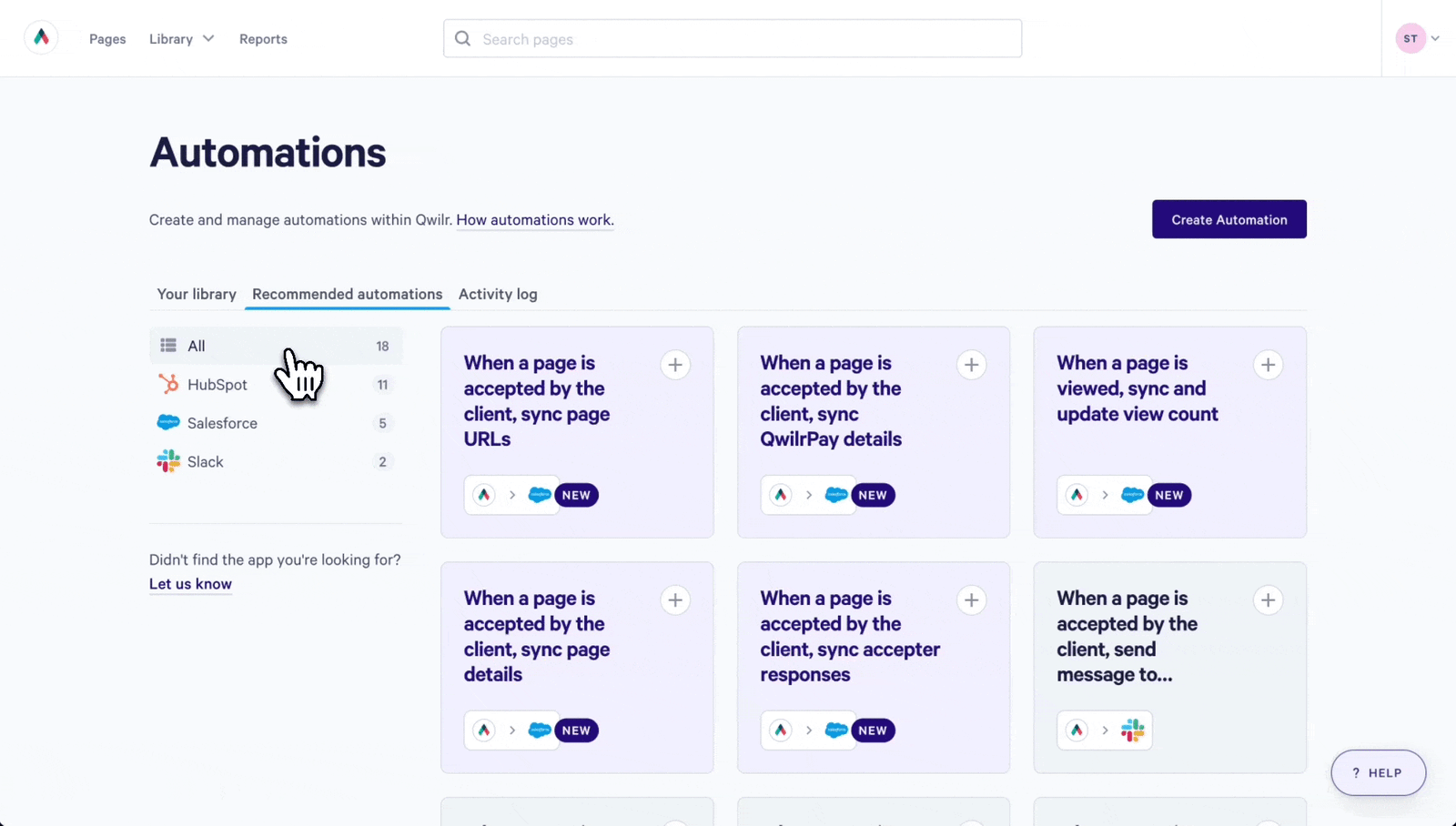
That connection is what makes it possible to personalize every proposal without doubling the time reps spend building them.
Include social proof that mirrors the buyer's situation
Generic case studies signal that the vendor has customers. Targeted case studies signal that the vendor has solved this buyer's specific problem before.
Ruben Medina, Head of Marketing and Sales at scheduling tool Koalendar, identifies social proof as one of the first things buyers look for when reviewing a sales proposal — and one of the strongest drivers of buyer confidence among hesitant committees. His team found that tailoring proof points and real-world examples to the prospect's situation helped convert hesitant buyers into signed contracts.
In each case study or client testimonial, cover:
- The client's starting situation and the challenge they needed to solve
- The solution delivered and the rationale for the approach
- Measurable outcomes — cost reduction, time savings, revenue impact, or efficiency gains — with specific numbers
- A direct quote from the client stakeholder who owned the project
Qwilr's proposal templates support embedded case study sections with image tiles, pull quotes, and structured layouts that make proof points scannable.
Back your sales proposal with market research and third-party data
Buyer-specific data from discovery is the most persuasive input in a proposal. But not every deal produces enough quantitative detail to build a complete business case — particularly early-stage conversations with smaller organizations or potential customers who don't track granular internal metrics.
Market research fills that gap. Industry benchmarks, analyst reports, and third-party buyer data give the economic buyer something defensible to attach to a budget request when internal numbers alone aren't sufficient.
Sources like Gartner, G2, Forrester, and industry-specific reports carry weight because buyers can verify them independently. For small business buyers who don't have access to enterprise research budgets, industry expertise demonstrated through well-sourced third-party data serves as a signal of credibility that builds buyer confidence early in the review.
Three guidelines for integrating research into successful sales proposals:
- Pair third-party data with client data from discovery wherever possible: An industry benchmark is more persuasive when presented alongside the buyer's own metrics
- Cite the source and year for every statistic: Undated or unattributed data points raise credibility questions with procurement and finance teams
- Use research to address objections preemptively: Citing real-world examples and studies that quantify implementation timelines or success rates neutralizes common hesitations before they become blockers
Medina's experience reinforces this approach. His team found that developing sales proposals tailored to the prospective customer's needs helped close deals that had shown early hesitation. The combination of "here's what the market data says" and "here's what it means for your business specifically" gives buying committees the confidence to move forward without requesting additional rounds of justification.
Start with a proven template, then customize
A blank page is the slowest way to write a winning sales proposal. Research shows that sales reps spend 60% of their time on nonselling activities, including 16% on creating quotes alone.
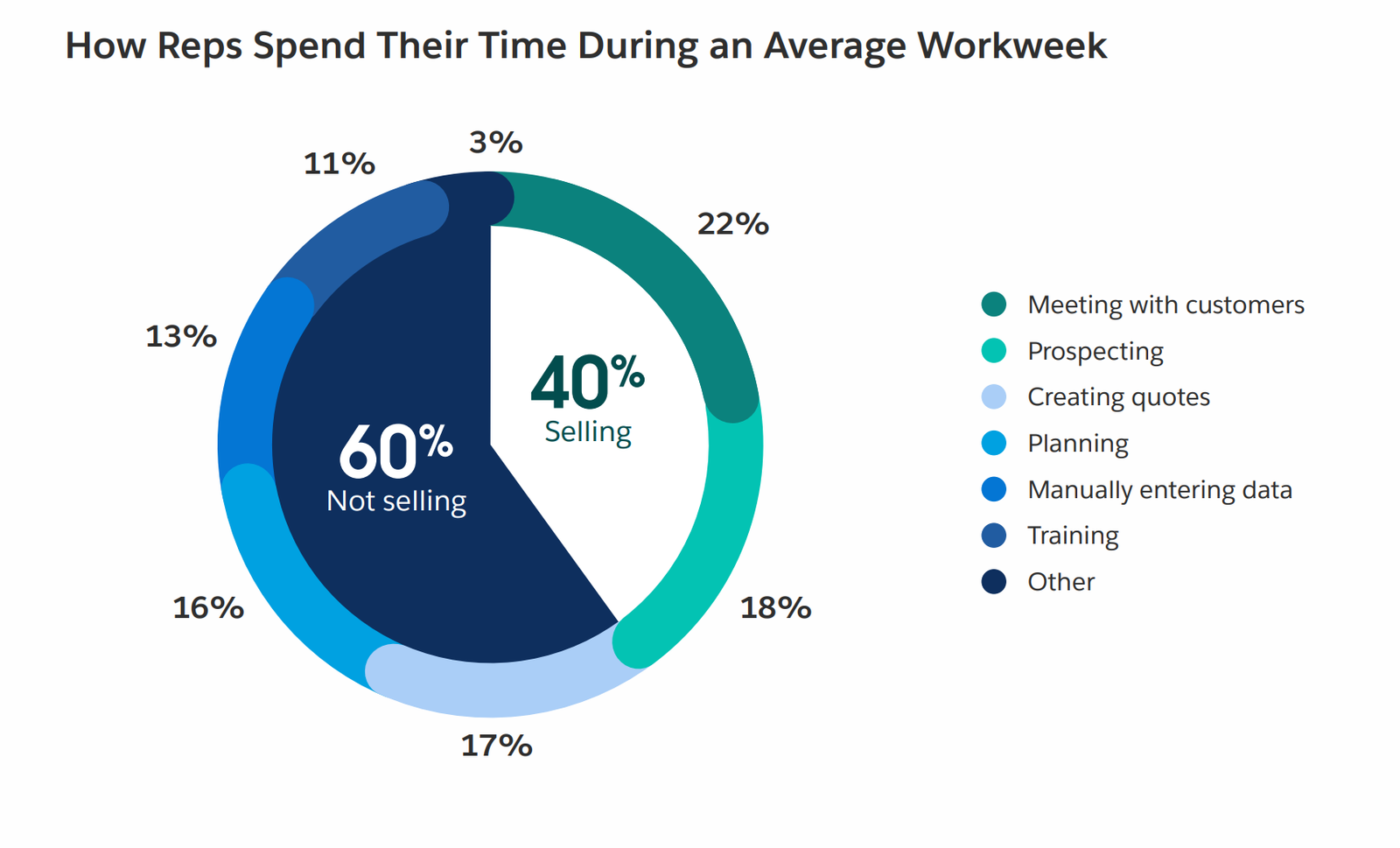
A tested proposal template reclaims a portion of that time by handling structure, formatting, and branding so reps focus on the sections that differentiate the deal. When every proposal follows the same core structure, sales leaders can benchmark what's working across the team.
Where templates go wrong is when reps treat them as finished documents. A template with placeholder text that never gets replaced, such as generic problem statements, boilerplate client testimonials, or industry expertise claims with no supporting evidence, tells the buyer that the vendor didn't invest time understanding their situation. The logical structure is there, but the substance that builds buyer confidence is missing.
A template handles the structural work so reps can focus their time building the value case around the buyer and create multiple proposals.
Qwilr's sales proposal templates are built around this principle. Each template includes pre-structured sections for executive summaries, interactive pricing, embedded terms, and e-signature — formatted and branded so reps aren't starting from scratch.
Build sales proposals that close deals faster with Qwilr
Every tip in this guide points to the same underlying problem. Static, one-size-fits-all proposals create friction at the exact moment a deal needs momentum. Buyers can't find the information relevant to their role, and the rep has no visibility into whether the proposal was opened, shared, or ignored.
Qwilr was built to remove that friction. Interactive business proposals let buyers explore pricing in real time, review embedded case studies, accept terms, and sign.
Start building future proposals with Qwilr. Book a demo today.
About the author

Kiran Shahid|Content Marketing Strategist
Kiran is a content marketing strategist with over nine years of experience creating research-driven content for B2B SaaS companies like HubSpot, Sprout Social, and Zapier. Her expertise in SEO, in-depth research, and data analysis allow her to create thought leadership for topics like AI, sales, productivity, content marketing, and ecommerce. When not writing, you can find her trying new foods and booking her next travel adventure."
FAQs
You can make your sales proposal visually appealing by adding relevant, supporting graphics and using charts or graphs to illustrate key data points. This can make your sales proposal easier to digest and more memorable.
The top five key elements of a written sales proposal are an executive summary, enough detail to paint a comprehensive picture of the problems and solutions at hand, a good reason your prospect needs to buy your service now, a quick outline of the next steps, and an easy to read, persuasive design.