
Contract terms change all the time. A project scope expands, a deadline shifts, a payment structure gets renegotiated, and suddenly, the agreement both parties signed no longer reflects the deal on the table.
A contract addendum is how professionals document those changes without tearing up the existing contract and starting over. Used correctly, an addendum adds new terms, clarifies ambiguous language in existing terms, or extends key provisions while keeping the original contract fully intact.
This guide covers when a contract addendum is the right tool, how it differs from an amendment, what every enforceable addendum must include, and a step-by-step process for drafting one that holds up legally and keeps all parties aligned.
Key Takeaways
- An addendum adds or clarifies terms in a contract without changing its original intent, unlike an amendment that replaces or removes terms.
- Use an addendum for significant changes like deadlines, scope, financial terms, or regulatory updates, not for minor corrections.
- Include a title, reference to the original contract, effective date, changes, purpose, signatures, and an optional integration clause.
- Keep formatting consistent, consult legal advice for complex changes, stay specific, and draft contracts with flexibility to minimize addenda.
What is an addendum?
A contract addendum is a supplementary legally binding document that adds new clauses, extends existing provisions, or clarifies ambiguous language in an initial agreement that has already been signed.
It doesn't replace the original contract, but it sits alongside it and updates specific elements while leaving everything else intact.
Contract addenda appear across industries:
- A construction firm formalizing a scope expansion
- A freelancer adding revision terms
- A SaaS vendor adjusting a renewal date
- Real estate transactions adding contingencies or buyer conditions
An addendum is not a contract amendment. A contract amendment replaces or removes existing contract language. An addendum adds to it while the original terms remain fully enforceable. Both require signatures from all parties to be legally binding, following the same formalities as the original contract.
When to use an addendum
A contract change requires a formal addendum when the update affects the rights, obligations, timelines, or payment terms of the original contract. Minor corrections like typos or formatting errors don't meet that threshold, and the signing parties can resolve them through a written acknowledgment.
A practical test: if the change would alter what one or more parties owe, deliver, or expect from the agreement, it needs an addendum. If a dispute arose tomorrow, would the undocumented change affect how a court interprets the contract? If yes, document it.
Scenarios that typically require a formal addendum vary depending on the nature of the engagement, but common examples include:
- Extending deadlines or delivery dates
- Expanding or reducing the agreed scope of work
- Adjusting payment terms, payment amount, fees, or milestone schedules
- Clarifying ambiguities in language that have caused disagreement between parties
- Adding new clauses to address compliance requirements triggered by applicable laws or new regulations
These various scenarios cover most contractual relationships across industries, from employment contracts and service contracts to construction project agreements and SaaS renewals.
If the changes are so extensive that they alter the fundamental nature of the agreement, drafting a new contract or new agreement is the more practical path.
What to include in an addendum
A contract addendum carries legal weight only when it contains the right components. Missing a signature, omitting the effective date, or failing to reference the existing contract can render the additional document unenforceable or create the exact ambiguity it was meant to prevent.
Title and reference
Every addendum needs a clear, descriptive title that identifies it as a separate document and connects it directly to the original agreement. A title like "Addendum No. 1 to the Software Development Agreement dated January 15, 2025, between Acme Corp and Bright Solutions Ltd" tells any reader — or reviewing legal counsel — exactly what they're looking at and where it belongs in the contract history.
Without this reference, an addendum risks being treated as a standalone document with no legal relationship to the original contract.
Include both the addendum number and the original contract date in the title. If this agreement generates future addenda, numbered titles prevent version confusion and create a clean audit trail.
Effective date
The effective date specifies when the new terms take effect. It answers a question that matters enormously in a dispute: were the updated terms in force on the date the incident occurred?
This date doesn't have to match the signing date. An addendum formalizing a deadline extension might be signed on March 10, but take effect retroactively from March 1 — the date the original deadline passed. Both dates belong in the document.
Three things to confirm when setting the effective date:
- It aligns with the timeline changes outlined in the addendum
- It doesn't create a gap between when the original terms expired and when the new terms begin
- All parties agree on the date before signing
When all three conditions align, the effective date becomes one of the strongest protections in the addendum and gives both parties a clear, previously agreed reference point if either party ever disputes any contract terms.
Parties involved
Name every party to the original contract — the involved parties — exactly as they appear in the existing agreement: full legal names, business entity types, and roles. A freelance designer named in the original contract as "Sarah Chen, sole trader" should appear identically in the addendum, not as "Sarah" or "S. Chen Designs."
Inconsistencies between how parties are named in the initial contract and the addendum create grounds for one party to argue the documents don't refer to the same agreement. For businesses, this means using the registered legal entity name rather than a trading name, unless the original contract used the trading name. When in doubt, match the original exactly.
Purpose
The purpose statement explains in one or two sentences why the addendum exists. It gives every signatory — and any third party reviewing the contract later — immediate context for why the original agreement needed updating.
A strong purpose statement is specific. "This addendum extends the project completion date due to delays in third-party API integration" is useful. "This addendum modifies the original agreement" tells the reader nothing they couldn't determine from the title.
Keep it factual and neutral using clear language. The purpose statement isn't the place to assign blame for why changes became necessary — it documents the what, not the why behind the why.
Details of the changes
This is the section that does the legal work. Every modification, addition, or clarification belongs here, written with enough precision that no reasonable reader could interpret it differently.
Reference the specific clause being modified before stating the new terms:
- Identify the section number and heading from the original contract
- State whether the clause is being replaced, extended, or supplemented
- Write the new language in full rather than summarizing it
Vague change language — "delivery timelines have been adjusted" — creates exactly the ambiguity an addendum is meant to eliminate. "Section 3.2 of the original agreement is amended to extend the delivery date from April 30, 2025 to June 15, 2025" leaves no room for dispute. When the new scope of changes is broad, numbered sub-clauses keep the section navigable for all parties reviewing it.
Integration clause
An integration clause confirms that the original contract remains fully in force except where the addendum explicitly modifies it. Without one, a reviewing attorney or court may question whether the addendum was intended to replace the entire agreement or only specific sections.
The clause doesn't require complex legal language. A single sentence covers it: "All terms and conditions of the original agreement dated [date] remain in full force and effect except as modified by this addendum."
Mark it optional only when the addendum's scope is narrow and unambiguous — a single deadline change between parties with an established working relationship, for example. For anything involving payment terms, IP ownership, business partnerships, or legal requirements around regulatory compliance, include it without exception to ensure compliance with the original agreement's intent.
Signatures
An addendum without signatures is an unenforceable document. Every party named in the addendum must sign and date it — the same parties who signed the original contract, in the same capacity.
A common mistake: one party signs and considers the addendum active before the second party has countersigned. The signed addendum takes effect only when all original signatories have executed it — the same parties who signed the initial contract, in the same capacity. Until that point, both sides remain bound by the original terms.
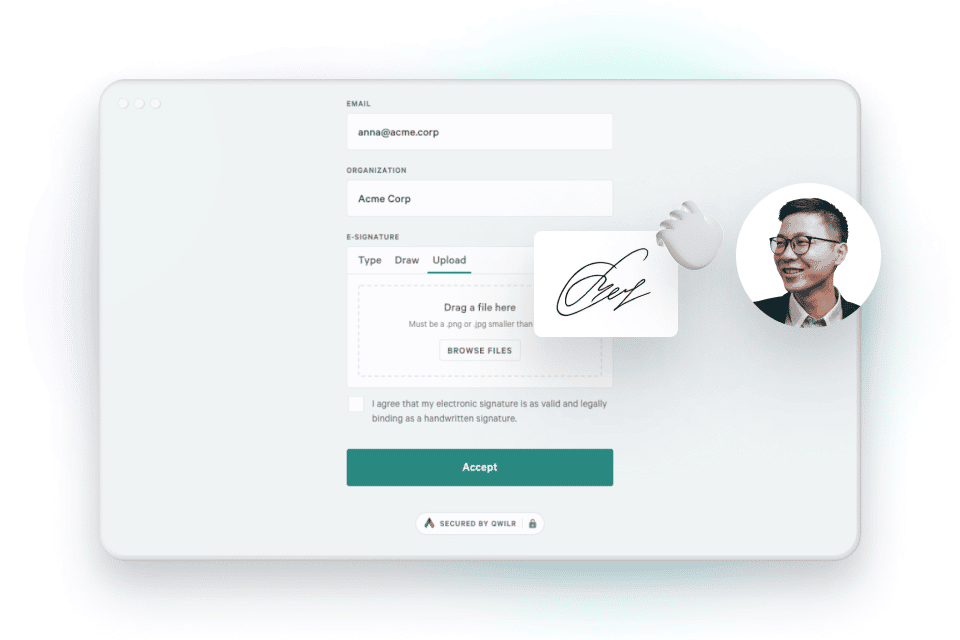
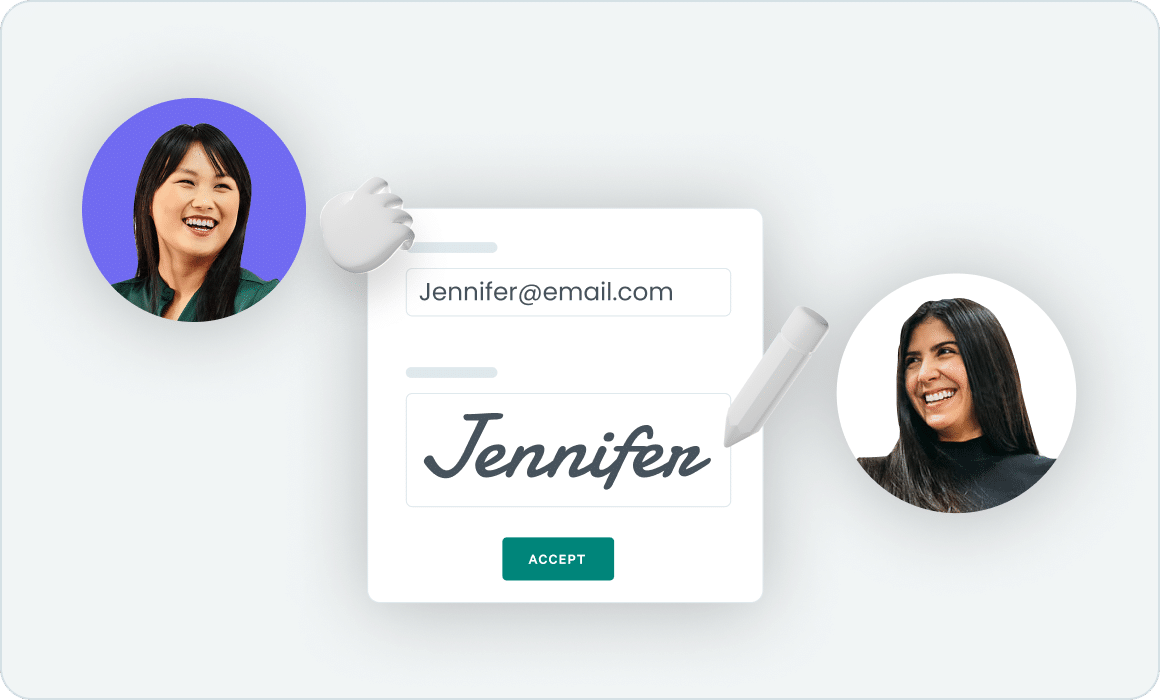
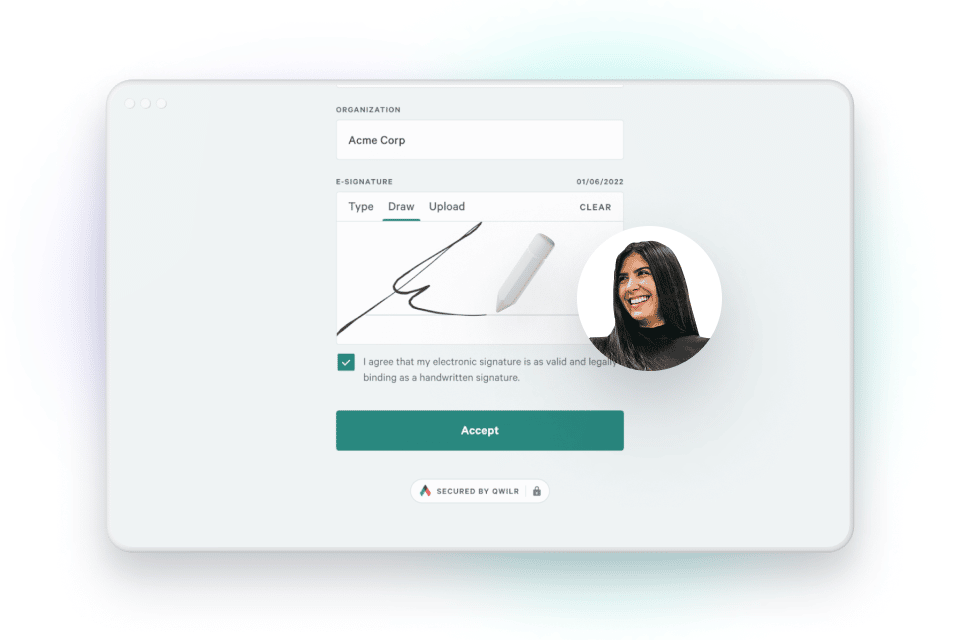
For high-value agreements or contracts involving multiple stakeholders, e-signature software eliminates the coordination delays that come with physical signing. Platforms like Qwilr embed legally binding e-signatures directly into the document.
For teams managing contract changes regularly, the ability to bundle the addendum, updated terms, and signature collection into a single document eliminates the back-and-forth that typically delays execution. Rather than emailing a PDF, waiting for a wet signature, and chasing a countersignature, all parties review and sign in one interaction.
"We were doing in two steps what we could have been doing in one. We knew there had to be a way to combine the proposal and the cost agreement into one easy step."
Nam Truong, Digital + Innovation, Law Squared
Governing law
The governing law clause specifies which jurisdiction's legal framework applies to the addendum and, by extension, to any disputes arising from it. For contracts between parties in the same state or country, this clause often mirrors the original agreement. For cross-border agreements, it becomes critical.
Without a governing law clause, a dispute between a UK-based agency and a US-based client could end up contested across two legal systems simultaneously — a costly outcome that a single sentence prevents.
Match the governing law clause to the existing contract unless both parties agree to change jurisdiction. If the addendum introduces obligations subject to specific regulation — data privacy requirements under GDPR, for example, or payment processing rules under PCI DSS — name the relevant framework and applicable laws explicitly rather than relying on a general jurisdiction reference. Failing to do so can create unintended consequences if a dispute crosses local laws or jurisdictions.
How to write an addendum: key steps
A contract addendum follows a predictable structure, but the drafting process requires more care than filling in a template. The most common mistakes, like vague modification language, mismatched party names, and missing signatures, happen when drafters move too quickly through steps that seem obvious and skip the ones that feel administrative.
The six steps below cover the full process from reviewing the original agreement to storing the final signed document. Each step references the components covered in the previous section, so by the time both parties sign, every required element is accounted for, and the addendum is enforceable from day one.
1. Review the original contract
Before drafting a single line, locate the signed original and read it in full.
Note the exact clause numbers, defined terms, and party names from the original document since these need to appear verbatim in the addendum. Pay attention to any existing modification clauses specifying how new circumstances or changes must be documented, or whether legal requirements around additional approvals apply.
A construction firm extending a subcontractor's delivery timeline, for example, might discover the original contract requires written consent from the project owner before any schedule change takes effect. Missing that requirement invalidates the addendum before it's signed.
2. Define the scope of changes
With the original contract in hand, document exactly what needs to change, which clauses are affected, and whether the update is a replacement, an extension, or a new addition.
Be specific before drafting begins. Vague scope definition at this stage produces modification language that's too broad to enforce and too ambiguous to survive a dispute. If an addendum modifies unrelated clauses — a payment amount adjustment and an IP ownership update, for example — those changes are easier to review, approve, and reference later when kept in separate documents.
3. Draft the addendum using the components above
With the scope defined, build the addendum using the eight components covered in the previous section: title, effective date, party names, purpose, modification language, integration clause, governing law, and signature blocks.
Qwilr's template library provides a pre-structured framework that includes each of these elements by default, reducing the risk of omitting a component under deadline pressure.

For teams managing contracts across multiple clients, the same addendum template means every document starts from the same consistent structure — regardless of who drafts it.
4. Add legal language and check for conflicts with the original
With the modification language in place, add the integration clause and governing law clause, then read the addendum against the original contract in full.
Check for three specific conflict types:
- Defined terms: Does the addendum use the same definitions as the existing agreement, or introduce new services or obligations that contradict existing language?
- Clause references: Do the section numbers cited in the addendum match the original document exactly?
- Jurisdiction: Does the governing law clause align with the initial contract, or has it unintentionally changed?
For complex agreements involving payment terms, IP ownership, or regulatory obligations, involving a legal professional at this stage costs significantly less than resolving an ambiguity after both parties sign.
A block library with pre-approved legal language helps maintain consistency at this step. When standard integration clauses, governing law provisions, and compliance language are stored as reusable components, legal teams review and approve the language once rather than auditing every addendum from scratch.
BELAY, a virtual staffing company managing contracts across four acquired businesses, uses this approach to keep legal content current across a high volume of documents:
"Once the legal team approves a block, we just add it. We’re always updating language and services, and Qwilr lets us adapt quickly."
Nick Vian, IT Systems Administrator, BELAY
5. Obtain signatures from all parties
Every party named in the addendum must sign before the document takes effect — in the same capacity they signed the original contract.
A director who signed the initial agreement as an authorized representative must sign the addendum in the same role. A freelancer who signed as a sole trader cannot sign the addendum under a newly formed limited company without first addressing that change through a new agreement or explicit acknowledgment from other parties.
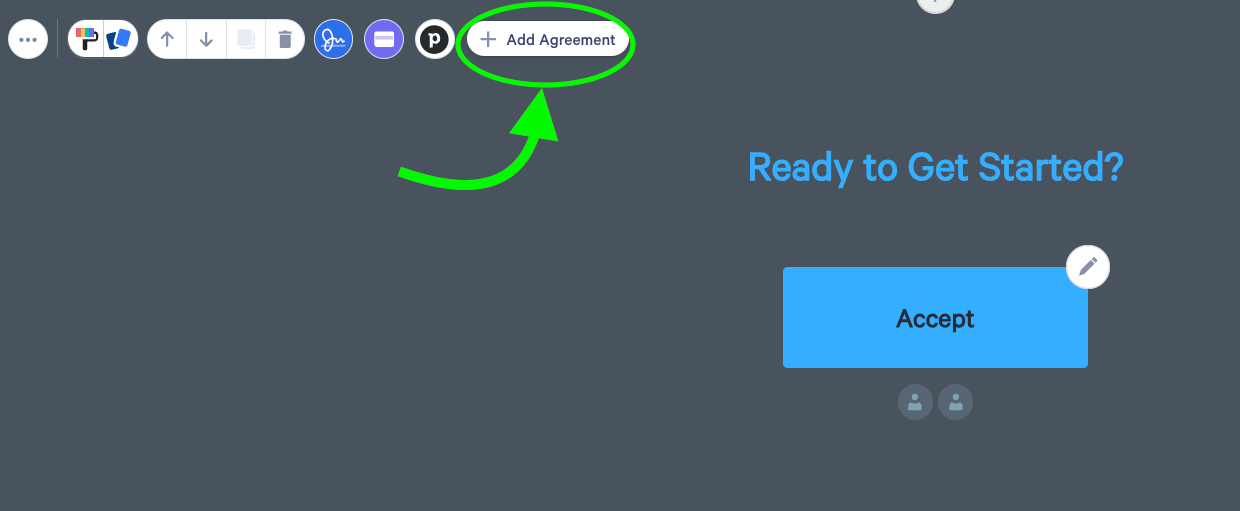
Qwilr simplifies the signing process by combining legally binding e-signatures, agreements, and payment collection in a single platform. Here's how to add an agreement in Qwilr:
- Create or open your proposal in Qwilr
- Add an accept block and choose to 'add an agreement.'
3. Choose from a pre-set agreement template or start with a blank template. Qwilr has partnered with Lawpath to provide users with legally vetted agreement templates for Australia and the United States.
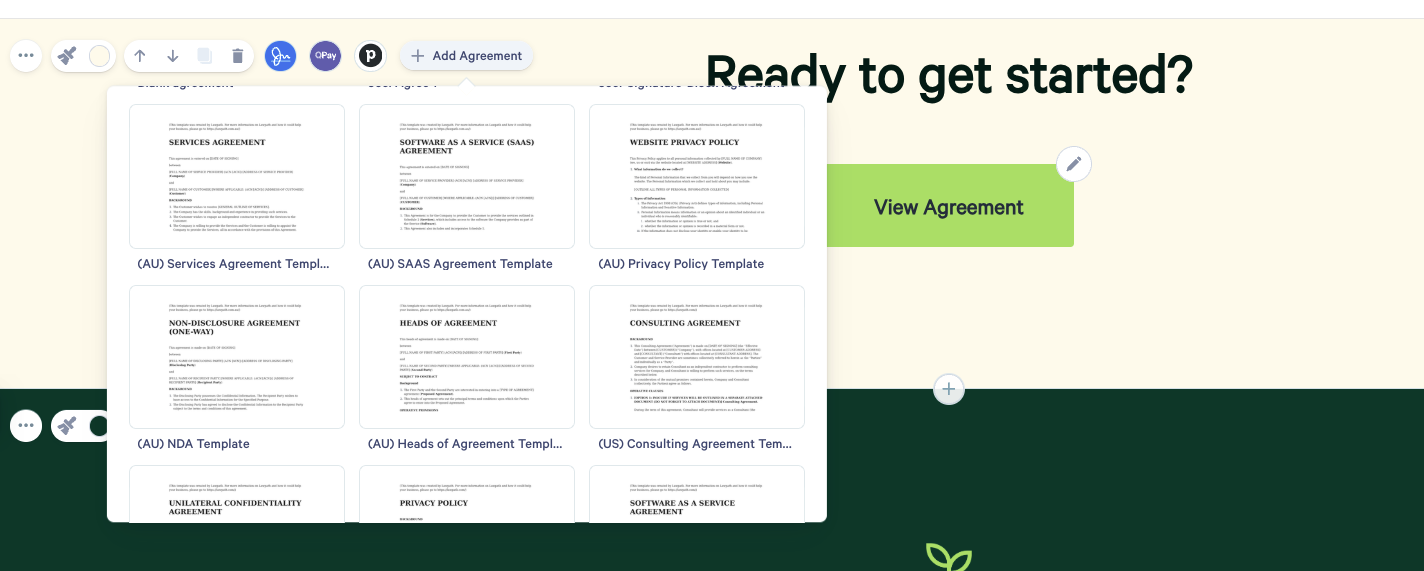
4. Customize the terms, save as a template for future use
5. Share the proposal and contract together and collect signatures in one interaction
Qwilr notifies all signatories the moment everyone executes the addendum — eliminating the follow-up emails that typically delay the final step.
For teams whose stakeholders review contracts on the go — real estate agents between showings, executives between meetings — mobile-friendly signing removes a bottleneck that physical or desktop-only documents create.
ShowingTime, a real estate software company with 201–500 employees, found this especially impactful:
“Having a true, mobile-friendly solution has been a game changer in a competitive market. Our customers can now easily view proposals and accept agreements while on the road, which has added velocity to the sales process."
Veronica Parker, Sales Operations Manager at ShowingTime
6. Store the signed addendum alongside the original contract
A signed addendum only protects both parties if they can locate it when it matters.
Store the executed addendum in the same location as the existing contract using contract lifecycle management software, clearly labeled with the addendum number and effective date. Anyone reviewing the agreement in the future, like a new stakeholder, a legal team, or an auditor should find the complete contract history without needing to request the additional document separately.
Qwilr maintains a full audit trail for every document, logging view timestamps, signature dates, and post-signature amendments in a single dashboard.

If a dispute arises, that record establishes exactly what both parties agreed to, when each party signed, and whether either party accessed the addendum before questioning the terms.
5 practical tips for drafting an addendum
Understand what makes a contract addendum legally binding
For an addendum to hold up under legal scrutiny, it needs to meet the same basic requirements as the original contract:
- Offer
- Acceptance
- Consideration
Essentially, both parties must receive something of value from the updated terms.
An addendum that omits party signatures, uses vague modification language, or fails to reference the existing contract has no legal standing. In this case, courts treat it as an unexecuted draft rather than a legally enforceable modification.
Before parties sign, confirm the addendum meets the four criteria to ensure it qualifies as a valid contract modification:
- All original signatories named in the initial contract have signed
- The modification language references specific clauses from the original document
- Mutual consent and mutual agreement exist — both parties review and agree to the updated terms without pressure or ambiguity
- The addendum includes an integration clause confirming the existing contract remains in full force
Time the addendum correctly
An addendum drafted after a deadline has passed, one party misses a payment, or a dispute has already surfaced, carries significantly less legal weight than one both parties execute before the relevant terms take effect.
An addendum negotiated under new circumstances — when one party is already in breach — can be challenged as lacking genuine mutual consent. The right time to issue an addendum is when a change becomes foreseeable, particularly in circumstances where new services, closing date shifts, or scope changes are under discussion. Teams managing long-term contractual relationships should build addendum review into renewal windows, project milestone check-ins, and any conversation where scope, timeline, or payment terms shift.
Know when to draft a new contract instead
An addendum works when the changes are specific, and the original agreement remains fundamentally sound. When the modifications are extensive enough to alter the nature of the relationship, a new contract is the cleaner solution.
Three signals that a new agreement is the better path:
- The addendum would modify more than three or four clauses
- The involved parties have changed, like a new entity has taken over obligations, or a key stakeholder has left the agreement, and the ABC Company or individual named in the initial contract no longer reflects who is actually bound
- The existing agreement contains original terms that no longer reflect the commercial reality of the relationship
Attempting to patch a fundamentally outdated agreement with successive addenda creates a document trail that is difficult to interpret and harder to enforce. A single, current contract that reflects the actual terms both parties are operating under is easier to manage, easier to review, and more defensible if a dispute arises.
Manage related documents and version control
A contract addendum doesn't exist in isolation. It sits within a broader document ecosystem that typically includes the existing contract, prior addenda, statements of work, master service agreements, and any correspondence that informed the changes. Maintaining consistency across all related documents is essential when teams can't confirm which version of a new agreement is current; the risk of one party operating under outdated terms increases.
Three practices that maintain consistency and prevent version confusion:
- Number every addendum sequentially and reference prior addenda using the addendum vs. original contract distinction clearly in each new document
- Store all related documents in a single location, clearly labeled with execution dates
- Notify all relevant other parties when a new addendum takes effect, including any insurance addendums or compliance-related additions triggered by local laws
Qwilr's document dashboard keeps the original contract, all executed addenda, and the full audit trail in one place.
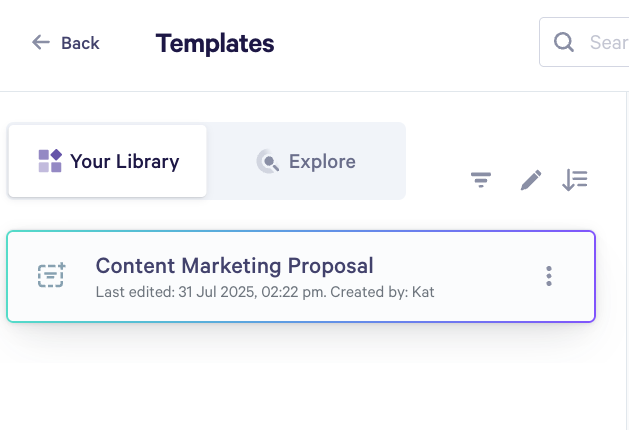
Any stakeholder reviewing the agreement sees the complete, current picture without requesting documents separately.
“All of our templates have an embedded terms and conditions page so we know they are always up to date and accurate. Having a clearly defined and automated process to save and share agreements has significantly reduced the need to audit opportunities."
Veronica Parker, Sales Operations Manager at ShowingTime
Ensure compliance for cross-border agreements
A contract addendum that complies with the laws of one jurisdiction may be unenforceable in another. For agreements between parties in different countries or US states, compliance requires more than matching the governing law clause to the original contract.
Key considerations for cross-border addenda:
- Data privacy: addenda involving data sharing or processing obligations may trigger GDPR, CCPA, or other regional privacy frameworks regardless of the governing law clause
- Payment terms: currency, tax treatment, and payment processing requirements vary significantly across jurisdictions
- Signature standards: electronic signature laws differ — ESIGN and UETA govern US agreements, while eIDAS covers the EU. Confirming which standard applies before executing the addendum prevents enforceability challenges later
For high-value or highly regulated cross-border agreements, local legal counsel in each relevant jurisdiction is the most reliable way to confirm the addendum meets regional requirements before both parties sign.
Managing contract addenda with Qwilr
Contract addenda protect both parties, but only when both parties draft, execute, and store them correctly.
The most common failure points are administrative: a missing signature block, a vague modification clause, and an addendum stored separately from the existing contract that nobody can locate when it matters.
Qwilr brings the full addendum workflow into one platform — pre-built addendum templates, a legally binding document workflow with e-signatures that meet ESIGN and eIDAS standards, and a document dashboard that keeps every signed addendum alongside the initial contract with a full audit trail.
Try Qwilr free and start managing contract changes without the back-and-forth.
Sales amplified by Qwilr
The legalities of writing an addendum shouldn’t scare you off. Yes, it’s an upgrade of the contract. Yes, with some deep focus and proofreading, you can nail it.
At the end of the day, you are creating a legally binding document that serves everyone’s best interests. Whether you’re a contractor, freelancer, or business owner, mastering the art of writing an addendum will make you as adaptable a yoga instructor in a tornado. After all, in the world of contracts, flexibility is often the key to success.
For a shot at success, sign up for our free trial to see all the gains that Qwilr has to offer.
About the author

Kiran Shahid|Content Marketing Strategist
Kiran is a content marketing strategist with over nine years of experience creating research-driven content for B2B SaaS companies like HubSpot, Sprout Social, and Zapier. Her expertise in SEO, in-depth research, and data analysis allow her to create thought leadership for topics like AI, sales, productivity, content marketing, and ecommerce. When not writing, you can find her trying new foods and booking her next travel adventure."