
- Gap Selling Template
Gap Selling Template
Maximize your sales potential with gap selling techniques – design a compelling, clear, and solution-focused approach to win clients.
About this template
Connect with buyers in a meaningful way with our Gap Selling template and quickly determine their current state problems, future desired state, and business objectives. Our interactive Gap Selling template will help your sales representatives close more deals and shift the focus on the client, making them feel heard.
What's included?
- Executive summary following the gap selling framework
- Product value prop
- Product value section
- Interactive pricing
- Team information
- Customer testimonials
- Acceptance of terms
- Contact us information
Included in our gap selling template
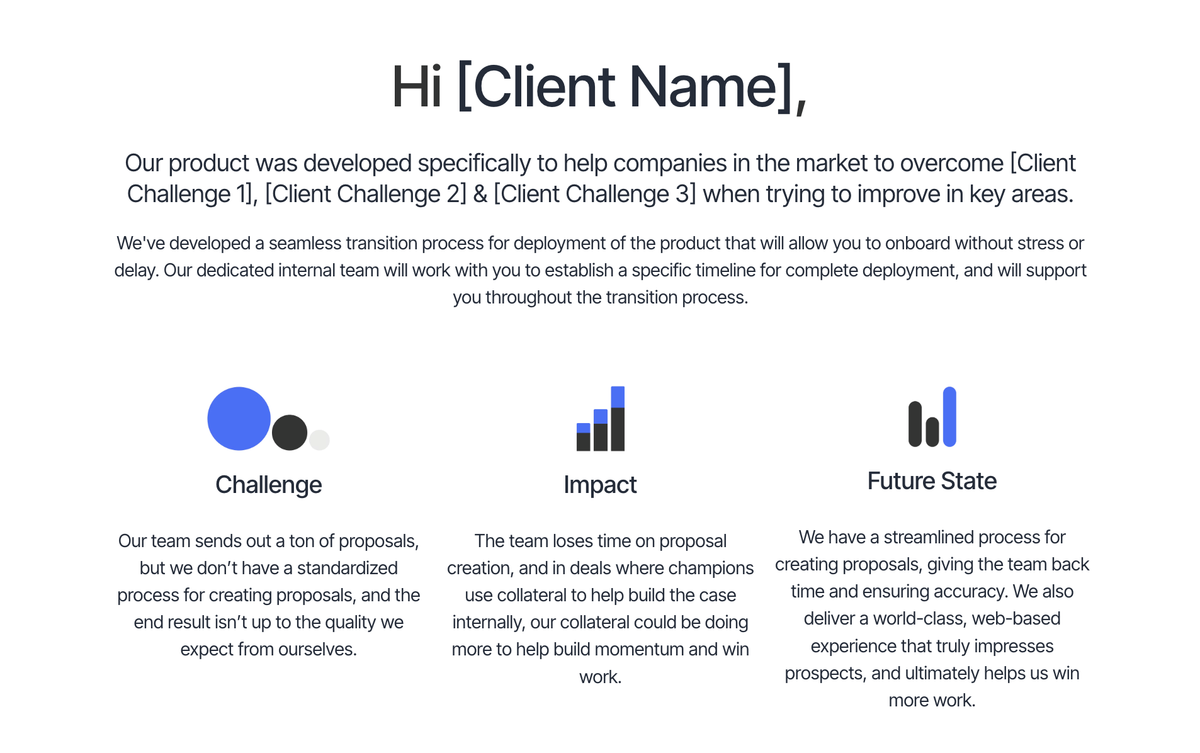
Executive summary
The executive summary is structured to clearly articulate the gap between the client’s current state and their desired future state, helping prospects immediately see the business impact of solving the problem. Pre-written prompts guide sellers to frame challenges, outcomes, and urgency in a concise narrative that executives can scan and understand quickly. This makes it easier to align stakeholders early and anchor the proposal around measurable value rather than features alone.
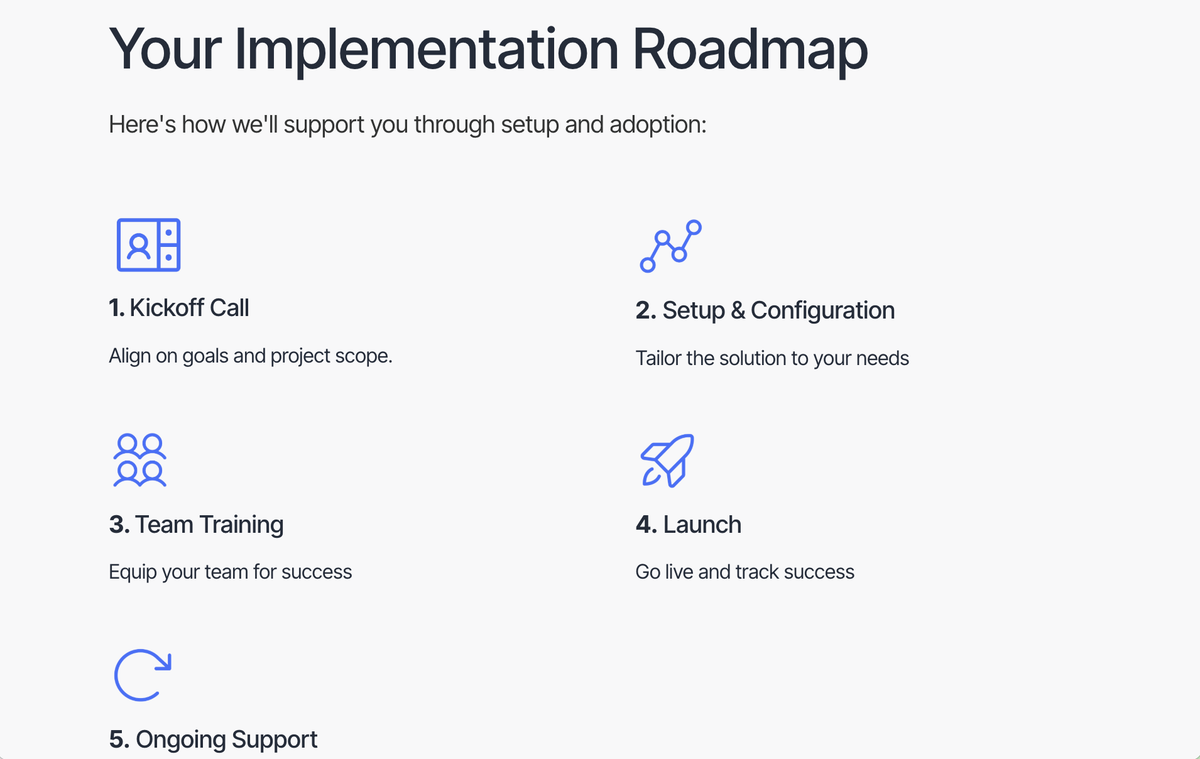
Implementation timeline
A clear implementation roadmap shows exactly how the proposed solution will move the client from where they are today to where they want to be. The template includes customizable phases, milestones, and timelines so sellers can map actions directly to outcomes and dependencies. By visualizing progress and accountability, this section builds confidence that the solution is practical, achievable, and designed to deliver results.
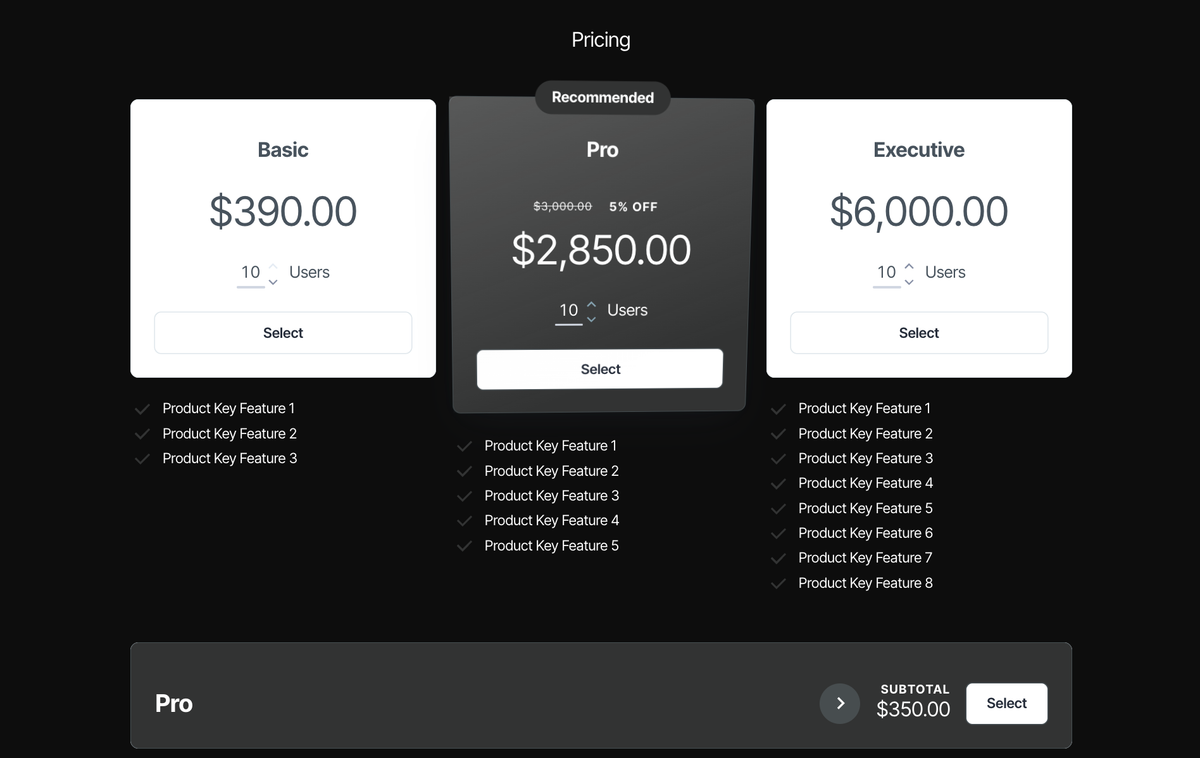
Interactive pricing
Pricing is presented in a flexible, interactive format that supports value-based selling rather than static line items. Qwilr’s dynamic pricing allows sellers to configure packages, options, and add-ons that reflect different levels of investment, while keeping everything easy for buyers to understand. This approach reinforces the connection between cost and outcome, helping prospects evaluate pricing in the context of the gap being closed.
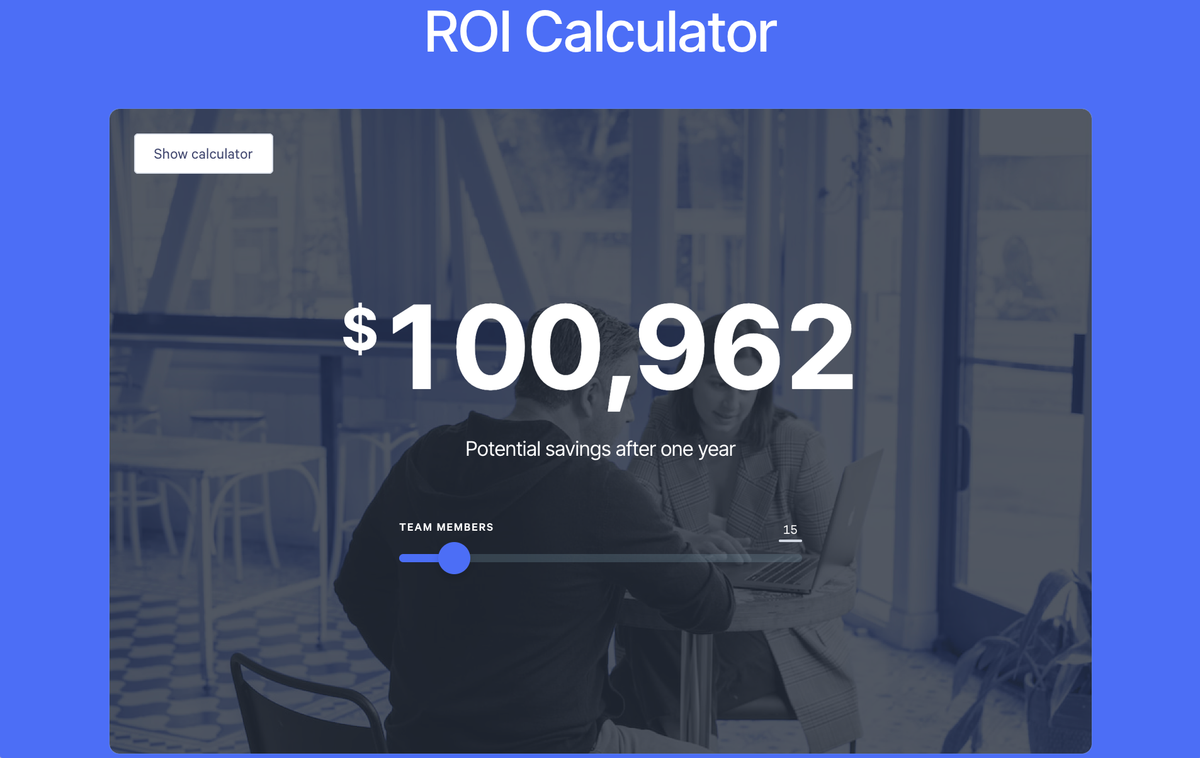
Customizable ROI calculator
Quantifying impact is made simple with an embedded ROI calculator that shows the financial upside of addressing the client’s challenges. Sellers can customize inputs such as costs, savings, or efficiency gains, allowing prospects to see real-time calculations tailored to their business. This transforms abstract value into tangible numbers, strengthening the case for change and accelerating internal buy-in.
Team intro
Trust is reinforced by introducing the people responsible for delivering the solution, not just the solution itself. The template provides space to showcase team roles, experience, and credibility in a polished, consistent format that’s easy to personalize. By humanizing the proposal and highlighting relevant expertise, this section helps prospects feel confident in who they’ll be working with after signing.

Why Qwilr?
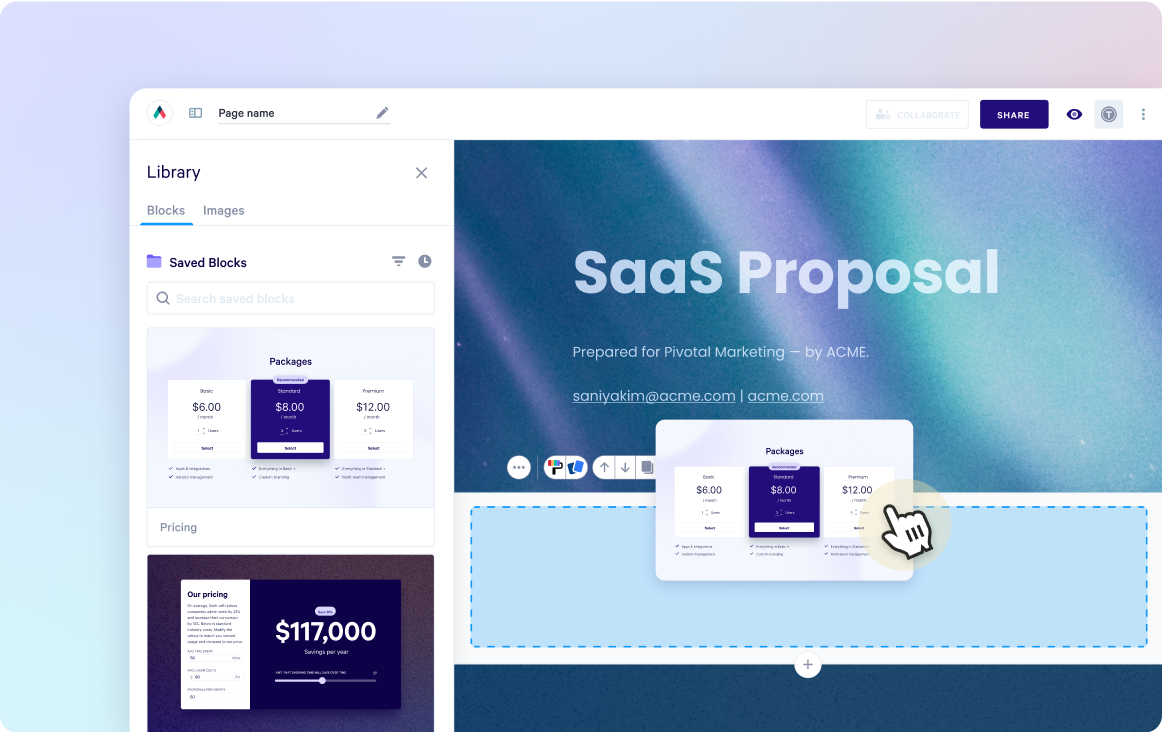
Design interactive proposals
Impress buyers with interactive proposals that stand out. Qwilr’s drag-and-drop editor makes it easy to create on-brand, stunning collateral — no design skills needed. Add videos, dynamic pricing, and ROI calculators to deliver a unique experience, while automated brand customizations ensure every proposal looks professional.
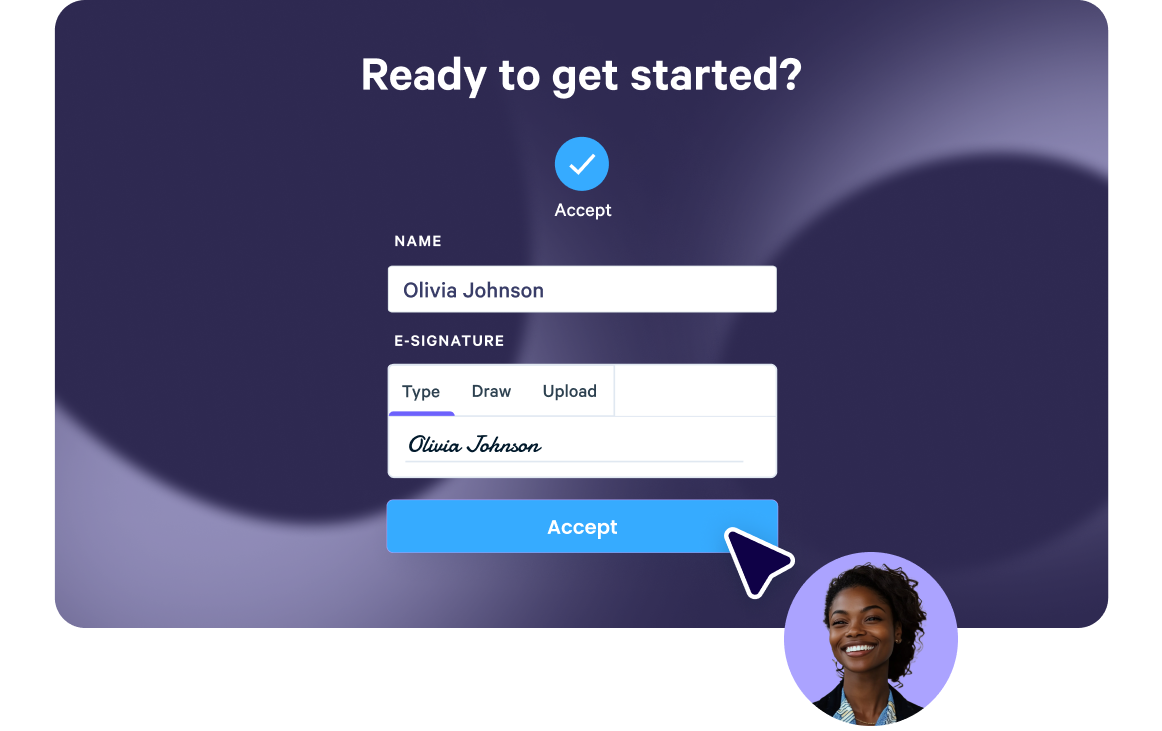
Built-in e-sign functionality
Combine stunning proposals, plain-text agreements, and secure e-signatures in one tool. Add print-friendly agreements alongside dynamic content and collect legally compliant e-signatures with ease. Track progress, capture multiple signatures, and close deals faster with Qwilr’s integrated e-sign functionality.
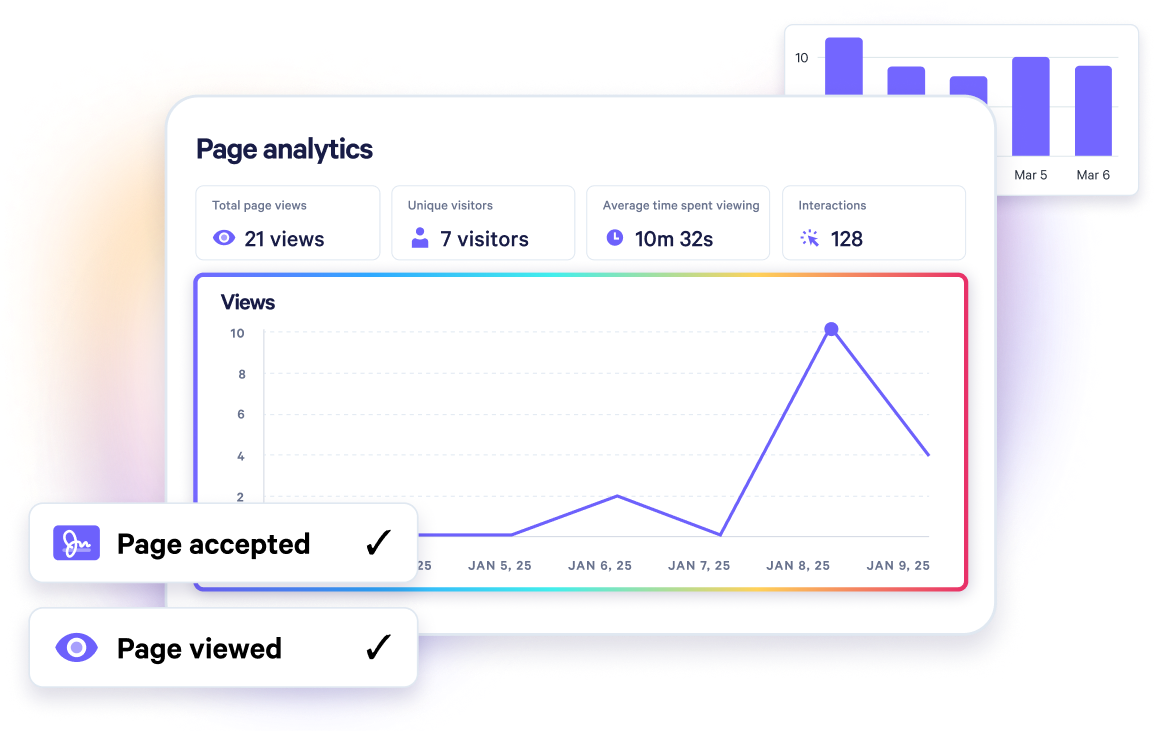
Real-time proposal analytics
Qwilr’s analytics provide full visibility into buyer engagement. Track when proposals are opened, signed, or shared, and get instant notifications for key buyer activities. See what buyers click on, how they engage, and prioritize follow-ups based on real-time insights—all designed to help close deals faster.
Templates for every use case
Explore templates for sales, marketing, customer success, sales enablement and more.
Explore sales process templates
Frequently asked questions
The Gap Selling methodology ensures sales representatives gain a full scope of a prospect’s problem before identifying the gap they need to address. Simply put, this sales methodology empowers sales teams to win more business by helping clients reach their future desired state.
The Gap Selling methodology is designed to shift the primary focus of the discussion from your products and services to the problems the buyer is facing. This ultimately allows sales representatives to build meaningful relationships with prospects before offering their products or services. While Gap Selling may be more time-consuming than traditional sales techniques such as BANT, it is best suited for solving complex problems B2B clients tend to face.
According to Keenan, there are five elements a sales representative must consider to fully understand a client’s current situation: environment, problem, impact, root cause, and emotion. Only by understanding a client’s current state can a sales representative successfully determine their desired future state, helping them close any gaps that exist. Here is a brief overview on each element of a prospect’s current state:
Environment: Where is the buyer based and what is their environment like?
Problem: What problem are they trying to solve?
Impact: What impact are these problems having on the buyer’s business?
Root Cause: What are the fundamental issues that result in this problem occurring?
Emotion: Is there current state affecting their emotions?
Whether the Gap Selling methodology is the right sales technique for your team will ultimately depend on your industry. The Gap Selling methodology is primarily geared towards offering solutions to complex problems for B2B businesses. This sales methodology, however, is not ideal for transactional sales and retail businesses, where time is of the essence.
The Gap Selling methodology requires your sales representatives to spend significant time in discovery mode asking probing, provoking, or validating questions. As such, Gap Selling is typically recommended to businesses that offer products and services that don’t have a standard solution.
Sales representatives must ask a series of Gap Selling discovery questions to better understand their client’s current state and desired future state. Typically, there are four types of Gap Selling discovery questions: Probing, provoking, process, and validating questions. Here are some of the most commonly-asked Gap Selling discovery questions.
Probing
- Tell me about your company.
- How would you describe the problem you’re facing?
Process
- Can you help me understand how your company currently does this?
- What timeline did you have in mind?
Provoking
- What are you hoping to achieve?
- What kind of impact is this problem having on your business?
- What’s currently holding you back from reaching your goals?
Validating
- If I understand correctly, this problem is the main issue. Am I correct?
- Last time we spoke, your biggest challenge was (problem). Is this still true today?
The Gap Selling methodology differs from other sales techniques in that it is problem-centric rather than product-centric. Unlike other sales methodologies, including SPIN and Solution Selling, the Gap Selling methodology centers the entire sales cycle around the impact of a buyer’s current state problems.
Sales representatives can then shift the focus on determining the client’s future desired state before positioning their products or services. The wider the “gap” between the client’s current state and future desired state, the higher their motivation will be to close the deal.